कोशिश गोल्ड - मुक्त
Tracking Election Trends
Outlook
|01 Oct 2023
An analysis of election results prior to 1971 indicates that issues determined their outcome, irrespective of whether polls were held simultaneously or separately. But the 1951-71 political situation was entirely different from the present

A STUDY of outcomes of elections from 1951 and 1971— when parliamentary and assembly polls used to be held together generally, and separately only exceptionally—reveals that results were determined more by state-specific and national political issues and alignments of parties. Whether polls were held simultaneously or separately was not a deciding factor.
The Congress party—the political force which enjoyed an overwhelming dominance all over India during this period— used to record a higher vote share in the Lok Sabha elections when compared to the simultaneously-held assembly elections in most states, even in its strongholds. This happened mostly because independent candidates used to get a higher share of votes in assembly elections.
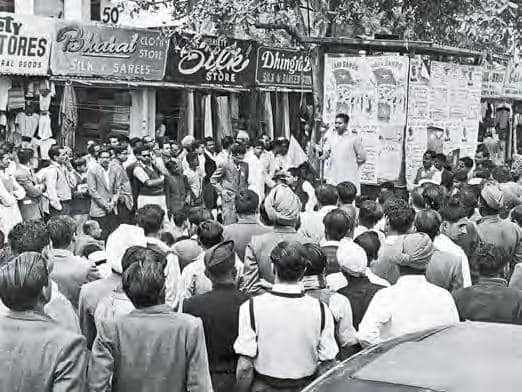
On the other hand, the national opposition parties or regional forces did not necessarily benefit from separate elections, when state elections were held mid-term due to the reorganisation and creation of new states or because of the government losing the majority. There have been instances when, in the case of simultaneous elections, the Congress’ assembly vote share was about 5 percentage points lower than its Lok Sabha share. In some cases, their assembly vote share saw an increase in separately held elections.
However, it wouldn’t possibly be right to draw conclusions about the present political scenario based on the 1951-71 electoral trends for two reasons. First, the Congress was the main force not only nationally but in every state of the country. The current ruling party at the Centre is still trying to make inroads in many parts of the country where its electoral presence remains insignificant.

यह कहानी Outlook के 01 Oct 2023 संस्करण से ली गई है।
हजारों चुनिंदा प्रीमियम कहानियों और 10,000 से अधिक पत्रिकाओं और समाचार पत्रों तक पहुंचने के लिए मैगज़्टर गोल्ड की सदस्यता लें।
क्या आप पहले से ही ग्राहक हैं? साइन इन करें
Outlook से और कहानियाँ

Outlook
The Spectacle of the Woman Accused
Media narratives—especially when women are involved—can end up amplifying suspicion and weaponising gender

7 mins
March 11, 2026

Outlook
The Stink of Epstein
Why are the rich and powerful of the world scared of what lies buried in the Jeffrey Epstein files?
6 mins
March 11, 2026
Outlook
Passing the Watermelon
Narendra Modi's presence in Israel is being read not just as a bilateral engagement, but as an endorsement of Israeli action in Gaza and the West Bank
5 mins
March 11, 2026

Outlook
For Phoolan, Who Wasn't a Devi
“Whether or not it is the Truth is no longer relevant. The point is that it will, (if it hasn’t already) - become the Truth. Phoolan Devi, the woman has ceased to be important. (Yes of course she exists. She has eyes, ears, limbs, hair etc. Even an address now) But she is suffering from a case of Legenditis. She’s only a version of herself. There are other versions of her that are jostling for attention. Particularly Shekhar Kapur’s “Truthful” one, which we are currently being bludgeoned into believing.”–Arundhati Roy in ‘The Great Indian Rape-Trick I’, on the film Bandit Queen by Shekhar Kapur based on Phoolan, whom he never met because he didn’t think he needed to meet her. The film was based on journalist Mala Sen’s book India’s Bandit Queen: The True Story of Phoolan Devi.
5 mins
March 11, 2026

Outlook
The Chic Cartel
Women are not just victims or side characters in recent crime-and-power OTT dramas. They are complex forces-capable of empathy, strategy and ruthlessness-whose narratives demand both recognition and reckoning
5 mins
March 11, 2026

Outlook
The Hierarchy of Sympathy
In crimes against women, justice is shaped not only in courtrooms but in newsrooms where narrative determines whose suffering becomes national conscience and whose fades into procedural silence
5 mins
March 11, 2026

Outlook
Dasyu Sundari
Media accounts simultaneously cast her as victim and avenger, until a life shaped by caste violence and gendered oppression was repackaged into a consumable myth of dishonour and revenge
8 mins
March 11, 2026

Outlook
Prince Pervert
Are rumours of the death of the rule of law vastly exaggerated?
4 mins
March 11, 2026
Outlook
Together, Apart
Poonam Saxena's translations of Mannu Bhandari and Rajendra Yadav's memoirs present a portrait of the trailblazing Hindi writer-couple's marriage and of newly independent India
3 mins
March 11, 2026

Outlook
The Great Indian Rape Trick'
The trope of transforming sexual violence against women into a springboard for rage that can only be channelled through counter-violence has long served as a popular framework in cinema, both globally and in India
6 mins
March 11, 2026
Translate
Change font size