कोशिश गोल्ड - मुक्त
Saved, Yet Shamed
Outlook
|April 30, 2018
India trims the annual increase of HIV/AIDS cases by 57 per cent since 2000. But social stigma lives on.

TO an observer’s eye, the long lines at the Ram Manohar Lohia Hospital in Delhi every Friday seem much of a piece with the usual crowds to be found outside any government medical institution. But this is different. Friday is the day most HIV-positive people registered with the hospital come to collect their anti retroviral therapy (ART) drugs for the month. They blend into the crowd with no distinction, waiting in line for their turn like everybody else. The disease that distinguishes them from others is often not mentioned, or is spoken of in low whispers between patients familiar with each other’s history. Most don’t want it to be known that they are HIV-positive or, worse, have one of the most incurable and most stigmatised diseases in the world, AIDS.
The way HIV/AIDS is viewed medically has changed miraculously in the last three decades. Steady developments in medicine, and timely introduction of such medicines, mean that the disease is now considered fairly manageable and not much different from, say, diabetes. The National AIDS Control Organisation’s (NACO) programme, started in 1992, has made strides in managing the disease by providing treatment, testing facilities and counselling. More than 60 per cent of all HIVpositive individuals seek treatment from government centres, bringing them into a well defined system that provides anti retroviral therapy (ART) to those affected. Although there are still about 21.17 lakh people living with the disease in India, the number of new infections annually has gone down by 57 per cent since 2000. Yet, the associated social stigma has shown no signs of abating—patients continue to be ostracised even after all the awareness campaigns. It’s telling that not a single person we spoke to for this story wanted to be named or photographed.
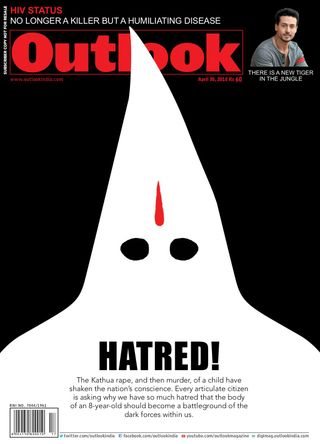

यह कहानी Outlook के April 30, 2018 संस्करण से ली गई है।
हजारों चुनिंदा प्रीमियम कहानियों और 10,000 से अधिक पत्रिकाओं और समाचार पत्रों तक पहुंचने के लिए मैगज़्टर गोल्ड की सदस्यता लें।
क्या आप पहले से ही ग्राहक हैं? साइन इन करें
Outlook से और कहानियाँ
Outlook
Turbulence in Tehran
To ignore or lampoon the attempts in Iran against the rule of clerics shrinks the space for the anti-imperialist Left to challenge other political ideologies, such as Hindutva

5 mins
March 21, 2026
Outlook
Not in Our Name
HE should have first corrected his own vices and then given us advice”.
3 mins
March 21, 2026
Outlook
Epic Faux Pas
For Iran, survival is victory. The martyrdom of Khamenei has had a rallying effect, and its strategy is built on domestic civil-military endurance and regional-global deterrence
6 mins
March 21, 2026

Outlook
'Winter Will One Day be Past'
This book is a true testament of friendship and an act of solidarity
4 mins
March 21, 2026
Outlook
‘Nolite Te Bastardes Carborundorum (Don't let the bastards grind you down)
\"There is more than one kind of freedom,\" said Aunt Lydia. \"Freedom to and freedom from.
4 mins
March 21, 2026
Outlook
Zan. Zendegi. Azadi
Are Trump and Netanyahu really interested in liberating Iranian women through this war?
5 mins
March 21, 2026
Outlook
Bruno ki Betiyaan
Whether future regimes sustain, reshape, or compete with Bihar's maternal welfare architecture will determine how deeply Nitish Kumar's political legacy shapes the state's democratic future
4 mins
March 21, 2026

Outlook
Capitalism Redux
The Global South must learn from the West Asian crisis that the persistence of neoliberalism alongside hyper-nationalism leads to brutality and genocidal war
4 mins
March 21, 2026
Outlook
The JNU Files
The immediate backdrop to the recent showdown at Jawaharlal Nehru University lay in earlier tensions
7 mins
March 21, 2026

Outlook
What is Trump's Endgame?
The Iran war looks like a high-stakes attempt by the US and Israel to reshape the balance of power in West Asia
6 mins
March 21, 2026
Translate
Change font size