
मैगज़्टर गोल्ड के साथ असीमित हो जाओ
10,000 से अधिक पत्रिकाओं, समाचार पत्रों और प्रीमियम कहानियों तक असीमित पहुंच प्राप्त करें सिर्फ
कोशिश गोल्ड - मुक्त
THE INDIAN ARMY'S RAPID REACTION CAPABILITY
Geopolitics
|January 2021
While the IAF and navy are very capable and have improved their ability to transport and sustain the army, much needs to be done in order to give the Indian Army its desired deployment capability, writes SANJAY BADRI MAHARAJ

In November 1988, the Indian Army, Air Force and Navy conducted a highly effective out of area operation to preserve the government of the Maldives which was facing a determined assault by a group of armed mercenaries on behalf of a disgruntled local businessman.
India has, since its independence, maintained limited but not inconsiderable forces capable of interventions outside of the Indian subcontinent. At the core of this capability was and is the Indian Army’s 50th Parachute Brigade. This, coupled with enhancements in the 1980s to the Indian Air Force’s transport fleet with newer, long-range transporters-enabled 50 Para Brigade to further its reach. The Indian Navy always retained a not insubstantial amphibious capability. This capability, through a mechanised infantry brigade (340 Independent Infantry Brigade) was available for use during Operation Cactus but was not done.
The Indian Navy itself was emerging as a major blue-water force in Asia, operating two aircraft carriers with escorts. While lacking a dedicated force of marines, the navy began the creation of a naval special forces unit which would play an important role in Operation Cactus. Also, of note were the Indian Navy’s aviation assets in the form of shipborne helicopters and land-based maritime reconnaissance aircraft.
Today, these forces have been enhanced but need to be further refined to ensure their continuing viability for out-of-region interventions.
The army’s rapid reaction forces today
At the core of the army’s rapid reaction forces is the 50th Parachute Brigade. Regiment’s order of battle. The total strength of the regiment stands at about some 4,500 personnel in the paratroopers (airborne), while the Para (SF) includes about 1,200 operatives.
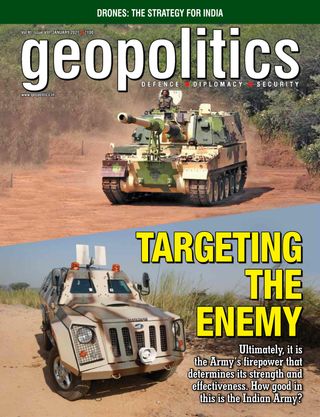

यह कहानी Geopolitics के January 2021 संस्करण से ली गई है।
हजारों चुनिंदा प्रीमियम कहानियों और 10,000 से अधिक पत्रिकाओं और समाचार पत्रों तक पहुंचने के लिए मैगज़्टर गोल्ड की सदस्यता लें।
क्या आप पहले से ही ग्राहक हैं? साइन इन करें
Geopolitics से और कहानियाँ
Geopolitics
Tata expands Morocco push with LAMV offer
After securing an order for its WhAP 8x8 armoured vehicle from the Royal Moroccan Army, Tata Advanced Systems Limited is now actively promoting its Light Armoured Multipurpose Vehicle in the same market.

1 min
February 2026
Geopolitics
Armenia eyes India's Astra Missile for Su-30SM fleet
Armenia is in advanced discussions with India to acquire the Astra beyond-visual-range air-to-air missile, signalling a deepening of defence ties between the two countries.
1 min
February 2026
Geopolitics
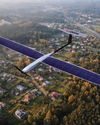
SUVI V1 becomes India's first Type-Certified UAV
In India's unmanned aviation sector has reached a significant regulatory milestone with Okulo Aerospace announcing that its SUVI V1 platform has received Type Certification from the Directorate General of Civil Aviation.
1 min
February 2026

Geopolitics
Swan Defence wins Oman naval training ship contract
Swan Defence and Heavy Industries has secured a defence export contract from the Government of the Sultanate of Oman for the construction and supply of an advanced naval training ship for the Royal Navy of Oman.
1 min
February 2026
Geopolitics
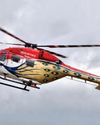
HAL'S 'DHRUV' BET
Hindustan Aeronautics Limited (HAL) is attempting a careful reset of the Dhruv helicopter narrative, positioning the platform simultaneously as a cornerstone of India's future civil helicopter market and as a rehabilitated workhorse returning to frontline maritime service.
2 mins
February 2026
Geopolitics
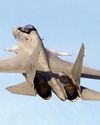
India Offers Su-30MKM Upgrade to Malaysia
India has offered a midlife modernisation package for Malaysia's fleet of 18 Sukhoi Su-30MKM fighters, marking a significant step in bilateral defence-industrial cooperation.
1 min
February 2026
Geopolitics
Astra upgrade rooted in indigenous R and D
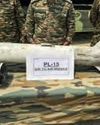
Recent reports linking the Indian Air Force's Astra missile upgrades to Chinese PL-15 technology have been firmly dismissed by defence officials and scientists.
1 min
February 2026

Geopolitics
COMMAND OR COMPLIANCE? RECLAIMING THE SPIRIT OF MILITARY INITIATIVE
What does it truly mean to be a military leader in a democracy? It is a question sparked by the recent controversy surrounding General Manoj Naravane's memoir. While the government always has the final say, a great general shouldn't just wait for instructions; they must lead with confidence, give honest advice, and take decisive action on the battlefield. KARAN KHARAB highlights why India needs a military culture that rewards bold Initiative over hesitation and \"seeking orders.\"
8 mins
February 2026
Geopolitics
India's integrated air combat plan from Mk1A to MkIII
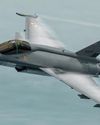
India's combat aviation landscape is entering a defining phase, marked by parallel developments in aircraft production and missile technology that together reflect a broader push toward operational self-reliance.
3 mins
February 2026

Geopolitics
DEFENCE BUDGET 2026-27: FOCUS ON CAPITAL ACQUISITIONS
While there is an overall increase in the latest defence budget, the statistics only tell half of the story, explains AMIT COWSHISH
11 mins
February 2026
Translate
Change font size