कोशिश गोल्ड - मुक्त
What Is Truth?
Philosophy Now
|April/May 2022
Richard Oxenberg on the need for an old paradigm, especially in ethics.

This question has reverberated through the ages, not least because, as Pilate’s question suggests, different religions and cultures have presented us with very different versions of what they’ve called the truth. Muslims, Jews, Protestants, Catholics, Communists, Fascists, and many others, have fought violent battles to promulgate and defend their particular version of ‘the truth’.
The bloody battles over truth in Europe between Protestants and Catholics played a significant role in motivating the scientific revolution of the sixteenth and seventeenth centuries. It was the hope of the early scientists and their champions to find a reliable and verifiable method of distinguishing truth from falsehood based on generally available evidence that would yield truths of universal validity – truths that all informed, intelligent, and rational people would be able to agree upon.
The sciences have been hugely successful in their endeavor. Our ability to predict and control events in our physical environment has advanced immeasurably due to the employment of scientific methods. There can be no question about this. What might be questioned, however, is whether the sort of truths the sciences provide are the truths we most fundamentally seek.
Aristotle writes in his
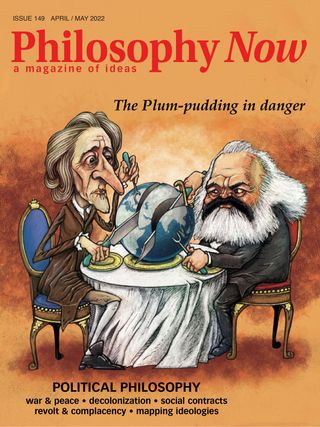

यह कहानी Philosophy Now के April/May 2022 संस्करण से ली गई है।
हजारों चुनिंदा प्रीमियम कहानियों और 10,000 से अधिक पत्रिकाओं और समाचार पत्रों तक पहुंचने के लिए मैगज़्टर गोल्ड की सदस्यता लें।
क्या आप पहले से ही ग्राहक हैं? साइन इन करें
Philosophy Now से और कहानियाँ

Philosophy Now
Nosferatu
Stefan Bolea considers two very different artistic approaches to love and death.

6 mins
April/May 2025

Philosophy Now
Heidegger's Ghost
Raymond Tallis wonders where Heidegger's body went when he was philosophising.
7 mins
April/May 2025

Philosophy Now
Is Comedy Good For Us?
Damaris Stock has a laugh with Plato and friends.
10 mins
April/May 2025
Philosophy Now
In Defense of Idleness
Wendell O'Brien says, 'Just Don't Do It'.
10 mins
April/May 2025
Philosophy Now
Leaving Nothing to Chance by Carl Knight
LEAVING NOTHING TO Chance (2025) by Carl Knight, is an informed, proficient and lucid defence of luck egalitarianism.
3 mins
April/May 2025

Philosophy Now
Star Maker by Olaf Stapledon
THE 1937 SCIENCE FICTION novel Star Maker was written by philosophy professor Olaf Stapledon in the dark days as Europe awaited the onslaught of Nazi Germany. This casts a shadow over the whole book.
6 mins
April/May 2025
Philosophy Now
Love & Emptiness in the Sufi Tradition
Medha Ninad Tambe meditates on Rumi, love and self-negation.
7 mins
April/May 2025

Philosophy Now
The Hedgehog's Dilemma: A Metaphor About the Challenges of Human Intimacy
Krishna Chaubey explains Arthur Schopenhauer's poignant thought experiment.
4 mins
April/May 2025
Philosophy Now
The Mirror & the Flame
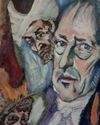
Rebwar Fatah imagines Attar's & Hegel's shared path.
4 mins
April/May 2025
Philosophy Now
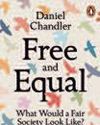
Free and Equal by Daniel Chandler
DANIEL CHANDLER, AN economist and philosopher based at the London School of Economics, begins Free and Equal: What Would a Fair Society Look Like? (2023) by asking an intriguing question. How is it, he wonders, that the most influential political philosopher of the last century has had almost no practical impact on politics or policy? The philosopher in question is John Rawls, whose magnum opus was A Theory of Justice (1971).
5 mins
April/May 2025
Translate
Change font size