
मैगज़्टर गोल्ड के साथ असीमित हो जाओ
10,000 से अधिक पत्रिकाओं, समाचार पत्रों और प्रीमियम कहानियों तक असीमित पहुंच प्राप्त करें सिर्फ
कोशिश गोल्ड - मुक्त
Shield Your Portfolio From Inflation
Kiplinger's Personal Finance
|September 2021
Use our picks to hedge against rising prices that can eat into your investment returns.

INVESTORS FEAR INFLATION in the same way Superman dreads a pile of kryptonite. Just as the mysterious substance weakened the Man of Steel, a persistent rise in prices can diminish the strength of an investment portfolio. Inflation eats into returns and reduces the buying power of assets in investment accounts, such as 401(k)s. “Inflation has a scary connotation,” says Axel Merk, president and chief investment officer of Merk Investments.
Rising prices are especially scary for retirees with larger holdings of lower-return assets, such as cash and bonds. If inflation rises 3% every year, for example, a retiree who has enough saved today to spend $50,000 a year would need just over $67,000 a year by 2031 and more than $90,000 per year by 2041 to fund the same lifestyle, according to an analysis by Kendall Capital.
Wall Street is certainly scared of inflation, at least in the short run. The reopening of the economy has created a boom as pandemic headwinds subside, with price hikes driven by supply-chain bottlenecks and product shortages at a time when pent-up consumer demand has been fueled by government stimulus checks. Following a 40-year period during which inflation was mostly in hibernation, the nation is living through the biggest spike in prices in more than a decade for stuff such as gas, groceries and used cars.
In June, the consumer price index, the government’s main measure of inflation, saw a year-over-year increase of 5.4%, the largest rise since 2008. The prices that suppliers charge businesses (so-called producer prices) also rose in June at the fastest annual pace since 2010, and employers are boosting worker pay amid a tight labor market. Fund managers now say inflation is the biggest market risk, a Bank of America Securities survey found.
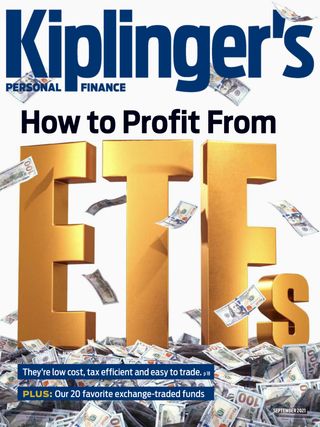

यह कहानी Kiplinger's Personal Finance के September 2021 संस्करण से ली गई है।
हजारों चुनिंदा प्रीमियम कहानियों और 10,000 से अधिक पत्रिकाओं और समाचार पत्रों तक पहुंचने के लिए मैगज़्टर गोल्ड की सदस्यता लें।
क्या आप पहले से ही ग्राहक हैं? साइन इन करें
Kiplinger's Personal Finance से और कहानियाँ

Kiplinger's Personal Finance
NAVIGATING MEDICARE ENROLLMENT
Failing to sign up on time can be a costly mistake.

2 mins
March 2026

Kiplinger's Personal Finance
HOW TO LOWER YOUR TAX BILL
The One Big Beautiful Bill Act brought a host of changes that could affect your 2025 tax return. We'll show you how to make the most of them and get other breaks that reduce what you owe-or maximize your refund.
13 mins
March 2026

Kiplinger's Personal Finance
Trim Your Child-Care Costs
Working parents can take advantage of tax breaks and local assistance programs.
5 mins
March 2026
Kiplinger's Personal Finance
Focus on Income First
EVERY reader knows I am unfazed at the sacrifice of a percentage point or two of share price or net asset value to secure a higher yield or cash distribution. That underscores my reverence for short-term high-yield bonds, packaged car leases and credit card bills, floating-rate corporate bank loans, and the many multisector and flexible exchange-traded and closed-end funds that own these assets or some of each. These investments reliably distribute upward of 5% and sometimes 7%. Add funds or ETFs that write options on stocks or stock indexes to pay out 8% or more, and you might easily overlook how the Federal Reserve has slashed the interest rate it controls to 3.5%—the low since September 2022—with further cuts to follow this year.
2 mins
March 2026

Kiplinger's Personal Finance
Cleaning Up the Paper Clutter
Once you hit retirement, keeping tax returns from decades ago can become unwieldy.
3 mins
March 2026

Kiplinger's Personal Finance
RESOLVE CONFLICTS WITH YOUR ADVISER
Knowing how to deal with a disagreement can improve both your finances and your relationship with your planner.
3 mins
March 2026

Kiplinger's Personal Finance
Longevity Advice for Women
IN recent columns, I have written about longevity literacy and the need for long-term-care planning (see “Living in Retirement,” Dec. 2025 and Feb. 2026). To see how women fit into this picture, I interviewed Maddy Dychtwald, cofounder of AgeWave, a research and consulting firm focused on aging, and author of Ageless Aging: A Woman’s Guide to Increasing Healthspan, Brainspan and Lifespan. Dychtwald interviewed dozens of researchers, scientists and physicians for her book, and these are some of her key takeaways.
2 mins
March 2026
Kiplinger's Personal Finance
MORE TOOLS TO BUILD A BOND LADDER
THE market for exchange-traded funds that help build bond ladders is growing.
1 mins
March 2026

Kiplinger's Personal Finance
MAKE LEARNING A LIFELONG AFFAIR
GOING back to live on a college campus, taking classes, and mixing and mingling with students young enough to be their grandchildren wasn't originally on Anna and Jeffry Young's retirement bingo card. Yet that's their life these days.
12 mins
March 2026

Kiplinger's Personal Finance
GREAT TRIPS FOR SOLO TRAVELERS
Planning a vacation for one? From mountain treks to wellness retreats, you can find a getaway that suits your style—and that builds in some companionship, too.
10 mins
March 2026
Translate
Change font size