कोशिश गोल्ड - मुक्त
THE F-5 AN AMERICAN TIGER
Flight Journal
|November - December 2020
We all know about jet fighters such as the Phantom, Tomcat, Eagle, Viper, Hornet, F-22, and F-35, but what about the less-covered F-5? It doesn’t seem to secure as much time basking in the spotlight. Let’s indulge ourselves.

Conceived as a private venture and initially relying on internal funding only, the Northrop F-5 “Freedom Fighter” design (N-156) was initiated in the 1950s. The goal was to provide a lightweight, inexpensive, easy-to-maintain fighter aircraft. At first, it looked like the program was going to be less than a success, but that soon changed. As the U.S. Air Force was looking for a new trainer to replace their aging T-33As at the time, the N-156T (T = trainer and redesignated as the T-38) became a natural fit, making its first flight in June of 1956. It was low cost, had a supersonic ability, and was selected to replace the legacy Shooting Stars.
The F-5 ABCs
The N-156F (F = fighter and later designated YF-5A) first took to the skies just after the T-38, in July 1956. While the T-38 was churned out, with nearly 1,200 ultimately coming off the assembly line in the end, the F-5A light fighter was only ordered in relatively small numbers by U.S. Air Force. However, the F-5A did make an excellent fit for more defensively postured small countries. Thus, foreign sales of the F-5A, along with F-5B two-seat models, blossomed in a big way, with over 25 different countries flying F-5s.
The F-5 saw action in the Vietnam conflict, and the F-5C “Skoshi Tiger” was born, locking in the “Tiger” nickname change for the F-5 series. They slapped on some armor, a refueling probe, and some additional instruments (although there were only a handful of F-5Cs made). The F-5C’s biggest shortcoming was its limited combat range, and later the F-5Cs were handed off to the Republic of Vietnam Air Force. Some of these, along with F-5A/ Bs, were later captured by the North Vietnamese after the fall of the South. There was a proposed F-5D fighter/trainer model, but it was never manufactured.
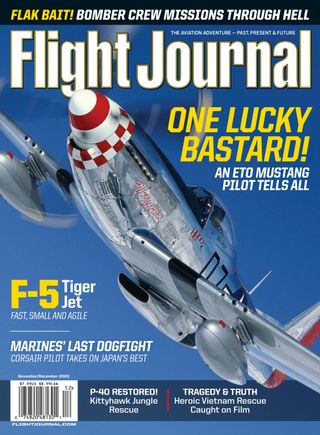

यह कहानी Flight Journal के November - December 2020 संस्करण से ली गई है।
हजारों चुनिंदा प्रीमियम कहानियों और 10,000 से अधिक पत्रिकाओं और समाचार पत्रों तक पहुंचने के लिए मैगज़्टर गोल्ड की सदस्यता लें।
क्या आप पहले से ही ग्राहक हैं? साइन इन करें
Flight Journal से और कहानियाँ
Flight Journal
DESPERATE MEASURES
Volksjäger, the Luftwaffe's last hope

10 mins
January - February 2026
Flight Journal
THE Fairey Swordfish
Antiquated, yet devastatingly effective
14 mins
January - February 2026
Flight Journal
Tuskegee RED TAILS
The men, the machines, the missions
11 mins
January - February 2026
Flight Journal
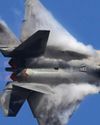
THE HIGH-VELOCITY RAPTOR
The F-22A thrust vectoring system is the “bread and butter” of the Raptor's incredible maneuvering capability.
14 mins
January - February 2026
Flight Journal
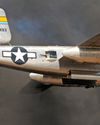
Mitchells over the Mediterranean
Wavetop warfare: skip-bombing and big guns
13 mins
January - February 2026
Flight Journal
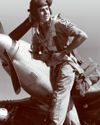
MUSTANGS OVER IWO
Inside the 506th Fighter Group's long-range missions
10 mins
January - February 2026
Flight Journal
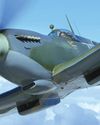
ELLIPTICAL ELEGANCE
Flying and evaluating the Seafire Mark III
4 mins
November - December 2025
Flight Journal
IRON DOG
Fighting the Pacific and the P-39 at the same time
14 mins
November - December 2025
Flight Journal
Fighter Pilots: A Warrior Clan
TAKE A HARD LOOK at the two young men in these photos. Do they look as if they were bent on killing one another? On the left we have a young, unknown enlisted Japanese pilot standing in front of a Nakajima Ki-27 \"Nate,\" one of Japan's earliest monoplanes that led to the much vaunted Zero.
3 mins
November - December 2025
Flight Journal
KEN WALSH THE FIRST CORSAIR ACE
Medal of Honor pilot's combat adventures
12 mins
November - December 2025
Translate
Change font size