
मैगज़्टर गोल्ड के साथ असीमित हो जाओ
10,000 से अधिक पत्रिकाओं, समाचार पत्रों और प्रीमियम कहानियों तक असीमित पहुंच प्राप्त करें सिर्फ
MANUFACTURING OF CARBON FIBRE
Textile Value Chain
|July 2020
Highlight of the article Carbon fibre is also called as graphite fibre. Carbon fibre was developed in the mid 1960s. It is first found by Dr. Roger Bacon. It is in the form of several long strands of materials mainly composed by carbon atoms. Each strand is 0.005-0.010mm thick in diameter. Its density is much lower than density of steel.

The raw material used to make carbon fiber is called the precursor. About 90% of the carbon fibers produced are made from polyacrylonitrile (PAN). The remaining 10% are made from rayon or petroleum pitch. All of these materials are organic polymers, characterized by long strings of molecules bound together by carbon atoms. The exact composition of each precursor varies from one company to another and is generally considered a trade secret.
During the manufacturing process, a variety of gases and liquids are used. Some of these materials are designed to react with the fiber to achieve a specific effect. Other materials are designed not to react or to prevent certain reactions with the fiber. The process for making carbon fibers is part chemical and part mechanical. The precursor is drawn into long strands or fibers and then heated to a very high temperature without allowing it to come in contact with oxygen. Without oxygen, the fiber cannot burn. Instead, the high temperature causes the atoms in the fiber to vibrate violently until most of the noncarbon atoms are expelled. This process is called carbonization and leaves a fiber composed of long, tightly interlocked chains of carbon atoms with only a few non-carbon atoms remaining.
Stabilizing
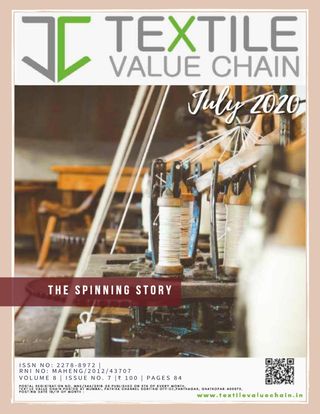

यह कहानी Textile Value Chain के July 2020 संस्करण से ली गई है।
हजारों चुनिंदा प्रीमियम कहानियों और 10,000 से अधिक पत्रिकाओं और समाचार पत्रों तक पहुंचने के लिए मैगज़्टर गोल्ड की सदस्यता लें।
क्या आप पहले से ही ग्राहक हैं? साइन इन करें
Textile Value Chain से और कहानियाँ
Textile Value Chain
EPR in Textiles: Turning Compliance into Opportunity
When the EU Comes to Panipat, It Means One Thing — The World Is Watching

3 mins
November 2025

Textile Value Chain
European Parliament Delegation Visits Panipat Recycling Cluster to Strengthen India-EU Collaboration on Circular Textiles
A high-level delegation from the European Parliament's Committee on International Trade (INTA) visited the Panipat Textile Recycling Cluster — India's largest hub for recycled textiles and circular manufacturing — during their official visit to India.
1 mins
November 2025

Textile Value Chain
Paramount Instruments: Where Innovation Turns Testing into Joy
At Paramount Instruments, innovation isn't just a Pursuit- it's in our DNA.
2 mins
November 2025
Textile Value Chain
Crafting the Future: LMW & Hami Weavelon pioneer Compact Spinning in Polyester
Manmade fibres today form the backbone of the global textile industry, driven by their versatility, performance, and ability to meet the rising demand for both everyday and specialised applications.
3 mins
November 2025

Textile Value Chain
Data is the New Thread: Weaving India's Textile Sector into a Circular Powerhouse
On November 13, 2025, at the 12th Edition of the India and Sustainability Standards (ISS) International Dialogue and Conference held at Bharat Mandapam in New Delhi, representatives from the Home Exporters Welfare Association of India (HEWA) joined industry leaders, policymakers, and international organizations to address a pressing question: How can India's textile sector meet emerging global data requirements while supporting its MSME backbone?
3 mins
November 2025

Textile Value Chain
Rieter Winding Suction Nozzle Upgrade: More Yarn, Less Energy Use
After upgrading the suction nozzles on their 32 winding machines, Sanyang Textile Co., Ltd., China, saw an increase in yarn production of 3% and a reduction of 13% in energy use. The flow-optimised, aerodynamically designed suction nozzle enables efficient upper yarn search and pickup from the package. This results in a 55% reduction in red light percentage and a significant reduction in the operator's workload.
1 mins
November 2025
Textile Value Chain
EU's Extended Producer Responsibility (EPR) Law and Its Implications for India's Textile Industry
The European Union (EU) has approved a new Extended Producer Responsibility (EPR) framework for textiles. This is a major regulatory shift that makes fashion brands and producers accountable for their products' entire lifecycle, from design and production through collection, sorting, recycling and disposal.
9 mins
November 2025

Textile Value Chain
GTE Ahmedabad 2025 Concludes Day 3 with a Huge Footfall
The 38th Garment Technology Expo (GTE) Ahmedabad 2025, co-located with the Lace & Trims Show, wrapped up its third day on an impressive note, recording around 9,700 B2B visitors. The strong industry turnout reaffirmed the expo's role as one of the most influential and business-driven platforms for garment and apparel technology in the western region.
2 mins
November 2025

Textile Value Chain
Reinterpreting Korean Street Fashion through Sustainable Design Practices
A Path through Eco-conscious Urban Fashion
7 mins
November 2025
Textile Value Chain
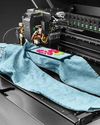
3D Printing in Textiles Manufacturing: A Game-Changer in Design, Sustainability, and Efficiency
The global textile and apparel industry is undergoing a radical transformation due to the convergence of digital design, advanced material technology, and next-generation manufacturing. Of the latter, few have greater potential to change how textiles are made today than additive manufacturing, better known as 3D printing.
5 mins
November 2025
Translate
Change font size