
मैगज़्टर गोल्ड के साथ असीमित हो जाओ
10,000 से अधिक पत्रिकाओं, समाचार पत्रों और प्रीमियम कहानियों तक असीमित पहुंच प्राप्त करें सिर्फ
HR Needs and Skills acquired-GAP Analysis for Textile Machinery segment
Textile Value Chain
|October 2020
Importance of HR & Skills in present Employment Trend and Pattern of Indian Textile Engineering Industry

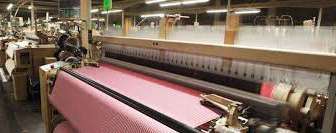
In the Indian Textile Engineering Industry the employment trend is mainly towards Marketing/ Sales of machines & spares, Consultancy (Project handling), Academia and government agencies/ bodies. It is observed that due to Modern workshops of the processes like designing, foundry, welding, cutting, bending, molding, simulation, finishing, erection, etc. of other Units like Automobiles, IT, etc. the employment shift is less towards Indian TEI, where even CNC machine units are < 25%.
HR & Skill Development needed at
a) Educational Institute level with an objective to develop a SMART Student
Today due to Digitalization and Smart manufacturing, the Technological development of Textile machines in metallurgy, design, process, IT, Computerization, etc. are taking place frequently, overcoming the traditional trend of displaying these developments during ITMA, once in 4 years. Such frequently changing technological developments cannot be involved /adopted in the regular syllabus, but can be further updated to the students through following initiatives at appropriate intervals, helping him to be a SMART Student :-
i) Visits of students to International exhibitions,
ii) Guest lecturers of Industry Experts to Institutes,
iii) Visits of students to state-of-the-art Factories with latest technology machines,
iv) Portable Technical Clinics involving machine manufacturers and Industry Experts,
v) Technology Display Centres in the Institutes through tie-ups with machine manufacturers,
vi) Whats app technology group of students roping in machine manufacturers, Industry Experts and R & D Institutes/ Associations,


यह कहानी Textile Value Chain के October 2020 संस्करण से ली गई है।
हजारों चुनिंदा प्रीमियम कहानियों और 10,000 से अधिक पत्रिकाओं और समाचार पत्रों तक पहुंचने के लिए मैगज़्टर गोल्ड की सदस्यता लें।
क्या आप पहले से ही ग्राहक हैं? साइन इन करें
Textile Value Chain से और कहानियाँ
Textile Value Chain
EPR in Textiles: Turning Compliance into Opportunity
When the EU Comes to Panipat, It Means One Thing — The World Is Watching

3 mins
November 2025

Textile Value Chain
European Parliament Delegation Visits Panipat Recycling Cluster to Strengthen India-EU Collaboration on Circular Textiles
A high-level delegation from the European Parliament's Committee on International Trade (INTA) visited the Panipat Textile Recycling Cluster — India's largest hub for recycled textiles and circular manufacturing — during their official visit to India.
1 mins
November 2025

Textile Value Chain
Paramount Instruments: Where Innovation Turns Testing into Joy
At Paramount Instruments, innovation isn't just a Pursuit- it's in our DNA.
2 mins
November 2025
Textile Value Chain
Crafting the Future: LMW & Hami Weavelon pioneer Compact Spinning in Polyester
Manmade fibres today form the backbone of the global textile industry, driven by their versatility, performance, and ability to meet the rising demand for both everyday and specialised applications.
3 mins
November 2025

Textile Value Chain
Data is the New Thread: Weaving India's Textile Sector into a Circular Powerhouse
On November 13, 2025, at the 12th Edition of the India and Sustainability Standards (ISS) International Dialogue and Conference held at Bharat Mandapam in New Delhi, representatives from the Home Exporters Welfare Association of India (HEWA) joined industry leaders, policymakers, and international organizations to address a pressing question: How can India's textile sector meet emerging global data requirements while supporting its MSME backbone?
3 mins
November 2025

Textile Value Chain
Rieter Winding Suction Nozzle Upgrade: More Yarn, Less Energy Use
After upgrading the suction nozzles on their 32 winding machines, Sanyang Textile Co., Ltd., China, saw an increase in yarn production of 3% and a reduction of 13% in energy use. The flow-optimised, aerodynamically designed suction nozzle enables efficient upper yarn search and pickup from the package. This results in a 55% reduction in red light percentage and a significant reduction in the operator's workload.
1 mins
November 2025
Textile Value Chain
EU's Extended Producer Responsibility (EPR) Law and Its Implications for India's Textile Industry
The European Union (EU) has approved a new Extended Producer Responsibility (EPR) framework for textiles. This is a major regulatory shift that makes fashion brands and producers accountable for their products' entire lifecycle, from design and production through collection, sorting, recycling and disposal.
9 mins
November 2025

Textile Value Chain
GTE Ahmedabad 2025 Concludes Day 3 with a Huge Footfall
The 38th Garment Technology Expo (GTE) Ahmedabad 2025, co-located with the Lace & Trims Show, wrapped up its third day on an impressive note, recording around 9,700 B2B visitors. The strong industry turnout reaffirmed the expo's role as one of the most influential and business-driven platforms for garment and apparel technology in the western region.
2 mins
November 2025

Textile Value Chain
Reinterpreting Korean Street Fashion through Sustainable Design Practices
A Path through Eco-conscious Urban Fashion
7 mins
November 2025

Textile Value Chain
3D Printing in Textiles Manufacturing: A Game-Changer in Design, Sustainability, and Efficiency
The global textile and apparel industry is undergoing a radical transformation due to the convergence of digital design, advanced material technology, and next-generation manufacturing. Of the latter, few have greater potential to change how textiles are made today than additive manufacturing, better known as 3D printing.
5 mins
November 2025
Translate
Change font size