कोशिश गोल्ड - मुक्त
H uncovered
Racecar Engineering
|July 2021
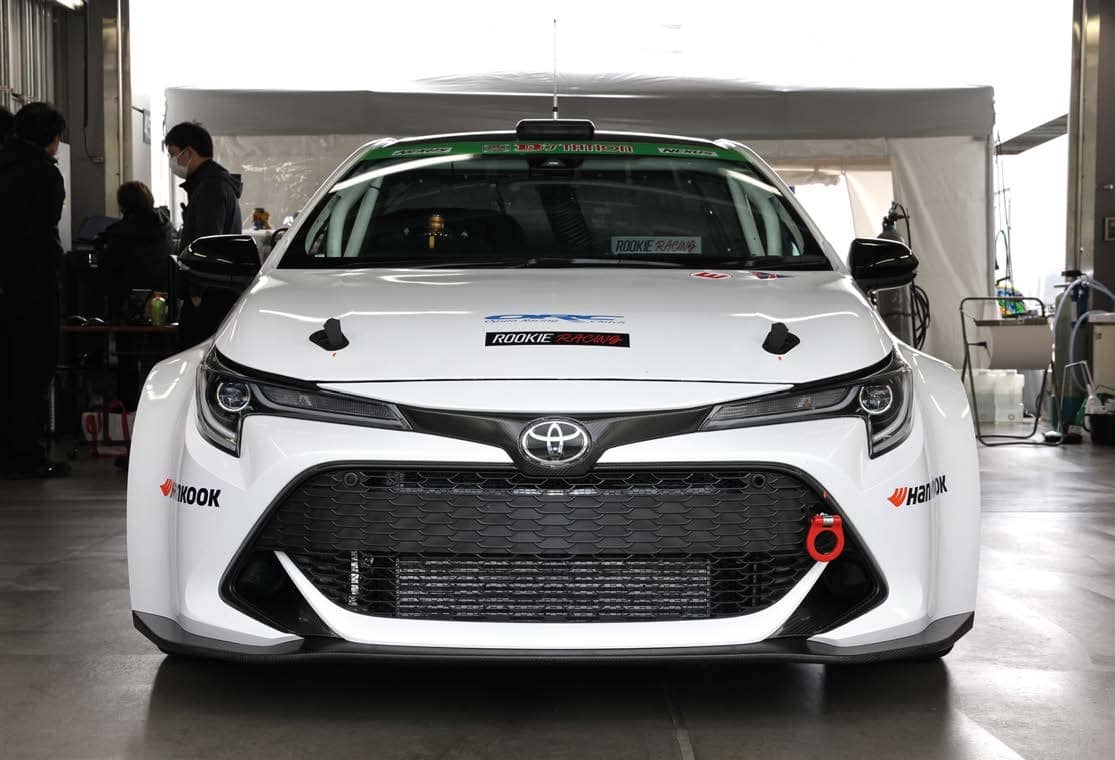
Toyota entered a hydrogen-powered racecar in the Super Taiku 24-hour race at Fuji as it seeks to prove the long-term future of the ICE

As the motoring world starts to home in on solutions to what will fuel our transport needs in the future, Toyota has opted to create a hydrogen-powered Corolla Sport, which was given its public competition debut by Rookie Racing in the Super Taiku 24-hour race at Fuji at the end of May.
The car, powered by an internal combustion engine using hydrogen fuel, was driven by the company owner, Akiyo Toyoda, whose plan it was to prove the fuel is safe and that, contrary to popular belief in Japan, he would not be blown up in the process.
Fuel cell electrified vehicles, such as Toyota’s Mirai, use a fuel cell in which hydrogen chemically reacts with oxygen in the air to produce electricity that powers an electric motor. Hydrogen engines generate power through the combustion of hydrogen using fuel supply and injection systems modified from those used in petrol engines.
Combustion in hydrogen engines occurs at a faster rate than petrol engines – Toyota has calculated it at eight times faster. While this will reduce stint times in a racecar environment, despite using compressed hydrogen in the fuel cell, it means there is power available even from low down the rev range, giving excellent throttle response.
Hidden potential

यह कहानी Racecar Engineering के July 2021 संस्करण से ली गई है।
हजारों चुनिंदा प्रीमियम कहानियों और 10,000 से अधिक पत्रिकाओं और समाचार पत्रों तक पहुंचने के लिए मैगज़्टर गोल्ड की सदस्यता लें।
क्या आप पहले से ही ग्राहक हैं? साइन इन करें
Racecar Engineering से और कहानियाँ

Racecar Engineering
Talk the torque
More thoughts on in-wheel motors and their effects on twisting force

6 mins
December 2021

Racecar Engineering
Rolling about
An explanation of the limitations of a previous load transfer article, bringing jacking forces into the mix
5 mins
December 2021

Racecar Engineering
F1 breaks schedule records
The FIA has confirmed no fewer than 23 races on the 2022 Formula 1 World Championship schedule, the highest number of grands prix ever to be held in a single season, and that has led to criticism from some teams that will be on the road for eight months.
1 mins
December 2021

Racecar Engineering
Under pressure
Toyota may have finished first and second at Le Mans this year, but the effort required to overcome a fuel delivery problem and finish with both cars was Herculean
12 mins
December 2021
Racecar Engineering
Physics at work
Dutch company, Intrax, offers Racecar Engineering an insight into the technologies it employs to optimise its suspension products
4 mins
December 2021

Racecar Engineering
Williams' 2030 ambition
Williams Racing has committed to becoming climate positive by 2030 as part of an all-new sustainability strategy.
1 min
December 2021

Racecar Engineering
Diff'rent strokes
Racecar looks at the different types of mechanical differential, their benefits and limitations
14 mins
December 2021

Racecar Engineering
Das Boot
A curious Twitter exchange fired up a unique, hydrogen-powered, cross-country project that will contest the Baja 1000 in November 2022
8 mins
December 2021

Racecar Engineering
Air born
Every racecar engineer's dream is a blank sheet of paper design. When Hoonigan and Subaru approached Vermont Sportscars about building the next generation of Gymkhana racer, that's just what the company was given
8 mins
December 2021
Racecar Engineering
Remote control
Called variously ‘virtual garages’, ‘mission control’ or ‘race support rooms’ is the future of race engineering sitting in the warm back at HQ?
14 mins
December 2021
Translate
Change font size