
मैगज़्टर गोल्ड के साथ असीमित हो जाओ
10,000 से अधिक पत्रिकाओं, समाचार पत्रों और प्रीमियम कहानियों तक असीमित पहुंच प्राप्त करें सिर्फ
कोशिश गोल्ड - मुक्त
DIESEL MATH
Diesel World
|December 2020
UNDERSTANDING THE NUMBERS BEHIND COMPRESSION-IGNITION

Diesel guys are number guys whether they know it or not. You’ll see the Big Three touting numbers in all of their ad campaigns: best in class towing, most torque, highest horsepower. In a day of little turbo economy cars, diesel numbers are almost always big. For many aftermarket enthusiasts, 500 rear-wheel horsepower and 1,000lb-ft of torque is sort of the starting performance benchmark. Whether you’re good at math or not, numbers infiltrate virtually every aspect of the diesel market, so let’s have a look at them! We promise to try and keep it basic.
ENGINE DISPLACEMENT
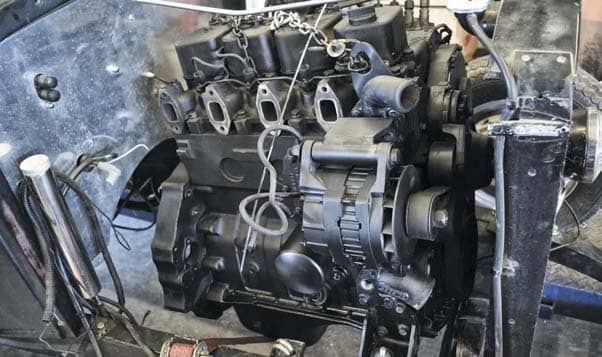
Almost all of the diesel engines we work within the performance industry are large, but if there’s a displacement you can’t place (or you’re talking to an old hot rod guy) you can mix liters and cubic inches by taking the size in cubic centimeters (5.9L for instance = 5900cc) and dividing it by 16.38. This gives us 360.2 cubic inches. That means an 8.3L (8300cc) is 506 cid, and a 1.9L TDI is a tiny 116 cubic inches. It may be off by a decimal place or two, but the cubic inch to cubic centimeter can be helpful in everything from calculating airflow to sizing turbos, since most American hot rod math is non-metric.
AIRFLOW

यह कहानी Diesel World के December 2020 संस्करण से ली गई है।
हजारों चुनिंदा प्रीमियम कहानियों और 10,000 से अधिक पत्रिकाओं और समाचार पत्रों तक पहुंचने के लिए मैगज़्टर गोल्ड की सदस्यता लें।
क्या आप पहले से ही ग्राहक हैं? साइन इन करें
Diesel World से और कहानियाँ

Diesel World
SEEING 2020
EMISSIONS FRIENDLY UPGRADES FOR THE 2020 DURAMAX

5 mins
November 2021

Diesel World
WHY THE CP4.2 FAILS
AND HOW YOU CAN KEEP YOURS OFF THE SCRAP PILE
2 mins
November 2021

Diesel World
FLASHBACK! SEMA 2018
THE MEGA TRUCKS ARE HERE!
2 mins
November 2021

Diesel World
LOOKS, SOUNDS, AND RUNS LIKE A DEERE
AN 800HP LBZ DURAMAX BUILT TO DO ONE THING— AND ONE THING ONLY
4 mins
November 2021

Diesel World
LITTLE ORANGE
1961 ALLIS-CHALMERS D-15 SERIES I
4 mins
November 2021

Diesel World
THE GAME CHANGER
INSIDE DHD’S RECORD-SETTING DURAMAX
2 mins
November 2021

Diesel World
DINOSAURS AREN'T EXTINCT
BRIAN JELICH’S TRAILBLAZING, 5.90 INDEX-RACING 7.3L POWER STROKE
4 mins
November 2021

Diesel World
FAMILY FARM TRUCK
JEREMY SCHMIDT’S 1948 CUMMINS-POWERED CHEVROLET LOADMASTER
4 mins
November 2021

Diesel World
BLACK HOLE CUMMINS
1964 CUMMINS VT12-825-M
4 mins
November 2021

Diesel World
KNOW YOUR 6.0L
THE KEY DIFFERENCES BETWEEN EARLY AND LATE MODEL ’03-’07 POWER STROKES
10 mins
August 2021
Translate
Change font size