
मैगज़्टर गोल्ड के साथ असीमित हो जाओ
10,000 से अधिक पत्रिकाओं, समाचार पत्रों और प्रीमियम कहानियों तक असीमित पहुंच प्राप्त करें सिर्फ
THE $80 MILLION QUESTION
BBC Wildlife
|April 2021
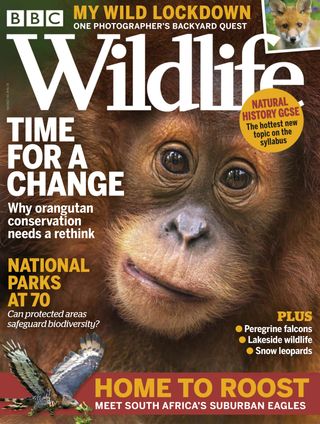
The world spends a huge amount of money on orangutan conservation every year but their numbers are still declining. What’s going on, why isn’t palm oil to blame and what can we do to arrest the downward curve?

According to Erik Meijaard, a conservation scientist who has been working for almost 30 years in South-East Asia, the world spends $80 million (about £60 million) a year on orangutan conservation. Erik and a number of colleagues are currently trying to determine exactly where this money goes. “We are looking at who is spending it – governments, NGOs, research organisations, sanctuaries, oil and timber companies, where the money comes from and what it is being invested in, and whether we can link that spending to local orangutan population trends,” he tells me during a video call from Brunei, where he lives for much of the year.
Though Erik’s research is unfinished, there’s one thing he can say with certainty. “What is clear is that we are spending all that money but we are still losing orangutans.” In other words, it’s not working.
Orangutans live on the Indonesian islands of Borneo and Sumatra, and are correspondingly separate species. There is also a third species, the Tapanuli orangutan, also found on Sumatra (see p55). Here are the broad-brush figures: in 2016, the IUCN estimated Bornean orangutan numbers at just over 100,000 (a figure forecast to drop to 47,000 by 2025), with about 15.5 million hectares of available habitat. Sumatran orangutans, in contrast, are considerably rarer, with an estimated 14,000 individuals contained within a much smaller area, mainly the Leuser Ecosystem, a 2.6 million hectare swathe (that’s 1.3 times the size of Wales) of rainforest in the island’s north.
Borneo and Sumatra may be very different in terms of the status and conservation of their resident orangutans, but they do have one thing in common: neither are having much success in safeguarding these apes.

यह कहानी BBC Wildlife के April 2021 संस्करण से ली गई है।
हजारों चुनिंदा प्रीमियम कहानियों और 10,000 से अधिक पत्रिकाओं और समाचार पत्रों तक पहुंचने के लिए मैगज़्टर गोल्ड की सदस्यता लें।
क्या आप पहले से ही ग्राहक हैं? साइन इन करें
BBC Wildlife से और कहानियाँ
BBC Wildlife
"I was terrified the elephant would ram us"
African elephant in Kenya

2 mins
January 2026
BBC Wildlife
ALL YOU EVER NEEDED TO KNOW ABOUT THE Fennec fox
THE FENNEC FOX IS THE SMALLEST fox in the world, with a body length that can be as little as 24cm.
3 mins
January 2026

BBC Wildlife
INTO THE PLASTISPHERE
A unique synthetic ecosystem is evolving in our oceans – welcome to the plastisphere
7 mins
January 2026

BBC Wildlife
“More than half of all animal life exists in a parasitic relationship, and all life lives in symbiosis”
Our survival depends on species evolving to live together - but some relationships take dark turns
7 mins
January 2026
BBC Wildlife
Are animals able to dream?
SLEEP IS A MYSTERIOUS THING. FOR A long time, we weren't sure why we do it.
1 mins
January 2026

BBC Wildlife
Does a cuckoo know it's a cuckoo?
ABSURD LITTLE BIRDS ACROSS THE world lay their eggs in the nests of other species, leaving the hapless parents to raise a changeling at the expense of their own offspring.
2 mins
January 2026
BBC Wildlife
Orcas killing young sharks
Juvenile great whites are easy prey for orca pod
1 mins
January 2026
BBC Wildlife
Ocean goes on tour
Acclaimed film touring the UK, backed by live orchestra and choir
1 min
January 2026
BBC Wildlife
Feisty bats hunt like lions
Winged mammals use a 'hang and wait' strategy to take down large prey
1 mins
January 2026

BBC Wildlife
SNAP-CHAT
Richard Birchett on magical merlins, wily coyotes and charging deer
2 mins
January 2026
Translate
Change font size