Essayer OR - Gratuit
The Evolution of Al: From Rule-Based Systems to Neural Networks
Tech AI Magazine
|January 2026
Artificial intelligence, or Al, is a buzzword that's everywhere-from your smartphone's voice assistant to streaming service recommendations, and increasingly in tools that shape how we create, work, and even think. But what exactly is Al? More importantly, how did we get from the early days of computers "thinking" in rigid ways to today's complex neural networks that can generate art, write stories, or assist in medical diagnoses? If you're a tech user curious about Al's inner workings, this article walks you through the evolution of Al-breaking down foundational concepts with clear examples and analogies that connect to your daily experiences.
-
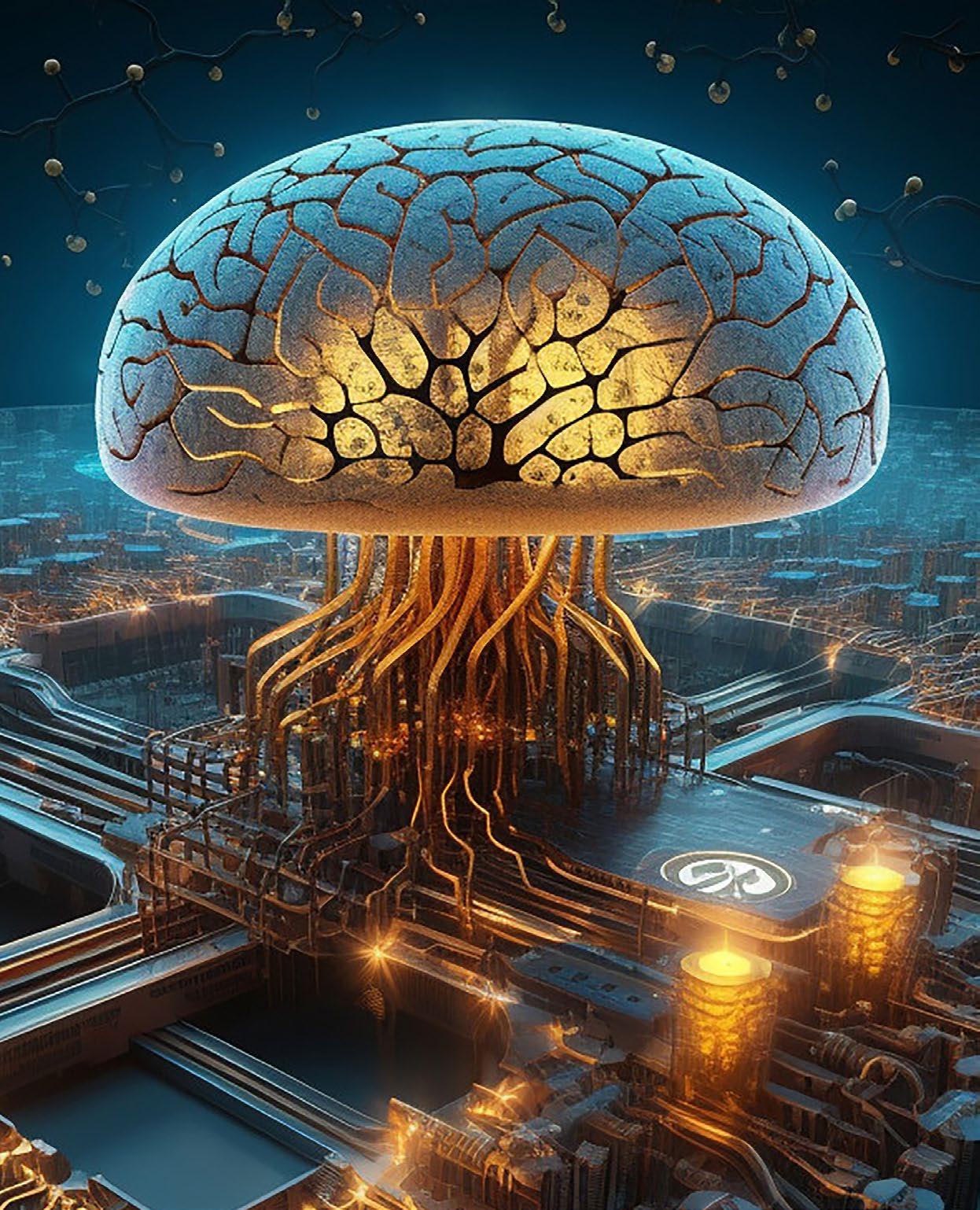
By the end, you'll have a better grasp of how AI evolved over decades and why these shifts matter in the way technology integrates into our lives.
Starting Point: The Age of Rule-Based Systems
To understand where AI is today, let's rewind to its beginnings. In the 1950s and 60s, computer scientists were excited about creating "thinking machines." Their initial approach focused on rule-based systems. Imagine you're trying to teach a computer chess. Early AI didn't learn the game by playing millions of rounds. Instead, experts would encode a set of rules-if the opponent moves a bishop to this position, respond with a knight here, and so on. These rules were painstakingly handcrafted by human programmers.
 Think of it like a recipe book. Each step in the recipe is explicit: add this amount of flour, then mix, then bake at 350 degrees. The rule-based system is a recipe for "decision-making" - it follows explicit instructions mapped out line by line. The advantage? The system's behavior is predictable and easy to debug. But the main limitation is obvious: the system can only handle situations the programmer anticipated. Any scenario outside those rules? The AI is clueless.
This might remind you of early GPS navigation devices from the 90s. They gave turn-by-turn directions, but if roads changed or traffic patterns shifted, the device couldn't adapt unless someone updated the maps manually. Rule-based AI is exactly this kind of system-rigid, static, and dependent on clear instructions from humans.
The Challenge of Complexity: When Rules Fall Short


Cette histoire est tirée de l'édition January 2026 de Tech AI Magazine.
Abonnez-vous à Magzter GOLD pour accéder à des milliers d'histoires premium sélectionnées et à plus de 9 000 magazines et journaux.
Déjà abonné ? Se connecter
PLUS D'HISTOIRES DE Tech AI Magazine

Tech AI Magazine
lonQ's Acquisition of Seed Innovations Accelerates Quantum-AI Integration
In a strategic acquisition announced in January 2026, quantum computing leader lonQ acquired Seed Innovations, a specialist in AI software and technology R&D, reinforcing the convergence of quantum computing and AI.

1 min
February 2026

Tech AI Magazine
Novel 'Test-Time Matching' Technique Enables AI Models to Self-Improve Post-Training
A breakthrough training technique called \"Test-Time Matching,\" announced in January 2026, lets AI models improve inference accuracy dynamically using new input data without additional retraining.
1 min
February 2026

Tech AI Magazine
10 Featured AI Prompts for Creating Research Proposals
Crafting a compelling research proposal can be daunting, but AI-driven prompts can revolutionize your approach.
6 mins
February 2026

Tech AI Magazine
Essential AI Reads: February 2026
DEEP READING
3 mins
February 2026

Tech AI Magazine
Can AI Help Me with That ?
David's Dilemma: Can AI Screening Tools Be Trusted in Recruitment? This month, we cover an interesting question from our avid reader David.
3 mins
February 2026

Tech AI Magazine
The 2026 AI Model Competitive Landscape: Leaders and Trends Across Text, Code, Image, Video, and Search
As artificial intelligence matures into an indispensable technology across industries, understanding the current competitive landscape of AI models is crucial for practitioners, enterprises, and innovators alike. The year 2025 brings a compelling mix of cutting-edge breakthroughs and practical solutions across five pivotal AI categories: text generation, code generation, creative image and video generation, and AI-powered information retrieval. This analysis synthesizes the latest benchmark data to identify top performers, evaluate key metrics, spotlight leading organizations, and highlight the industry dynamics shaping AI today.
3 mins
February 2026

Tech AI Magazine
Top 10 AI Tools for Video Editors
10 BEST AIs
5 mins
February 2026

Tech AI Magazine
How to Launch a One-Person AI-Powered Business
Starting a business solo has never been easier—or more exciting—than in 2026, thanks to artificial intelligence. Industry data shows that small businesses leveraging Al tools can boost revenue by up to 40% in the first year (McKinsey, 2025). One-person Al-powered ventures are thriving, enabling solo entrepreneurs to automate everything from marketing and customer support to product creation.
5 mins
February 2026

Tech AI Magazine
Latest AI Courses Launched in February 2026: Upskilling for the AI Era
As AI technology rapidly evolves, January 2026 has seen the launch and update of several cutting-edge AI courses that cater to a wide range of learners—from beginners to advanced practitioners, developers, creatives, and business professionals.
3 mins
February 2026

Tech AI Magazine
Hottest Tech Gadgets in February 2026
AI GADGETS
6 mins
February 2026
Listen
Translate
Change font size