
Passez à l'illimité avec Magzter GOLD
Obtenez un accès illimité à plus de 9 000 magazines, journaux et articles Premium pour seulement
Essayer OR - Gratuit
A Complete Guide to Deploying Java Applications in Docker
Open Source For You
|July 2025
Explore the entire life cycle of deploying Java applications via Docker -- from understanding the basics and writing the initial Dockerfile to building container images and managing complex multi-container deployments using Docker Compose. You can use this guide to streamline the deployment pipeline of a Spring Boot microservice, a traditional Java SE program, and even an enterprise web application.
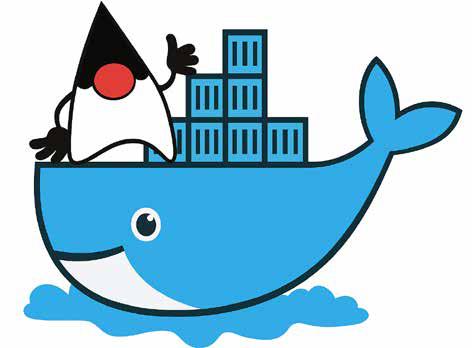
Consistency, scalability, and portability have become must-haves in software development. Because of Java’s robustness, platform independence, and vast ecosystem, it has been the cornerstone of enterprise and backend applications. But rolling out Java applications on multiple environments -- develop, test, and production --can cause dependency hell among other issues.
Docker offers a new method of containerisation on the packaging and delivery end. It wraps a Java application with its dependencies in a thin container that is portable and can be run anywhere -- on a local machine, in some test environment, or on a cloud-hosted production server.
The problem that Docker solves
An all-too common and annoying problem for the software developer is: “It works on my machine.” The Java application may be working flawlessly on the developer’s system, say with JDK 17 on macOS, but in QA or production it may be misbehaving according to different platform OSs and Java versions. Such variations break builds, or improperly configure sources or runtime situations.
These could be environment-related bugs -- the worst kind to locate and fix. Teams spend hours establishing how an issue can be replicated; in fact, it’s not really because of faulty code but an inconsistent setup. This slows development cycles, delaying releases, and increasing deployment risks.
Docker resolves all that by allowing developers to pack the Java application with the specific runtime, libraries, environment variables and configurations into the container image that simply runs the same way in any environment where Docker is installed --however inefficiently configured it may be in development, test, and production instruments.

Cette histoire est tirée de l'édition July 2025 de Open Source For You.
Abonnez-vous à Magzter GOLD pour accéder à des milliers d'histoires premium sélectionnées et à plus de 9 000 magazines et journaux.
Déjà abonné ? Se connecter
PLUS D'HISTOIRES DE Open Source For You

Open Source For You
Sending IoT Sensor Data to Public or Private Servers
This IoT system shows a simple and effective way to send sensor data using an ESP8266 microchip.

3 mins
March 2026

Open Source For You
Popular FOSS Tools for LLM Observability, Monitoring and Evaluation
This overview of popular tools for monitoring large language models also sheds light on how LLM-as-a-judge enhances their performance.
2 mins
March 2026
Open Source For You
Data Deduplication Done the Right Way
Deduplication helps to save space on Linux-based storage systems. Choose the right platform and check whether it meets your goals.
6 mins
March 2026

Open Source For You
The Relevance of Rubber Duck Debugging in the Age of AI
Discover why rubber duck debugging is a powerful process today. There's also a step-by-step guide on how to use it in the age of artificial intelligence.
4 mins
March 2026
Open Source For You
GitHub weighs turning off pull requests as AĬ slop floods projects
GitHub has formally acknowledged that AI-generated 'slop' is overwhelming open source projects, forcing maintainers to sift through poor pull requests (PRS), abandoned submissions and guideline violations - and is now considering restricting or even disabling pull requests, the core mechanism of open collaboration.
1 min
March 2026

Open Source For You
Global banks are deploying Ethereum's Layer-2 stack
Banks are standardising on Ethereum's open source stack as production financial infrastructure, shifting from experimental pilots and proprietary blockchains to live Layer-2 networks for tokenised deposits, interbank payments, and cross-border settlement.
1 min
March 2026

Open Source For You
OpenClaw's creator joins OpenAl
In a move that reinforces its commitment to open development rather than acquisition, OpenAI has brought Peter Steinberger, founder of OpenClaw, into the company while placing the popular AI agent under a foundation structure to ensure it remains open source.
1 min
March 2026
Open Source For You
LibreOffice 26.2 comes with native Markdown support
LibreOffice 26.2 has been released by The Document Foundation, strengthening its position as a fully free and open source office suite for Windows, macOS, and Linux, with support for more than 120 languages.
1 min
March 2026

Open Source For You
Indian government mandates labelling of Al-generated content and quicker deletion of illegal deepfakes
India has introduced sweeping AI content rules that immediately place pressure on social platforms and open source AI ecosystems to label, trace and rapidly remove AI Open ource synthetic media at scale.
1 min
March 2026
Open Source For You
I2C and I3C: How Modern Devices Communicate
I3C and I2C are both two-wire communication protocols that help exchange data between multiple devices. While I3C preserves the simplicity of I2C, it introduces new features suited for today's sensor-rich devices.
8 mins
March 2026
Listen
Translate
Change font size