Essayer OR - Gratuit
INNOVATIVE SMART METERING INFRASTRUCTURE MAKING CITIES SMART
EPR Magazine (Electrical & Power Review)
|January 2025
Despite persisting challenges, the smart meters industry is crucial in enhancing grid efficiency and stability by optimising energy distribution, reducing congestion, and supporting renewable energy integration through real-time data analysis.
-
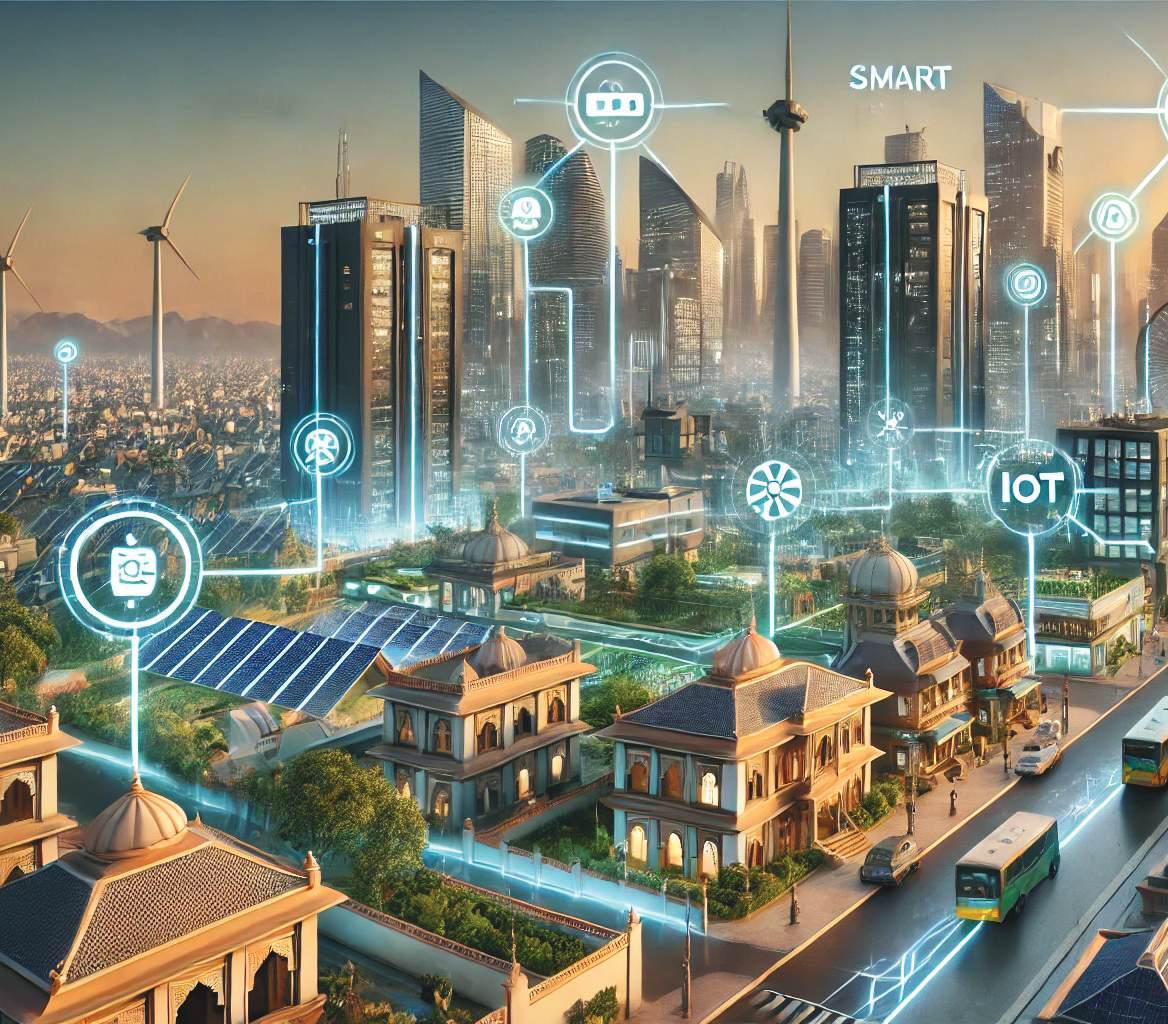
As India rapidly urbanises and the demand for efficient energy management intensifies, adopting innovative technologies like Radio Frequency Energy Harvesting (RFEH) and Wi-SUN presents promising solutions for modernising the nation’s smart metering infrastructure. In today’s scenario, these technologies offer the potential to address key challenges in deploying smart meters, which are integral components of smart grids, enabling real-time monitoring of energy consumption, optimising distribution, and enhancing grid stability. RFEH, which harnesses ambient radio frequency energy from telecom towers and other devices, offers a sustainable power source for low-energy IoT devices, including smart meters, reducing reliance on traditional power sources and minimising maintenance costs. Regulatory challenges hinder its widespread deployment, such as the need for spectrum clearance from the Wireless Planning and Coordination (WPC) Wing.
In tandem with RFEH, Wi-SUN technology can significantly enhance the scalability and reliability of smart metering systems. By providing a robust mesh network architecture, Wi-SUN ensures continuous communication across urban areas, supporting the seamless transmission of data and enhancing connectivity. Combining RFEH with Wi-SUN can lead to more sustainable and self-sustaining smart metering networks, offering a scalable solution for urban India.
While integrating these technologies still faces technical and regulatory hurdles, industry leaders analyse the transformative potential of smart meters in driving efficient energy management, improving grid operations, and supporting the transition to a smart, sustainable energy future in India.
Adoption of Radio Frequency Energy Harvesting (RFEH) and Wi-SUN Technologies


Cette histoire est tirée de l'édition January 2025 de EPR Magazine (Electrical & Power Review).
Abonnez-vous à Magzter GOLD pour accéder à des milliers d'histoires premium sélectionnées et à plus de 9 000 magazines et journaux.
Déjà abonné ? Se connecter
PLUS D'HISTOIRES DE EPR Magazine (Electrical & Power Review)

EPR Magazine (Electrical & Power Review)
GREW Solar partners with Mumbai Indians, Gujarat Titans for the T20 Season
GREW Solar backed by the Ahmedabad-based Chiripal Group, announced its partnership with Mumbai Indians and Gujarat Titans as Official Solar Energy Partner for the upcoming Men's T20 cricket season.

1 mins
April 2026

EPR Magazine (Electrical & Power Review)
Cummins pioneering digital integration of BESS for grid resilience
BESS is increasingly being deployed to support both customer operations and broader grid resilience.
2 mins
April 2026

EPR Magazine (Electrical & Power Review)
Secure: Shaping a better tomorrow with innovation, reliability and sustainability
Solutions such as eAudit Distribution support energy accounting and loss monitoring, while eWatch enhances visibility for SMEs.
2 mins
April 2026

EPR Magazine (Electrical & Power Review)
Energy transition beyond the grid
While the shift to renewables is necessary, it also increases dependence on global supply chains.
2 mins
April 2026

EPR Magazine (Electrical & Power Review)
Power minister unveils 200 lakh crore investment potential
The minister inaugurated Bharat Electricity Summit 2026, held recently in New Delhi, a four-day global Conference-cum-Exhibition which saw more than 100 high-level conference sessions featuring over 300 speakers, representatives from more than 80 countries, over 500 exhibitors, including over 100 startups and more than 25,000 visitors.
3 mins
April 2026

EPR Magazine (Electrical & Power Review)
HPL strengthens consumer business to drive future revenue
In the wires segment, we are launching products for the solar category, and in the lighting segment, we are introducing digital DBS and high-rating DC MCBs.
2 mins
April 2026

EPR Magazine (Electrical & Power Review)
Siemens focuses on FACTS to help utilities maintain grid stability
With electricity demand projected to rise sharply and peak demand expected to reach 459 GW, grid-stabilisation technologies will play a critical role.
2 mins
April 2026

EPR Magazine (Electrical & Power Review)
BESS emerges as a core building block of a flexible power system
As renewable capacity expands rapidly, the timely development of transmission infrastructure and grid modernisation becomes increasingly important.
3 mins
April 2026

EPR Magazine (Electrical & Power Review)
The hidden reliability challenge in advanced solar modules
The solar giant, RAYZON SOLAR, decided to evolve with an encapsulant that would have less moisture ingress, thereby reducing the chances of corrosion at the cell level, and to devise quick screening techniques to measure the damage cells can incur from corrosion.
2 mins
April 2026

EPR Magazine (Electrical & Power Review)
ANDRITZ expands Indian footprint with Tata Power's 1000 MW Bhivpuri Pumped Storage Project
Under the contract, ANDRITZ will supply three state-of-the-art reversible pump turbines, motor-generators, and associated electromechanical equipment.
2 mins
April 2026
Listen
Translate
Change font size