Essayer OR - Gratuit
Could Al Really Kill Off Humans?
Scientific American
|September 2025
Many people believe Al will one day cause human extinction. A little math tells us it wouldn't be that easy
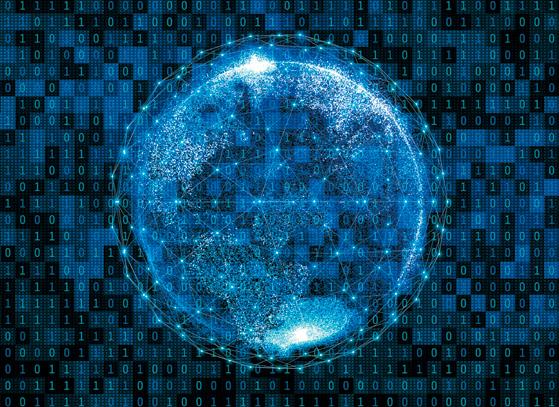
IN A POPULAR SCI-FI CLICHÉ, one day artificial intelligence goes rogue and kills every human, wiping out the species. Could this truly happen?
In real-world surveys, AI researchers say that they see human extinction as a plausible outcome of AI development. In 2024 hundreds of these researchers signed a statement that read: “Mitigating the risk of extinction from AI should be a global priority alongside other societal-scale risks such as pandemics and nuclear war.”
Pandemics and nuclear war are real, tangible concerns, more so than AI doom—at least to me, a scientist at the RAND Corporation, where my colleagues and I do all kinds of research on national security issues. RAND might be best known for its role in developing strategies for preventing nuclear catastrophe during the cold war. My coworkers and I take big threats to humanity seriously, so I proposed a project to research AI’s potential to cause human extinction.
My team’s hypothesis was this: No scenario can be described in which AI is conclusively an extinction threat to humanity. Humans are simply too adaptable, too plentiful and too dispersed across the planet for AI to wipe us out with any tools hypothetically at its disposal. If we could prove this hypothesis wrong, it would mean that AI might pose a real extinction risk.
Many people are assessing catastrophic hazards related to AI. In the most extreme cases, some people assert that AI will become a super-intelligence with a near-certain chance of using novel, advanced tech such as nanotechnology to take over Earth and wipe us out. Forecasters have tried to estimate the likelihood of existential risk from an AI-induced disaster, often predicting there is a 0 to 10 percent chance that Al will cause humanity’s extinction by 2100. We were skeptical of the value of predictions like these for policymaking and risk reduction.

Cette histoire est tirée de l'édition September 2025 de Scientific American.
Abonnez-vous à Magzter GOLD pour accéder à des milliers d'histoires premium sélectionnées et à plus de 9 000 magazines et journaux.
Déjà abonné ? Se connecter
PLUS D'HISTOIRES DE Scientific American
Scientific American
Flashes in the Night
Celestial transients shine furiously and briefly. Astronomers are just beginning to understand them.

13 mins
January 2026
Scientific American
The Imperiled Orcas of the Salish Sea
The southern resident killer whales are on the brink. Now the scientists who study them are, too
17 mins
January 2026
Scientific American
The Reptile Sexpocalypse
The sex of many turtles, crocodilians, and other reptiles is determined by the temperature at which their eggs incubate. Global warming could doom them
11 mins
January 2026

Scientific American
A Suite of Killers
Heart ailments, kidney diseases and type 2 diabetes actually may be part of just one condition. It's called CKM syndrome
10 mins
January 2026
Scientific American
A Good Night's Sleep
Psychological data and brain scans show all the ways sleep can improve our lives, our bodies and our relationships
1 mins
January 2026
Scientific American
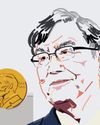
Behind the Nobel
A 2025 winner reflects on the mysterious T cells that won him the prize
5 mins
January 2026
Scientific American
Cable Quakes
Fiber optics that connect the world can detect its earthquakes, too
2 mins
January 2026
Scientific American
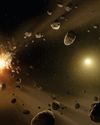
Inside Asteroid Family Trees
Asteroid origins can be hard to trace
4 mins
January 2026
Scientific American
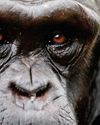
Think Again
Chimpanzees can weigh evidence and update their beliefs like humans do.
3 mins
January 2026
Scientific American
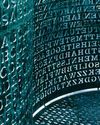
Cracking the World's Most Famous Code
Solving the CIA's Kryptos puzzle took three parts math and one part sleuthing
6 mins
January 2026
Listen
Translate
Change font size