Essayer OR - Gratuit
THE POWER OF WATER
How It Works UK
|Issue 195
We're hooked on fossil fuels. But hydroelectric power is becoming an increasingly important replacement for coal and oil

Hydroelectric power meets around 15 per cent of the world’s electricity needs, supplying about a billion people with power – that’s comparable to 3.6 billon barrels of oil. The importance of hydropower will grow over the coming decade, with a huge number of major schemes currently under construction – as of February 2024, there are at least five in China alone. It means that although our reliance on fossil fuels is still significant – it’s a hard addiction to crack, after all – hydropower is helping us decrease our dependence.
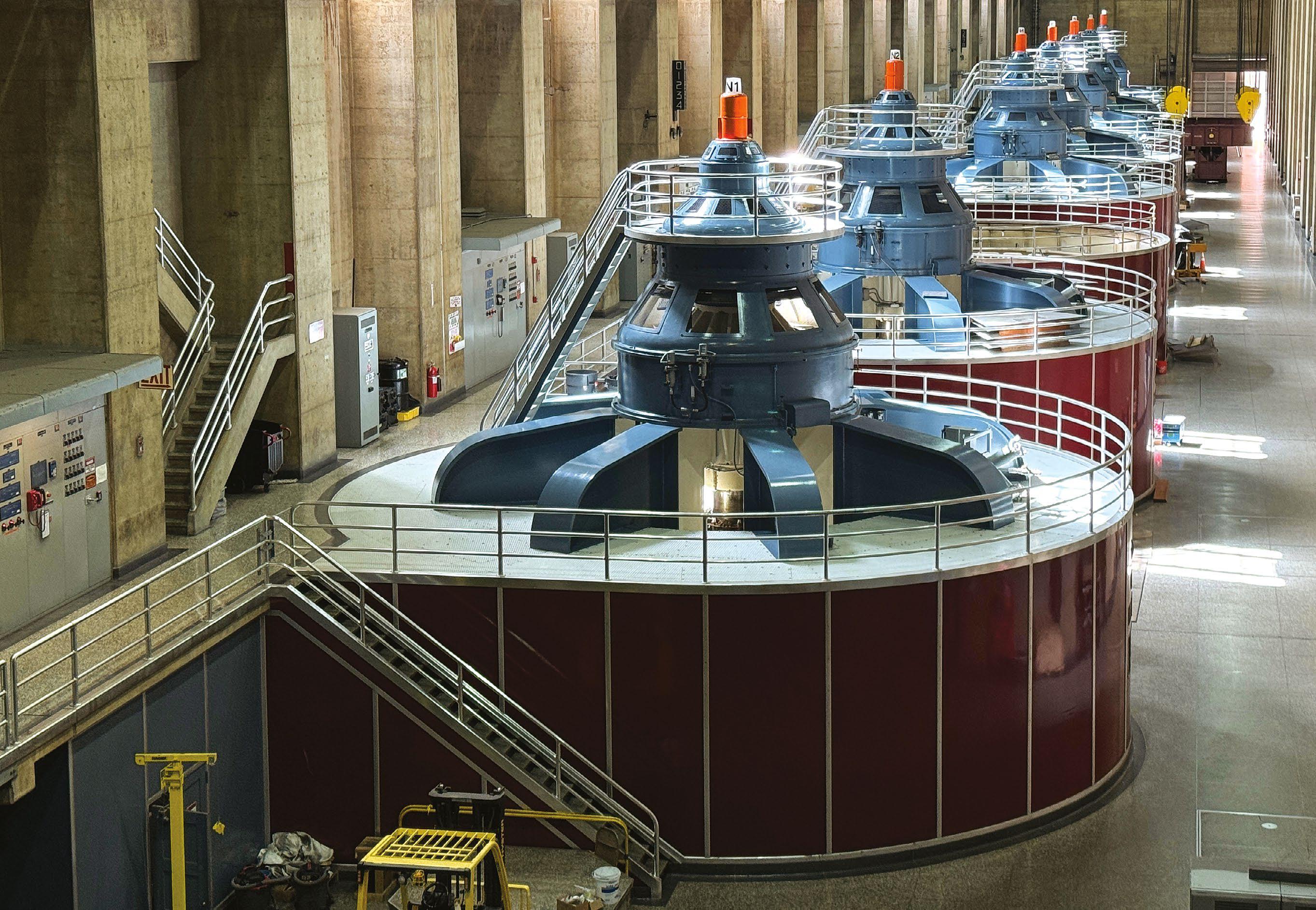 Power production is simply a process of converting energy from one form to another. In hydroelectric plants, it’s the ‘potential energy’ of water collected in a dam that eventually ends up as electricity. A pipe known as a penstock runs through the base of the dam. As water rushes through, the potential energy becomes kinetic energy – the energy of motion. This kinetic energy rotates a turbine in the penstock.
 The turbine leads to a shaft that in turn leads to a generator. Inside the generator, huge magnets start to rotate past copper coils to produce alternating current (AC) electricity.
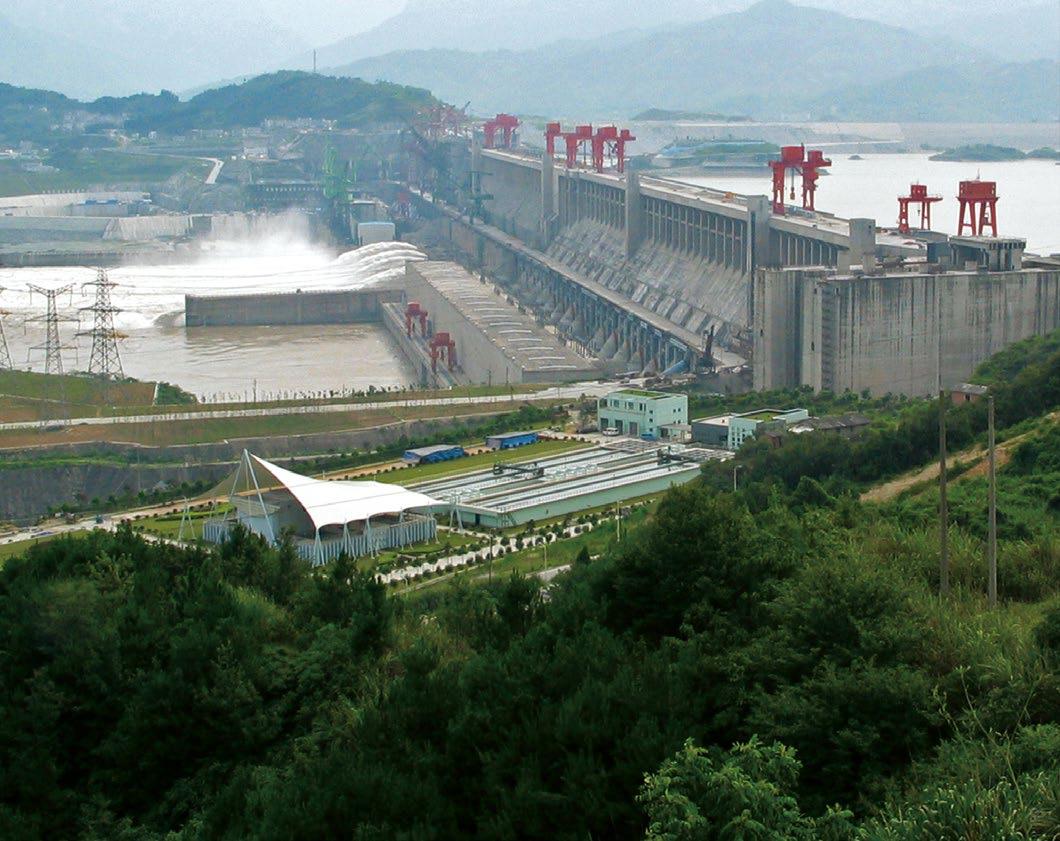 Finally, this is changed to a higher voltage using a transformer and delivered to the power grid.

Cette histoire est tirée de l'édition Issue 195 de How It Works UK.
Abonnez-vous à Magzter GOLD pour accéder à des milliers d'histoires premium sélectionnées et à plus de 9 000 magazines et journaux.
Déjà abonné ? Se connecter
PLUS D'HISTOIRES DE How It Works UK

How It Works UK
FORMULA FAST
YOUR ULTIMATE GUIDE TO FORMULA ONE RACING

1 mins
Issue 212

How It Works UK
MY LIFE AS AN ASTHMANAUT
A CHILDREN'S BOOK ABOUT ASTHMA
1 min
Issue 212

How It Works UK
LYDIA LOVES BUGS
A SHORT AND SWEET STORY OF AN ENTHUSIASTIC ENTOMOLOGIST
1 min
Issue 212

How It Works UK
INSIDE A DRONE
Drones aren't just for the military any more. These flying marvels are now taking over our lives
3 mins
Issue 212
How It Works UK
WE CAN HEAR WITHOUT EARS
AND OTHER THINGS YOU DIDN'T KNOW WE PLANTS COULD DO
1 min
Issue 212

How It Works UK
DO GEESE GET GOOSEBUMPS?
Many animals experience a similar reaction when they feel cold or scared
2 mins
Issue 212
How It Works UK
SUBMARINES WITHOUT SAILORS
Dive into the world of autonomous submarines and discover the mission that will see one sail around the world
4 mins
Issue 212

How It Works UK
WHAT HAPPENS INSIDE A COCOON?
How certain species of insects transform from crawling caterpillars to flying moths and butterflies
3 mins
Issue 212

How It Works UK
HOW THE ROSE LOST ITS SCENT
From floral to fragranceless, there's a biological reason behind a rose's missing odour today
3 mins
Issue 212
How It Works UK
How many insects have been discovered so far?
The total number of named species is around a million.
7 mins
Issue 212
Listen
Translate
Change font size