
Passez à l'illimité avec Magzter GOLD
Obtenez un accès illimité à plus de 9 000 magazines, journaux et articles Premium pour seulement
Essayer OR - Gratuit
SMART SURVEILLANCE
How It Works UK
|Issue 205
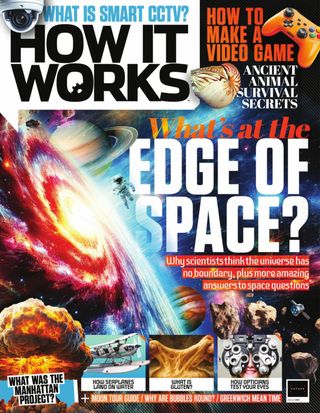
How smart CCTV uses data to scan and analyse a scene, identifying objects and people in milliseconds

Built into architecture or tucked out of sight, surveillance cameras can go unnoticed.
However, in many public spaces, such as town centres, roads, public transport hubs and private properties, they're always watching. These cameras remain in operation 24 hours a day, keeping a record of daily life to help deter illegal activity and antisocial behaviour or provide proof when it occurs.
The earliest closed circuit television (CCTV) could only livestream activity and required a security guard or police officer to observe multiple screens simultaneously in real time. The technology served as a way for one person to monitor more than one location at once, but didn't use data to make sense of the images it was streaming. Instead, it was up to human observers to notice suspicious behaviour and alert police to illegal activity.
Today, computer engineers have built systems that almost entirely take over the human supervision role. As sequences of events play out in front of the camera, a computer system can predict potential threats that might follow. It can also analyse the faces of people in crowds to help find missing people or track suspects of crime.
For collecting and processing this data, modern intelligent CCTV has a range of sensors and camera types to collect clear imagery and extract as much information as possible. This includes infrared cameras for night surveillance, which produce imagery by detecting infrared wavelengths that are invisible to the human eye. The camera then converts the infrared signature into a visible image to 'see in the dark'.

Cette histoire est tirée de l'édition Issue 205 de How It Works UK.
Abonnez-vous à Magzter GOLD pour accéder à des milliers d'histoires premium sélectionnées et à plus de 9 000 magazines et journaux.
Déjà abonné ? Se connecter
PLUS D'HISTOIRES DE How It Works UK
How It Works UK
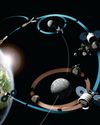
SPACE MINING UNCOVERED
Asteroids rich in rare elements could be harvested for their valuable contents, but the real worth may be in using them as interplanetary fuel stations

2 mins
Issue 211

How It Works UK
Human refuse is ‘kick-starting’ the domestication of raccoons
City-dwelling raccoons are showing early signs of domestication. Using photos uploaded to the citizen science platform iNaturalist, researchers found that raccoons in urban environments had shorter snouts than their rural counterparts. The difference could be one of several traits that make up 'domestication syndrome', the scientists wrote in a study published in the journal Frontiers in Zoology. Domesticated animals typically become less aggressive towards humans over time. They gradually develop a relationship in which people provide for them in exchange for resources, such as meat and milk from livestock or labour from herding dogs. That process often involves selectively breeding animals for certain desirable traits, but it doesn't always begin that way. \"I wanted to know if living in a city environment would kick-start domestication processes in animals that are currently not domesticated,\" said Raffaela Lesch, a zoologist at the University of Arkansas at Little Rock.
1 mins
Issue 211

How It Works UK
WHY THINGS ROT
How dead plants and animals decay, and how living organisms rely on this natural process to survive
3 mins
Issue 211

How It Works UK
BOOZE, BEANS AND YOUR BODY
Caffeine and alcohol are two of the world's most common drugs. But what effects does drinking them have on our brains and bodies?
5 mins
Issue 211
How It Works UK
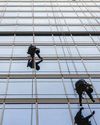
HOW TO CLEAN A SKYSCRAPER WINDOW
Discover how skilled window cleaners with nerves of steel tackle these towering glass facades
2 mins
Issue 211
How It Works UK
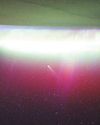
ASTRONAUTS SEE COMET LEMMON 'ABSORBED' BY AURORAE
For skywatchers, scientists and even the astronauts on the International Space Station (ISS), the skies have been active. The Sun has released its largest eruptions of 2025, sparking a series of aurorae that have reached as far south as Mexico. While astronauts on the ISS had to take shelter during the recent solar storms to avoid potentially dangerous radiation, they did manage to capture this image of Comet Lemmon appearing near the aurorae on Earth.
1 min
Issue 211
How It Works UK
HOW TO MAKE MAPLE SYRUP
Your favourite pancake topping is much more than just a sugary treat made in a factory
1 mins
Issue 211
How It Works UK
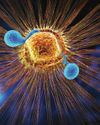
A high-fibre diet may ‘rejuvenate' immune cells that fight cancer
Microbes in the gut can help the immune system fight cancer, and a fibre-rich diet may be the key to unlocking those benefits, a study in mice suggests. The immune system is a key player in the body’s battle against cancer. On the front line of this resistance are CD8+ killer T cells, a type of immune cell that marauds around tumours and then exterminates the cancerous cells. But after each successive battle, these cells become worn out and don’t find tumours as effectively. As such, treatments that provide the cells with enough pep to finish their job are in high demand.
2 mins
Issue 211

How It Works UK
SEE THE BUTTERFLY NEBULA LIKE NEVER BEFORE
On 26 November 2025, the Gemini South telescope turned 25, and astronomers celebrated its birthday with a dazzling new image of the Butterfly Nebula.
1 min
Issue 211

How It Works UK
The Gulf of Suez is pulling apart
The Gulf of Suez, which partially divides Africa and Asia, may still be widening 5 million years after we thought it had stopped.
2 mins
Issue 211
Listen
Translate
Change font size