
Passez à l'illimité avec Magzter GOLD
Obtenez un accès illimité à plus de 9 000 magazines, journaux et articles Premium pour seulement
Essayer OR - Gratuit
Scientists pull up riches from the ‘Holy Grail of shipwrecks’
How It Works UK
|Issue 211
Valuable shipwrecked treasures are seeing the light of day after they sank along with the San José galleon off the coast of Colombia more than 300 years ago. The incredibly well-preserved items that were retrieved, including a cannon, a porcelain cup and three coins, are just a taste of the wreck's vast riches. The galleon is often dubbed 'the Holy Grail of shipwrecks' as it went down with a huge cargo of 180 tonnes of gold, silver and gems that was said to be worth around £13.5 billion ($18.2 billion) in 2018. The recovery is part of an ongoing project by the Colombian government to investigate the wreck and recover the precious artefacts. The recovery of the objects “opens the possibility for citizens to approach, through material testimony, the history of the San José galleon,” said Alhena Caicedo Fernández of the Colombian Institute of Anthropology and History.
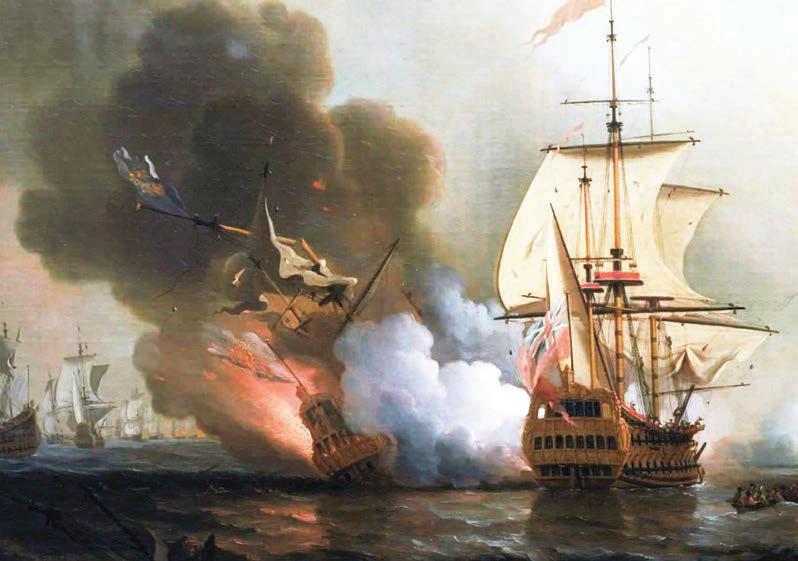
The San José was a 62-gun Spanish galleon that in June 1708 was leading a treasure fleet of 18 ships from South America to Europe when it was attacked by British warships. The galleon sank during the ensuing battle - though researchers dispute whether or not it exploded - killing the ship's 600 crew and passengers. Researchers finally located the wreck in 2015, south of Cartagena and about 600 metres below the surface. Its discovery prompted a number of parties, including the Colombian government, Spain, a US company and the In


Cette histoire est tirée de l'édition Issue 211 de How It Works UK.
Abonnez-vous à Magzter GOLD pour accéder à des milliers d'histoires premium sélectionnées et à plus de 9 000 magazines et journaux.
Déjà abonné ? Se connecter
PLUS D'HISTOIRES DE How It Works UK

How It Works UK
FORMULA FAST
YOUR ULTIMATE GUIDE TO FORMULA ONE RACING

1 mins
Issue 212

How It Works UK
MY LIFE AS AN ASTHMANAUT
A CHILDREN'S BOOK ABOUT ASTHMA
1 min
Issue 212
How It Works UK
LYDIA LOVES BUGS
A SHORT AND SWEET STORY OF AN ENTHUSIASTIC ENTOMOLOGIST
1 min
Issue 212

How It Works UK
INSIDE A DRONE
Drones aren't just for the military any more. These flying marvels are now taking over our lives
3 mins
Issue 212

How It Works UK
WE CAN HEAR WITHOUT EARS
AND OTHER THINGS YOU DIDN'T KNOW WE PLANTS COULD DO
1 min
Issue 212

How It Works UK
DO GEESE GET GOOSEBUMPS?
Many animals experience a similar reaction when they feel cold or scared
2 mins
Issue 212
How It Works UK
SUBMARINES WITHOUT SAILORS
Dive into the world of autonomous submarines and discover the mission that will see one sail around the world
4 mins
Issue 212
How It Works UK
WHAT HAPPENS INSIDE A COCOON?
How certain species of insects transform from crawling caterpillars to flying moths and butterflies
3 mins
Issue 212

How It Works UK
HOW THE ROSE LOST ITS SCENT
From floral to fragranceless, there's a biological reason behind a rose's missing odour today
3 mins
Issue 212
How It Works UK
How many insects have been discovered so far?
The total number of named species is around a million.
7 mins
Issue 212
Listen
Translate
Change font size