
Passez à l'illimité avec Magzter GOLD
Obtenez un accès illimité à plus de 9 000 magazines, journaux et articles Premium pour seulement
Essayer OR - Gratuit
NEANDERTHAL INVENTIONS
How It Works UK
|Issue 206
These caveman creations kept our ancient hunter-gatherer relatives alive
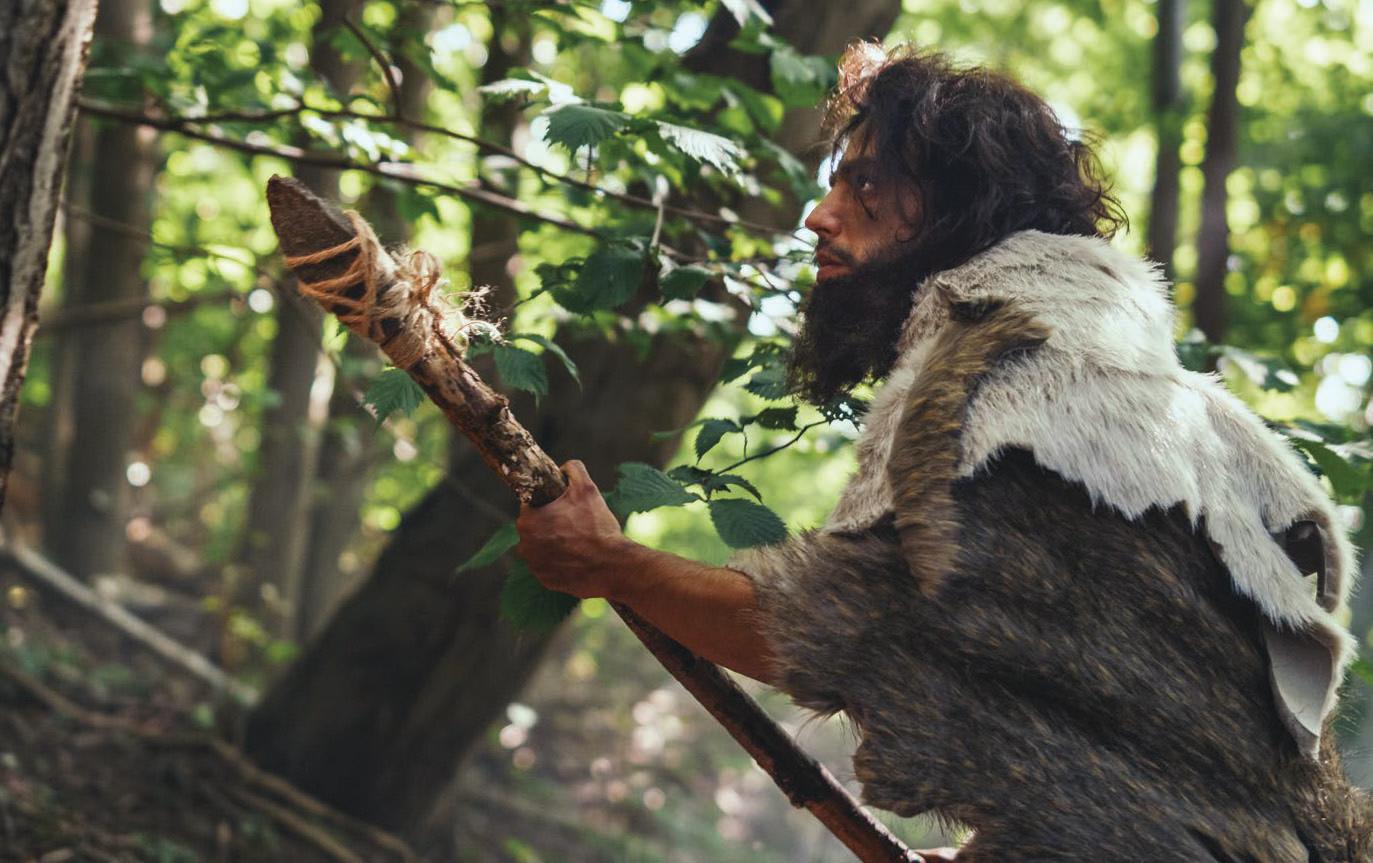
Between 40,000 and 400,000 years ago, our prehistoric cousins wandered throughout Europe and Asia. Homo neanderthalensis, commonly known as the Neanderthals, were a species that diverged from human lineage approximately 500,000 years ago. Often depicted as dimwitted cavemen, the Neanderthals were far from mindless fire-wielding apes. The use of fire was a turning point in human evolution. It changed the way our prehistoric ancestors ate food and stayed warm in frigid environments. Having access to a blazing fire during an ice age may have made the difference between life and death.
It has long been debated whether or not Neanderthals were able to make their own fire or simply ‘harvested’ flames from natural wildfires and carried burning sticks to their settlements. In 2018, researchers at Leiden University in the Netherlands found mineral traces of pyrite on the surfaces of Neanderthal hand axes. Many of the tools made by Neanderthals were made from flint, a hard sedimentary rock commonly found in Europe.
THE FIRST FASHIONISTAS?
Archaeologists think Neanderthals may have been the first early humans to don fur as a way of staying warm during winter. To fight against frigid conditions, Neanderthals evolved several anatomical adaptations, such as a stocky, muscular frame and a large nose, which is thought to have increased the surface area in the nasal passage to warm air as it entered. But mere biology might not have been enough to keep them warm. To battle chilling winds and rainfall, researchers estimate that up to 80 per cent of a Neanderthal's body would have been covered by 'non-tailored clothing'. To provide some protection against the elements, Neanderthals would have skinned their dinner, cleaned it and poked holes in the skin to thread strips of tissue through and fashion a loosely held garment.
PREHISTORIC TOOLBOX

Cette histoire est tirée de l'édition Issue 206 de How It Works UK.
Abonnez-vous à Magzter GOLD pour accéder à des milliers d'histoires premium sélectionnées et à plus de 9 000 magazines et journaux.
Déjà abonné ? Se connecter
PLUS D'HISTOIRES DE How It Works UK

How It Works UK
FORMULA FAST
YOUR ULTIMATE GUIDE TO FORMULA ONE RACING

1 mins
Issue 212

How It Works UK
MY LIFE AS AN ASTHMANAUT
A CHILDREN'S BOOK ABOUT ASTHMA
1 min
Issue 212

How It Works UK
LYDIA LOVES BUGS
A SHORT AND SWEET STORY OF AN ENTHUSIASTIC ENTOMOLOGIST
1 min
Issue 212

How It Works UK
INSIDE A DRONE
Drones aren't just for the military any more. These flying marvels are now taking over our lives
3 mins
Issue 212
How It Works UK
WE CAN HEAR WITHOUT EARS
AND OTHER THINGS YOU DIDN'T KNOW WE PLANTS COULD DO
1 min
Issue 212

How It Works UK
DO GEESE GET GOOSEBUMPS?
Many animals experience a similar reaction when they feel cold or scared
2 mins
Issue 212

How It Works UK
SUBMARINES WITHOUT SAILORS
Dive into the world of autonomous submarines and discover the mission that will see one sail around the world
4 mins
Issue 212
How It Works UK
WHAT HAPPENS INSIDE A COCOON?
How certain species of insects transform from crawling caterpillars to flying moths and butterflies
3 mins
Issue 212

How It Works UK
HOW THE ROSE LOST ITS SCENT
From floral to fragranceless, there's a biological reason behind a rose's missing odour today
3 mins
Issue 212
How It Works UK
How many insects have been discovered so far?
The total number of named species is around a million.
7 mins
Issue 212
Listen
Translate
Change font size