Essayer OR - Gratuit
THE PENS HAVE NOT TIRED
Down To Earth
|May 16, 2025
Poets, authors and non-fiction writers of our time consider all living beings and plants as equal citizens of the earth and raise a strong voice against their destruction
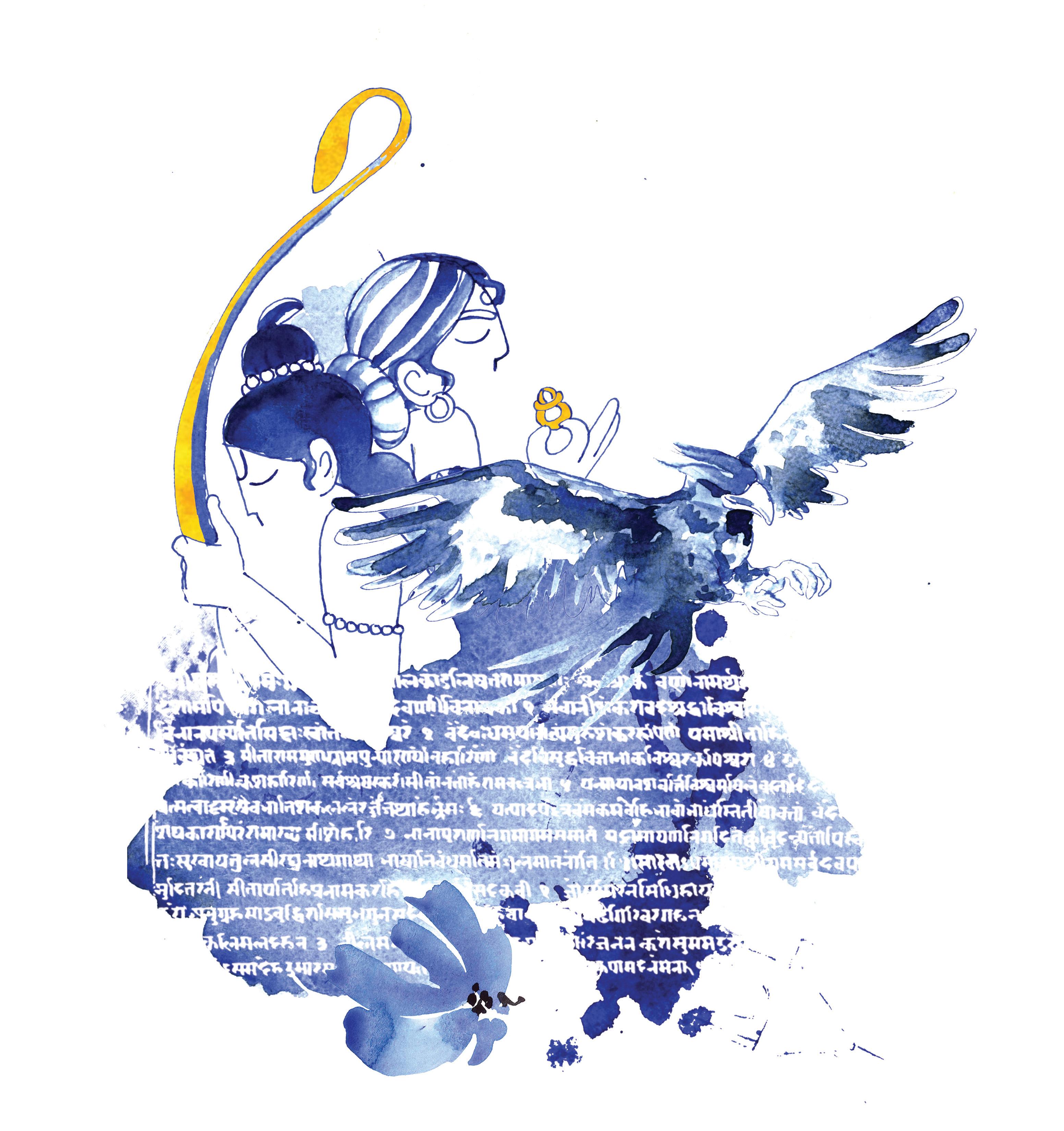
Nature and environment have marked their presence in Indian history since ancient times. Vedic poets deified various forms of nature and meticulously described their functions. In the Rig Veda, the most impressive 250 verses were composed in praise of Indra, the god of rain. Vedic poets, with their remarkable imaginative expansion, presented detailed descriptions of various forms of love between deified natural forces through: the relationships of father-daughter (between sky and dawn), husband-wife (between heaven and earth) and father-son (between heaven and sun). But the full depth and sensuality of attraction manifests primarily in descriptions of the lover-beloved relationship between these deified natural forces.
In the Sanskrit literary tradition, nature appears in its fullness in the works of Kalidasa and Bhavabhuti. The images of natural environment’s freedom and spontaneity in Meghadutam (The Cloud Messenger), the description of spring in the third canto of Kumarasambhavam, the extremely vivid and natural depiction of the ocean in the thirteenth canto of Raghuvamsham are what truly make Kalidasa the crown jewel of Sanskrit poetry. According to biographer G K Bhat, Bhavabhuti’s descriptions of nature reveal that Kalidasa is not the only son of nature, but there is another one—Bhavabhuti. However, there is a difference between the two. Kalidasa took more interest in describing the soft and beautiful forms of nature: tender vines and flowers; soft leaves and lotus stems; flowing rivers and calm lakes; shady groves and gentle breezes; and charming moon and cool fragrance of sandalwood.


Cette histoire est tirée de l'édition May 16, 2025 de Down To Earth.
Abonnez-vous à Magzter GOLD pour accéder à des milliers d'histoires premium sélectionnées et à plus de 9 000 magazines et journaux.
Déjà abonné ? Se connecter
PLUS D'HISTOIRES DE Down To Earth
Down To Earth
MAJESTIC SARUS STAGES COMEBACK
Involvement of farmers in conservation helps the sarus crane population soar in eastern Uttar Pradesh over the past decade

5 mins
June 16, 2026

Down To Earth
Global resistance to AI data centres hardens
India must learn how to regulate environmentally disastrous data centres that guzzle more water and power than entire nations
4 mins
June 16, 2026

Down To Earth
SUMMER SMOG
Ground-level ozone is one of the national capital's least appreciated public health threat
1 mins
June 16, 2026

Down To Earth
A FOREST IN WAIT
For five decades, Abujhmad in Chhattisgarh was closed to the country. Now, as the region opens up, ANIL ASHWANI SHARMA travels to villages in its dense forests to see how isolation has impacted the people and development
6 mins
June 16, 2026

Down To Earth
DON'T WASTE THE FUTURE
Policymakers may need to focus less on expanding programmes and more on improving their effectiveness and reach, suggests the latest NFHS-6 data
3 mins
June 16, 2026
Down To Earth
NEED A FOREST TRIBUNAL
A tribunal will provide people a dedicated independent forum where they will have a statutory right to approach
2 mins
June 16, 2026
Down To Earth
Moment or movement
ONE DEFINITION of the word metamorphosis in the dictionary is “a striking alteration in appearance, character, or circumstances”.
2 mins
June 16, 2026

Down To Earth
El Niño, amplified
As a possible super El Niño looms in 2026, scientists warn of devastations that may extend into 2027
6 mins
June 16, 2026

Down To Earth
A mindless denial
District level bodies are increasingly refusing tribal population's rights over resources guaranteed by the forest rights Act
5 mins
June 16, 2026

Down To Earth
TOOR TOUR
What makes pigeon pea so ubiquitous across cuisines in India
4 mins
June 16, 2026
Listen
Translate
Change font size