Essayer OR - Gratuit
Fixing food
Down To Earth
|May 01, 2025
In an attempt to reduce human-wildlife conflicts around Jim Corbett National Park, the Uttarakhand forest department is replacing teak and eucalyptus plantations with native and fruit-bearing trees
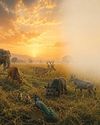
ON MARCH 17, Channa Devi of Teda village in Uttarakhand woke up to a distressing sight—her wheat crop, ready for harvest, had been trampled by a herd of elephants. “I had planted the crop on my entire 1.2-hectare (ha) field. Almost a quarter of the crop has now been damaged,” Devi tells Down To Earth (DTE), estimating the loss at 500 kg of wheat, along with the earning that would have sustained her family for at least six months. The herd of elephants must have wandered off from the nearby Jim Corbett National Park, says the 50-year-old, adding that raids by wild animals have become frequent in recent years.
In all the five villages that DTE visited in April, farmers narrate similar tales. These villages are located on the fringes of the Jim Corbett National Park and the adjoining Ramnagar forest division. Most of the farmers here have small landholdings and practice subsistence agriculture. They report crop raiding by wild herbivores, from chital (spotted deer) to sambar deer to nilgai to elephants, resulting in significant economic losses.
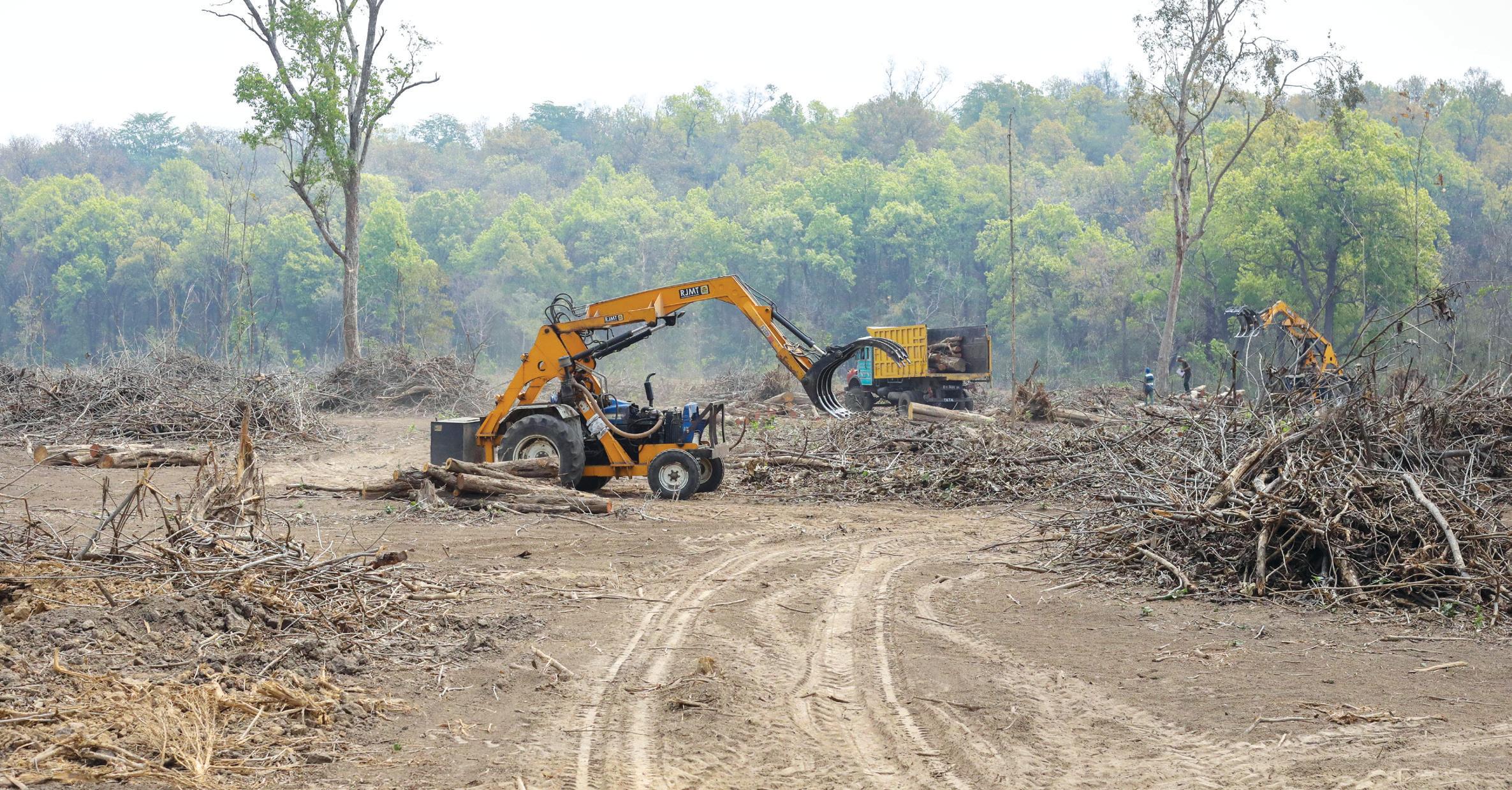
To curb the growing conflicts between wildlife and the farming communities, Ramnagar forest division has adopted a new approach. Since 2023, it has been replacing its monoculture plantations of teak and eucalyptus on the forest fringes, with multi-species forest plantations such as fruit trees.

Cette histoire est tirée de l'édition May 01, 2025 de Down To Earth.
Abonnez-vous à Magzter GOLD pour accéder à des milliers d'histoires premium sélectionnées et à plus de 9 000 magazines et journaux.
Déjà abonné ? Se connecter
PLUS D'HISTOIRES DE Down To Earth

Down To Earth
CONSERVED BY COMMUNITY
How a desire to make snow leopard tourism sustainable helped a small Ladakhi settlement became the region's first Community Conserved Area

4 mins
May 16, 2026

Down To Earth
An 'open' and 'shut' case of Al's risky trajectory
Elon Musk's lawsuit against Sam Altman, OpenAl, Microsoft is crucially about open-source versus closed technology for corporate profit
4 mins
May 16, 2026
Down To Earth
Burden of transition
Clean energy transition is once again shifting environmental, human costs to the Global South, finds a UN university investigation
4 mins
May 16, 2026
Down To Earth
One step closer
India attains criticality in fast breeder reactor technology, reaching the second stage of the country's three- stage nuclear programme towards energy security
4 mins
May 16, 2026

Down To Earth
ZESTY SEEDS
Coriander seeds are a traditional antidote to summer heat
3 mins
May 16, 2026

Down To Earth
Sahyadri gets a bird village
Residents of Maharashtra's Pisavare village have embarked on a mission to protect birds in their vicinity through simple practices such as documenting species and building nests
2 mins
May 16, 2026
Down To Earth
CONFLICT IN THE BACKYARD
Across India, farmers are abandoning their fields as conflict with wild and stray animals intensifies. Conservation policy must move beyond protection alone to restore a workable coexistence between people and animals.
18 mins
May 16, 2026

Down To Earth
Capital punishment
Adequate compensation and proper rehabilitation remain a mirage for many displaced by the construction of Chhattisgarh's new capital, Nava Raipur, even two decades after the project began
3 mins
May 16, 2026
Down To Earth
Migrant workers are assets
MIGRATION HAS turned into a potent tool of political warfare across the world. For over a decade, domestic electoral politics across regions, from Europe and North America to Asia and Africa, have fuelled anti-immigration sentiments. This is also increasingly fuelling anti-immigrant vigilantism, as seen widely across Europe in 2015-16, coinciding with the refugee crisis.
2 mins
May 16, 2026

Down To Earth
Petri dish to plate
Synthetic meat production has seen a rise globally, even as environmental benefits of growing foods in laboratory remain debatable
10 mins
May 16, 2026
Listen
Translate
Change font size