Essayer OR - Gratuit
A silent crisis
Down To Earth
|May 01, 2023
Years of undernutrition and a heavy reliance on rice, supplied through public distribution system, could be fuelling diabetes among tribal population

NIRASIYA BAI'S three sons are used to their mother fainting every other week. They keep pieces of shakkar (jaggery) handy and place it swiftly under her tongue, every time she feels dizzy or is on the verge of collapse. In March alone, she fainted thrice. The 52-year-old resident of Shivtarai village in Chattisgarh’s Bilaspur district suffers from diabetes. In 2010, when she was diagnosed with the condition, her blood sugar levels were well beyond the normal range —297 milligrams per decilitre (mg/ dl) in fasting and 361 mg/dl, two hours after food. When Down To Earth (DTE) met Nirasiya in March, her blood sugar levels were under control. But she appeared frail and lacked energy to participate even in the routine agricultural activities she used to do until a few years ago.
DTE visited other families in this village of Gond tribal community, and almost every other household had a similar story to narrate. The situation appears no better in neighbouring villages of Shivtarai in Kota block. Data shared by the district's health office shows that the community health centre (CHC) at Kota has diagnosed 922 new diabetes patients between April 2022 and February 2023. As many as 1,063 people have also been found suffering from hypertension.
What is even more perplexing is that Kota, as informed by Anil Kumar Shriwastawa, chief medical and health officer of Bilaspur, is home to a majority of the district's tribal population, and non-communicable diseases (NCDS) like diabetes have so far been believed to be rare among these communities.
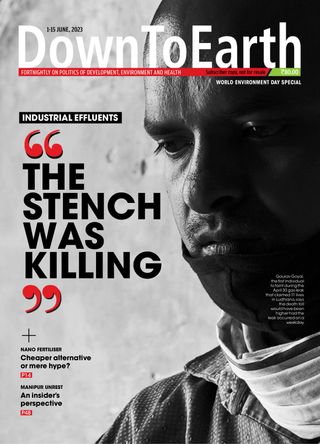

Cette histoire est tirée de l'édition May 01, 2023 de Down To Earth.
Abonnez-vous à Magzter GOLD pour accéder à des milliers d'histoires premium sélectionnées et à plus de 9 000 magazines et journaux.
Déjà abonné ? Se connecter
PLUS D'HISTOIRES DE Down To Earth

Down To Earth
BEYOND COLLATERAL DAMAGE
Recent geopolitical conflicts are urging a reconsideration of what constitutes environmental harm in war and the limits of existing legal frameworks

3 mins
April 01, 2026
Down To Earth
Masterstroke
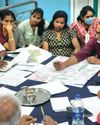
Residents of a small Kerala town reject an inadequate state-led development blueprint and create their own master plan that prioritises protection of historic water systems and urban commons
4 mins
April 01, 2026

Down To Earth
Rethinking E20
It is pertinent to explore potential of ethanol as high-value industrial feedstock
4 mins
April 01, 2026
Down To Earth
Food in the age of climate change
WHEN WE eat, we contribute to climate change. But food is also about livelihoods, about nutrition and about nature.
3 mins
April 01, 2026

Down To Earth
FADING WINTER
India's winters are warming, becoming shorter, shifting and spilling beyond their traditional bounds. The consequences are already evident in meltwater availability, forest-fire intensity and changes in flowering cycles and insect behaviour.
20 mins
April 01, 2026
Down To Earth
War on Iran strikes India's pharmaceuticals sector
Shortages of critical raw materials and rising input costs for the drug industry will have global consequences
4 mins
April 01, 2026

Down To Earth
POWER IN AN AGE OF INSECURITY
Energy transition is no longer solely about emission reduction but also about energy security
3 mins
April 01, 2026
Down To Earth
Re-discovery of fuelwood
THE WEST Asia conflict has made visible a multi-billion dollar energy market in India.
2 mins
April 01, 2026

Down To Earth
A CASE THAT RESHAPED INDIA'S ENVIRONMENT
The case of MC Mehta v Union of India stands as proof that a proactive judiciary can accelerate action even when the executive drags its feet
4 mins
April 01, 2026
Down To Earth
FOREVER DEPENDENT
India depends on global fertiliser supply chains for 70 per cent of its needs, leaving its food security exposed to geopolitical disruptions
6 mins
April 01, 2026
Translate
Change font size