Essayer OR - Gratuit
Capturing Milky Way THE MAGNIFICENT
BBC Sky at Night Magazine
|May 2023
Get ready for the return of late summer nights under the stars as Will Gater presents a beginners’ guide to photographing our ever-changing home Galaxy
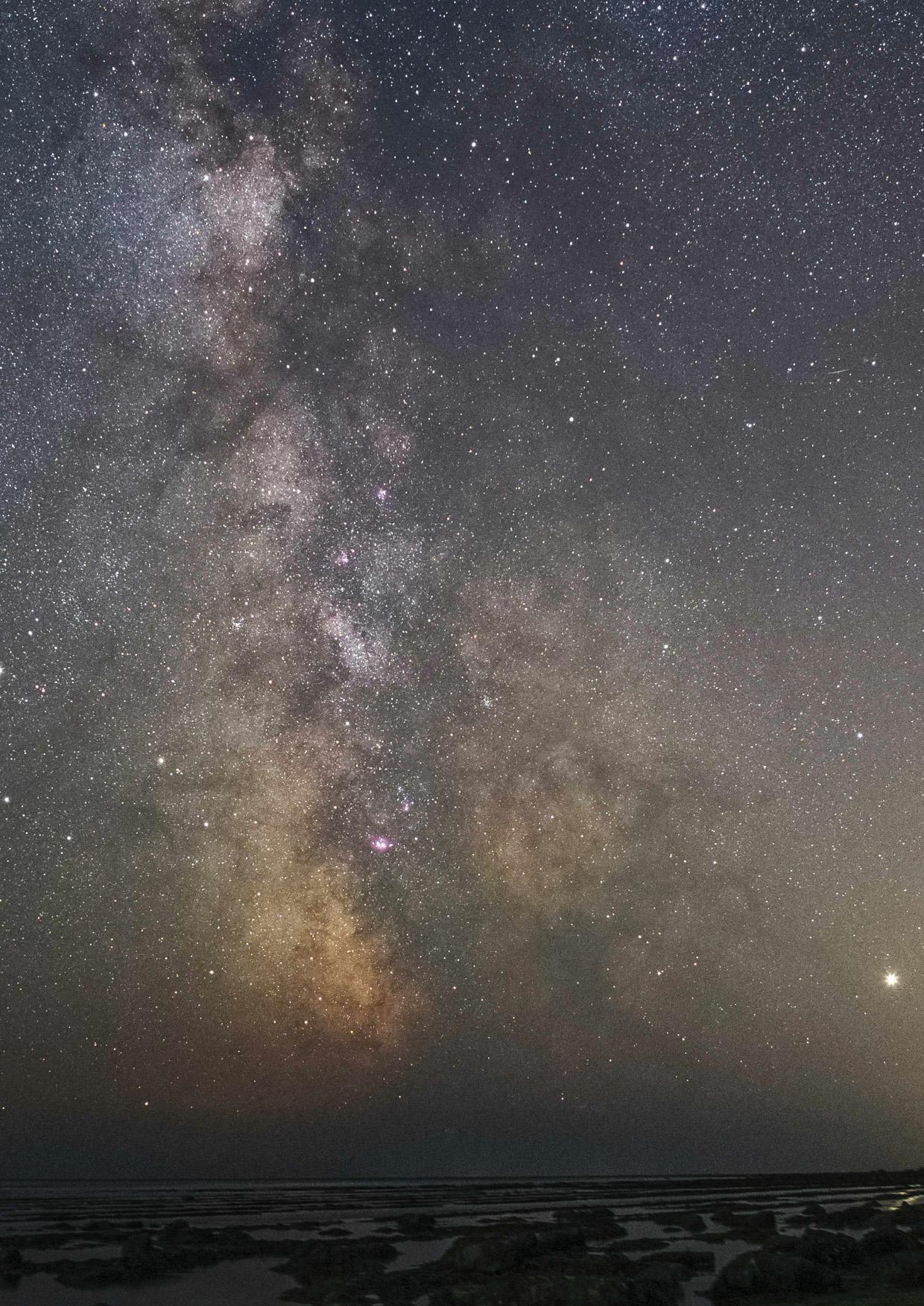
As the lighter nights begin to swing around in May, one thing I like to do is fire up Stellarium and plan out all the things I want to photograph when proper darkness returns in the late summer. Almost always, the target that occupies me the most, no matter how many times I've imaged it, is the Milky Way. Widefield, nightscape or long-focal-length close-up - it doesn't matter what format we're talking about, there's always something our Galaxy can offer.
It's important to think ahead when it comes to Milky Way imaging. The view changes from month to month, week to week and even hour to hour throughout the night. And the best time to photograph our Galaxy from the UK, in my opinion, is the first weeks of August. Not only has astronomical darkness come back for most of us in the UK by that point, but you also don't have to wait all night for the band of the Milky Way to be positioned close to the meridian. Plus, from a composition perspective I love how the core of the Galaxy and the swathe of its spiral arms, arcing up into the eastern sky, are positioned as midnight approaches.
If you've never dipped your toes into the waters of Milky Way astrophotography, now's the perfect time to get prepped for this season. So read on as we introduce you to shooting the spectacular celestial metropolis that we all call home.
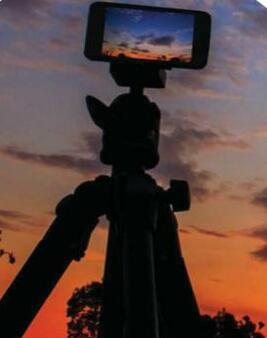
Use the right kit
You can achieve spectacular images even with a fairly modest setup


Cette histoire est tirée de l'édition May 2023 de BBC Sky at Night Magazine.
Abonnez-vous à Magzter GOLD pour accéder à des milliers d'histoires premium sélectionnées et à plus de 9 000 magazines et journaux.
Déjà abonné ? Se connecter
PLUS D'HISTOIRES DE BBC Sky at Night Magazine

BBC Sky at Night Magazine
Crush: Close Encounters with Gravity
Gravity is something that we're all innately familiar with. It keeps our feet on the ground, fights against a rocket trying to leave Earth and governs the movement of the planets and stars.

1 mins
April 2026

BBC Sky at Night Magazine
Exploring the Universe
There's no shortage of children's books about astronomy.
2 mins
April 2026

BBC Sky at Night Magazine
Make your Milky Way images pop
Simple, free processing techniques using FastStone Image Viewer
3 mins
April 2026

BBC Sky at Night Magazine
Nightfaring: In Search of the Disappearing Darkness
This book is a manifesto for dark skies, written as a travel memoir.
1 mins
April 2026

BBC Sky at Night Magazine
Flying saucers- The making of a modern myth
Our obsession with UFOs goes back further than you might think. Robert Pateman traces how early science fiction, dubious sightings and an alien-mad media led to the 1950s saucer fever
9 mins
April 2026

BBC Sky at Night Magazine
STAR OF THE MONTH
Alphecca, the brightest jewel in the Crown
1 min
April 2026

BBC Sky at Night Magazine
How to use a planisphere
Navigate the sky with the original stargazer's tool. No batteries, apps or Wi-Fi required!
3 mins
April 2026
BBC Sky at Night Magazine
Why rockets don't launch straight up
For a rocket to get its payload into space, it has to follow a curved path. But what would happen if it didn't?
2 mins
April 2026

BBC Sky at Night Magazine
Q&A WITH A DARK MATTER SPECIALIST
Dark matter makes up 27 per cent of all matter in the Universe. So why is it so hard to find? Meet one of the people making a map that leads us to it
3 mins
April 2026

BBC Sky at Night Magazine
Why I want to put a hotel on the Moon
Bored of the beach? Sick of city breaks? Step this way. Space entrepreneur Skyler Chan explains how he'll build a holiday destination on the Moon by 2030
2 mins
April 2026
Translate
Change font size