
Passez à l'illimité avec Magzter GOLD
Obtenez un accès illimité à plus de 9 000 magazines, journaux et articles Premium pour seulement
Essayer OR - Gratuit
The real reason America wants to return to the Moon
BBC Science Focus
|June 2026
Artemis II was a triumph, but there was some sinister reasoning behind our latest Moon mission
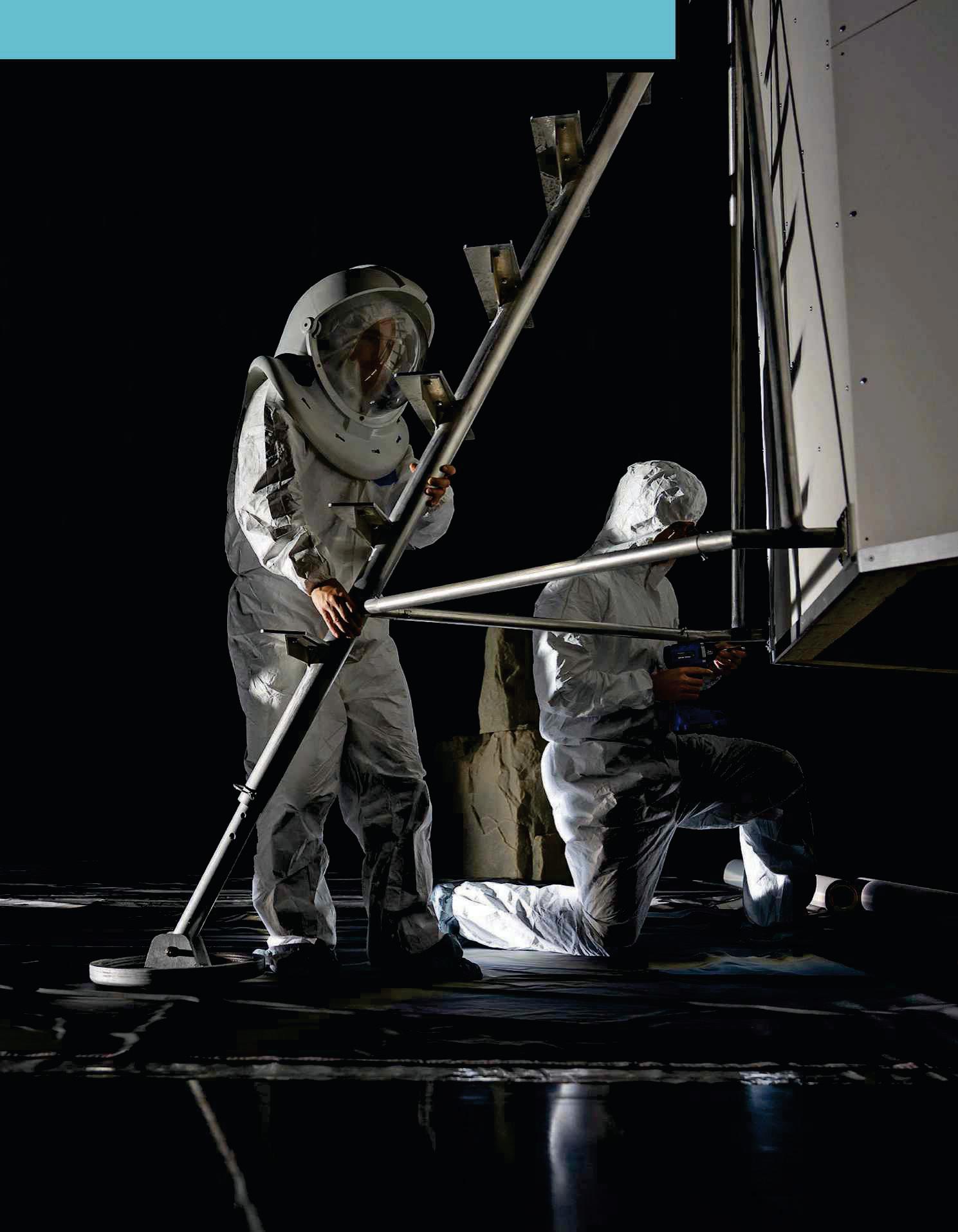
The world’s eyes have once again been turned to the heavens, thanks to NASA’s success with Artemis II. The successful mission saw four astronauts travel around the Moon and return to Earth — a small step towards the agency’s overarching aim of establishing a lunar base.
For those who remember the Apollo programme of the 1960s and 70s, though, the pressing question this return journey raises is: Why bother sending humans back to the Moon at all?
THE FIRST MOON BASE
There are plenty of compelling scientific reasons to return to the Moon, from collecting samples to study the formation of the Solar System to placing a telescope there for a clearer view of the stars, free from the distorting effects of Earth’s atmosphere. But recent decades have seen scientific concerns take a backseat to geopolitical realities.
America’s decision to return humans to the Moon is a direct response to geopolitical tensions with China. China has made no secret of its intention to establish a scientific research station on the Moon, and has been ramping up its robotic and human lunar exploration programmes over the last two decades.
The Artemis programme, established in 2017, can be seen as a response to that. It specifically seeks to establish a permanent lunar base with the US at the helm before China — a goal that led US Senator Ted Cruz to describe the situation the US now finds itself in as a “21st-century space race.”
Although the images of the Moon and video footage of the astronauts at work captured during Artemis II have been uplifting, the underlying motivations for the mission have remained largely in the background.
The geopolitical nature of this situation isn’t new, according to Dr Priyanka Dhopade, a researcher in sustainable space engineering at the University of Auckland.

Cette histoire est tirée de l'édition June 2026 de BBC Science Focus.
Abonnez-vous à Magzter GOLD pour accéder à des milliers d'histoires premium sélectionnées et à plus de 9 000 magazines et journaux.
Déjà abonné ? Se connecter
PLUS D'HISTOIRES DE BBC Science Focus

BBC Science Focus
WHAT’S THE BEST TEMPERATURE TO WASH LAUNDRY AT?
Although it was once true that washing laundry at high temperatures was more effective, that’s no longer the case.

1 mins
June 2026
BBC Science Focus
WHAT IS HISTAMINE FLUSHING AND WHAT CAN IT TELL YOU?
If you've ever experienced a sudden, warm, red bloom spreading across your face, neck or chest after a glass of wine or a spicy curry, that's likely to be the feeling of histamine flushing. While often harmless, it can sometimes serve as a useful warning sign for bigger problems.
2 mins
June 2026

BBC Science Focus
HOW TO SEE NOCTILUCENT CLOUDS
HOW TO SEE NOCTILUCENT CLOUDS
1 mins
June 2026
BBC Science Focus
HOW DO FEMALE ANIMALS STORE SPERM LONG TERM?
Female little brown bats mate in the autumn, but don't fertilise their eggs or become pregnant until spring.
2 mins
June 2026

BBC Science Focus
BEYOND THE EVENT HORIZON
How do you map something you can’t see? Scientists may have found a way
8 mins
June 2026

BBC Science Focus
The real reason America wants to return to the Moon
Artemis II was a triumph, but there was some sinister reasoning behind our latest Moon mission
5 mins
June 2026
BBC Science Focus
SHOULD I START EFT TAPPING?
A study at the University of Michigan in 2021 found that eating a hot dog carried a health burden equivalent to losing 36 minutes of life.
1 min
June 2026

BBC Science Focus
WHAT DOES NARCISSISTIC BAITING LOOK LIKE?
The narcissists in your life believe the world ought to see them and treat them as if they are special.
2 mins
June 2026

BBC Science Focus
ARE WE ADDICTED TO ULTRA-PROCESSED FOODS?
There could be a reason willpower often wilts in the face of junk foods — their addictive qualities might be overriding our resolve
9 mins
June 2026

BBC Science Focus
LACK OF TOUCH IS HARMING OUR HEALTH
Studies in this field, exploring the nature of ‘touch hunger’ or ‘touch deprivation,’ had previously focused on isolated older adults, but after COVID-19, they expanded to cover all age groups.
8 mins
June 2026
Listen
Translate
Change font size