Essayer OR - Gratuit
THE PEOPLE PLEASING TRAP (AND HOW TO ESCAPE IT)
BBC Science Focus
|November 2025
Are you a doormat if you constantly make sacrifices for other people? Or are you simply being a nice person by putting others' needs ahead of your own? Psychologists think there's something deep at work
Growing up, I spent a lot of time with my grandparents, who instilled in me the importance of politeness and the authority of adults. These principles turned me into the kind of child that teachers loved and that my peers mocked.
I raised my hand to answer every question and volunteered to hand out books at every opportunity. It could've been that I was innocently trying to be a good student, but I'm sure I also thought that being in my teachers' good books might give me some kind of academic advantage. I was people pleasing.
As I grew up, I found new people to please. Lecturers, recruiters, strangers on the internet. I hid behind the excuse that I was saying 'yes' to things I really wanted to say 'no' to, because it would further my career. And by doing so, I was really saying 'no' to things that could've offered me a happier life, like spending time with family.
But I reasoned, that as someone at the start of what I hoped would be a long, successful career, what was wrong with a little personal sacrifice?
“There are many reasons why we do nice things for other people,” says Prof Toru Sato, a psychologist at Shippensburg University in Pennsylvania, in the US. Sato began studying people pleasing in the early 2000s, concerned with its link to depression and anxiety.
One reason people pleasers make sacrifices is in the hopes of receiving something later down the line. “We do that all the time, right?” says Sato. “We do it at work and in relationships with people: ‘I scratch your back, you scratch mine’.”
If everyone in the transaction feels happy with what they give and what they receive, the process is relatively neutral (and not harmful). For example, a people pleaser at work who puts in extra hours in the hopes of receiving a promotion may be happy to do so, provided their organisation rewards them.
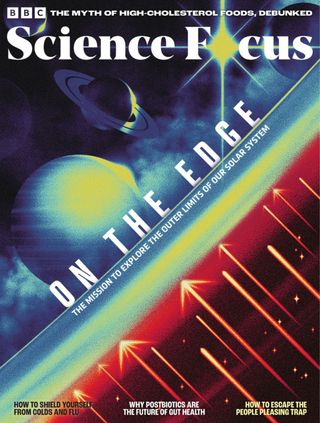

Cette histoire est tirée de l'édition November 2025 de BBC Science Focus.
Abonnez-vous à Magzter GOLD pour accéder à des milliers d'histoires premium sélectionnées et à plus de 9 000 magazines et journaux.
Déjà abonné ? Se connecter
PLUS D'HISTOIRES DE BBC Science Focus

BBC Science Focus
World's biggest cobweb is home to 100,000 spiders
Spiders don't normally create such large colonies, so there's no need to worry about finding one in your basement

1 min
February 2026

BBC Science Focus
A dementia vaccine could be gamechanging – and available already
Getting vaccinated against shingles could protect you from getting dementia, or slow the progression of the disease
1 mins
February 2026

BBC Science Focus
DATA IN SPACE
An unusual spacecraft reached orbit in November 2025, one that might herald the dawn of a new era.
7 mins
February 2026

BBC Science Focus
Climate change is already shrinking your salary
No matter where you live, a new study has found warmer temperatures are picking your pocket
4 mins
February 2026

BBC Science Focus
A MENTAL HEALTH GLOW-UP
Forget fine lines. Could Botox give you an unexpected mental health tweakment?
3 mins
February 2026
BBC Science Focus
Most people with high cholesterol gene don't know they have it
Standard testing struggles to detect the condition
1 mins
February 2026

BBC Science Focus
HOW CAN I BOOST MY IQ?
If you're serious about getting smarter, it's time to ditch the brain-training apps
4 mins
February 2026

BBC Science Focus
Humans are absolutely terrible at reading dogs' emotions
Think you can tell how our furry friends are feeling? Think again
1 mins
February 2026

BBC Science Focus
HOW TO TEACH AI RIGHT FROM WRONG
If we want to get good responses from AI, we may need to see what it does when we ask it to be evil
3 mins
February 2026

BBC Science Focus
What Australia's social media ban could really mean for under-16s
Many people think social media is bad for our kids. Australia is trying to prove it
5 mins
February 2026
Listen
Translate
Change font size