Essayer OR - Gratuit
Google Gemini: Could this be the ChatGPT killer?
BBC Science Focus
|March 2024
Google is working on a model to take on OpenAl. But is it good enough?
-

In 2023, ChatGPT took off. The online artificial intelligence (AI) tool became so big that even your uncle who doesn't own a smartphone knew about it. But as its owners, OpenAI, continue to polish and improve their prodigy, there's a competitor ready to take over.
Soon after the launch of ChatGPT, Google announced it was working on its own AI tool, Bard. A rival to Open Al's offering, Bard could do all the things ChatGPT could, but with the might of the world's largest search engine behind it.
Now, Google is taking another step forward with its latest AI project: Google Gemini. Currently being rolled out, Gemini is claimed to already be outperforming ChatGPT and it's left plenty of us wondering if Google will take the AI top spot in 2024.
WHAT IS GEMINI AND HOW DOES IT WORK?
When it comes to AI, the application that everyone knows about is ChatGPT. But for that tool to work it needs to be powered by something, that's where GPT-4 comes in. A large language model, GPT-4 is trained on billions of sets of data from the internet to understand images, texts, context and many other factors.
Gemini is to Google what GPT-4 is to OpenAI; it's the artificial intelligence that runs programs like ChatGPT or, in the Case of Google, Bard. Built from the ground up and using teams from across Google, Gemini can generalise and understand content, including text, code, audio, image and video. Like GPT4, Gemini was trained on a massive dataset, including books, articles, code repositories, music, audio recordings and other forms of media.
All this data is broken down into a form that's more understandable to Gemini. The model then learns the relationships between different terms and media, learning how to respond to prompts, questions and proposals.
HOW TO TRY GOOGLE GEMINI FOR FREE

Cette histoire est tirée de l'édition March 2024 de BBC Science Focus.
Abonnez-vous à Magzter GOLD pour accéder à des milliers d'histoires premium sélectionnées et à plus de 9 000 magazines et journaux.
Déjà abonné ? Se connecter
PLUS D'HISTOIRES DE BBC Science Focus

BBC Science Focus
HOW FISH COULD SAVE MILLIONS OF PEOPLE'S SIGHT
There's nowhere near enough donors to meet the demand for corneal transplants. A pioneering treatment that relies on fish scales could change that

3 mins
May 2026

BBC Science Focus
Your Wi-Fi is lying to you
Wi-Fi 7's giant speed claims might look impressive, but the realities of our homes – and the laws of physics – mean that real-world performance will never get close
6 mins
May 2026
BBC Science Focus
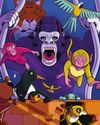
WHICH ANIMAL IS MOST LIKELY TO ESCAPE FROM THE ZOO?
Have you heard the one about the monkey and the Yorkshire pudding?
2 mins
May 2026
BBC Science Focus
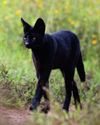
THE BLACK SERVAL
The black serval (Leptailurus serval) is an unusual, melanistic version of the African serval, a medium-sized wild cat that's native to Africa.
2 mins
May 2026
BBC Science Focus
Cryosleep vs hibernation: What's the difference?
When hibernating animals, such as hedgehogs and dormice, disappear for winter, they don't freeze like the Siberian salamander.
1 mins
May 2026
BBC Science Focus
Space brain
The greatest names in science are often said to be 'big-brained', but this cosmic wonder puts them all to shame. Nebula PMR 1 - otherwise known as the 'Exposed Cranium' nebula for its distinctive shape - measures around 3.2 light-years across.
1 min
May 2026

BBC Science Focus
Your most draining relationships are taking years off your life, study suggests
Difficult people don't just zap your energy - they may also accelerate your biological ageing
4 mins
May 2026

BBC Science Focus
DOES EARTH HAVE A HEARTBEAT?
Move over, Ringo Starr.
1 mins
May 2026
BBC Science Focus
WEIGHT-LOSS DRUGS FOR ALL?
The obesity crisis is ruining lives and costing governments trillions. But some healthcare experts think there's now a radical solution: roll out GLP-1 jabs to everyone who needs them for free. Could it work?
9 mins
May 2026
BBC Science Focus
HOW TO SEE VENUS ON APPROACH TO JUPITER
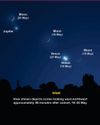
Venus has been slowly moving away from the Sun's glare over the past few weeks, heading into the evening twilight after sunset.
1 mins
May 2026
Listen
Translate
Change font size