Essayer OR - Gratuit
ECLIPSES ON DEMAND
BBC Science Focus
|September 2024
Inside an unassuming building, behind a damp car park in Antwerp, Belgium, scientists are teaching two spacecraft to be dance partners for a performance that will take place in front of the Sun.

It's early April, just days before the Great American Eclipse, when the Moon will slip in between us and our star, giving excited astronomers a rare, but brief, chance to see its corona - the 'crown' that forms its outer atmosphere.
If the two spacecraft can be taught to perform their dance correctly, the scientists in Belgium will be able to create their own, artificial eclipses and observe the corona whenever they want. Why? Because doing so could help us solve one of the biggest mysteries in solar physics: what's happening inside the Sun's fainter coronal ring.
There's a lot we don't know about the corona - why it's over a million degrees hotter than the Sun's surface, for instance. Or why space.weather (the radiation, particles, magnetic fields and matter ejected by the Sun that can interact with Earth's atmosphere and disrupt our electrical systems) originates from it. We don't know because the Sun's light outshines the corona, making it impossible to see, unless something blocks the Sun's light. Something like the Moon during an eclipse... or a pair of spacecraft performing a carefully choreographed dance.
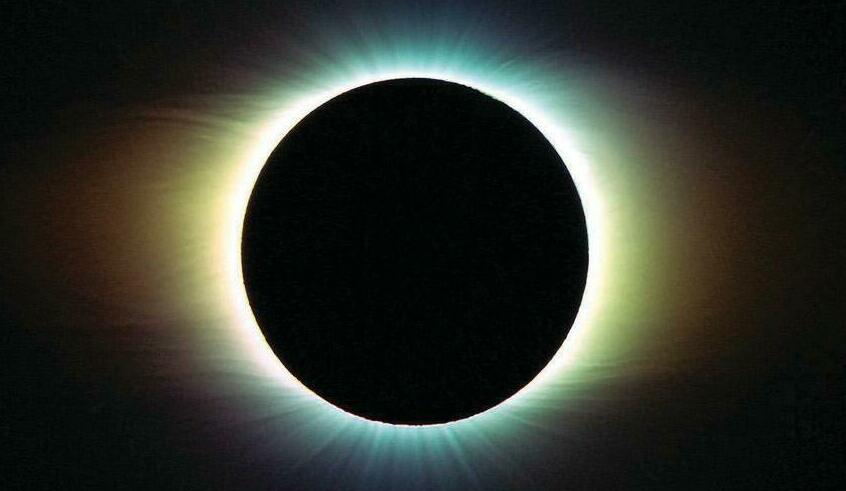 The spacecraft in question are of part the European Space Agency's (ESA's) Proba-3 mission and have to be taught to dance with each other because they'll be too far from Earth to control with the precision required to produce artificial eclipses. The mission's full name, Project for OnBoard Autonomy, gives a clue (albeit an unwieldy one) as to the level of involvement its controllers on Earth expect to have.

Cette histoire est tirée de l'édition September 2024 de BBC Science Focus.
Abonnez-vous à Magzter GOLD pour accéder à des milliers d'histoires premium sélectionnées et à plus de 9 000 magazines et journaux.
Déjà abonné ? Se connecter
PLUS D'HISTOIRES DE BBC Science Focus

BBC Science Focus
DOES MY DOG HAVE ADHD?
Officially, Attention-Deficit Hyperactivity Disorder (ADHD) is a human condition. People are diagnosed with it. Dogs are not. Yet many of its core features, including hyperactivity, impulsivity and distractibility, can be found in dogs.

1 min
March 2026
BBC Science Focus
DOES MY BRAIN LIVE A LITTLE IN THE PAST?
Yes, your brain does live a little in the past. It can't help it. The information it receives via your senses is always a little out of date. Whether it's light entering the retinas in your eyes, or sounds vibrating the hairs in your ears, it not only takes time for the data to arrive, but your brain then has to process it.
2 mins
March 2026
BBC Science Focus
ASTRONOMY FOR BEGINNERS
RETURN OF THE EVENING STAR (VENUS)
1 mins
March 2026

BBC Science Focus
CAN YOU STOP YOUR SENSE OF TASTE DULLING AS YOU AGE?
Sometimes I hear people say that food just doesn't taste the same as they get older. It's tempting to blame this on age, but there are other factors at play, too.
1 mins
March 2026
BBC Science Focus
MICROBIOMES OF THE SUPERAGERS
BY STUDYING THE INCREASING NUMBER OF PEOPLE WHO ARE LIVING BEYOND THEIR 100TH BIRTHDAYS, SCIENTISTS ARE DISCOVERING THAT THE SECRET TO REACHING A RIPE OLD AGE IN RUDE HEALTH MIGHT LIE IN OUR GUTS
8 mins
March 2026

BBC Science Focus
HOW BIG WERE MEDIEVAL WAR HORSES?
You might picture knights charging into battle on towering steeds, but medieval horses were typically no bigger than modern-day ponies.
1 min
March 2026
BBC Science Focus
FORCES OF HABIT
Could new research on setting up healthy habits resuscitate those stuttering New Year resolutions?
3 mins
March 2026

BBC Science Focus
5 DANGERS HIDING IN YOUR PROCESSED FOOD
We all know that ultra-processed foods are bad for us, but what ingredients should we particularly try to avoid? And what are they doing to our bodies?
9 mins
March 2026
BBC Science Focus
Mosquitoes are becoming thirstier for human blood
Habitat loss may be pushing mosquitoes towards human hosts with deadly consequences
1 mins
March 2026

BBC Science Focus
HOW CAN I GET OVER MY EX?
Relationship breakups can be brutal, just look at the popularity of songs like 'Someone Like You' by Adele, or all the covers of 'Cry Me a River' by Julie London.
1 mins
March 2026
Listen
Translate
Change font size