Essayer OR - Gratuit
ANTIGRAVITY: A RECENT TEST RESULT MIGHT HAVE RULED IT OUT
BBC Science Focus
|November 2023
Hoverboards and flying cars may be off the cards... but dark energy may yet come to the rescue

According to first Newton, then Einstein, and now an experiment at CERN, gravity is an attractive force that exists between all objects in the Universe. That includes objects that have no mass, because gravity acts on energy, and mass is just one form of energy (as Einstein's most famous equation states, energy is equal to mass multiplied by the square of the speed of light). This is why even massless photons of light, travelling from distant stars, have their paths bent as they pass massive galaxies on the way.
Antigravity is a hypothetical repulsive gravitational force. In some ways, it sounds obvious that it should exist. There are both attractive and repulsive electric forces, so why not the same for gravity?
The difference is that electric charge comes in two types, positive and negative. Different charges (a positive and a negative) will attract each other, while charges that are alike (two positives or two negatives) repel each other. The equivalent of 'charge' for gravity is energy, and it only comes in one type: positive.
As these positive energies attract each other there doesn't seem to be room for antigravity, which is a pity because it would be a great way of flying around without the need for rockets, jet engines or even wings.
However, there is (or was, until this month) a possible get-out clause for antigravity: antimatter.
Antimatter isn't hypothetical, it's very real. Particles such as electrons have an antimatter equivalent.
The antiparticle of the electron is the positron, and it has not only been observed, but is regularly used in hospitals for diagnostic purposes.


Cette histoire est tirée de l'édition November 2023 de BBC Science Focus.
Abonnez-vous à Magzter GOLD pour accéder à des milliers d'histoires premium sélectionnées et à plus de 9 000 magazines et journaux.
Déjà abonné ? Se connecter
PLUS D'HISTOIRES DE BBC Science Focus

BBC Science Focus
DOES MY DOG HAVE ADHD?
Officially, Attention-Deficit Hyperactivity Disorder (ADHD) is a human condition. People are diagnosed with it. Dogs are not. Yet many of its core features, including hyperactivity, impulsivity and distractibility, can be found in dogs.

1 min
March 2026

BBC Science Focus
DOES MY BRAIN LIVE A LITTLE IN THE PAST?
Yes, your brain does live a little in the past. It can't help it. The information it receives via your senses is always a little out of date. Whether it's light entering the retinas in your eyes, or sounds vibrating the hairs in your ears, it not only takes time for the data to arrive, but your brain then has to process it.
2 mins
March 2026
BBC Science Focus
ASTRONOMY FOR BEGINNERS
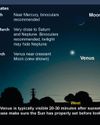
RETURN OF THE EVENING STAR (VENUS)
1 mins
March 2026

BBC Science Focus
CAN YOU STOP YOUR SENSE OF TASTE DULLING AS YOU AGE?
Sometimes I hear people say that food just doesn't taste the same as they get older. It's tempting to blame this on age, but there are other factors at play, too.
1 mins
March 2026

BBC Science Focus
MICROBIOMES OF THE SUPERAGERS
BY STUDYING THE INCREASING NUMBER OF PEOPLE WHO ARE LIVING BEYOND THEIR 100TH BIRTHDAYS, SCIENTISTS ARE DISCOVERING THAT THE SECRET TO REACHING A RIPE OLD AGE IN RUDE HEALTH MIGHT LIE IN OUR GUTS
8 mins
March 2026

BBC Science Focus
HOW BIG WERE MEDIEVAL WAR HORSES?
You might picture knights charging into battle on towering steeds, but medieval horses were typically no bigger than modern-day ponies.
1 min
March 2026

BBC Science Focus
FORCES OF HABIT
Could new research on setting up healthy habits resuscitate those stuttering New Year resolutions?
3 mins
March 2026

BBC Science Focus
5 DANGERS HIDING IN YOUR PROCESSED FOOD
We all know that ultra-processed foods are bad for us, but what ingredients should we particularly try to avoid? And what are they doing to our bodies?
9 mins
March 2026
BBC Science Focus
Mosquitoes are becoming thirstier for human blood
Habitat loss may be pushing mosquitoes towards human hosts with deadly consequences
1 mins
March 2026

BBC Science Focus
HOW CAN I GET OVER MY EX?
Relationship breakups can be brutal, just look at the popularity of songs like 'Someone Like You' by Adele, or all the covers of 'Cry Me a River' by Julie London.
1 mins
March 2026
Translate
Change font size