
Passez à l'illimité avec Magzter GOLD
Obtenez un accès illimité à plus de 9 000 magazines, journaux et articles Premium pour seulement
Essayer OR - Gratuit
De-dollarisation & BRICS' quest for financial sovereignty
The Sunday Guardian
|March 09, 2025
For decades, the U.S. dollar has been the dominant currency in the global financial system, functioning as the primary medium for international trade and the key reserve currency for central banks.

This dominance has given the United States considerable economic and geopolitical leverage, allowing it to impose financial sanctions and influence international monetary policies.
However, recent geopolitical tensions and global economic shifts have accelerated discussions on reducing dependence on the dollar, a process referred to as "de-dollarization." At the forefront of these discussions are the BRICS nations—Brazil, Russia, India, China, and South Africa. These countries are exploring ways to enhance their financial autonomy by reducing reliance on the U.S. dollar in trade, investments, and monetary reserves.
While a fully integrated BRICS currency remains an ambitious goal, alternative strategies such as local currency settlements, new financial institutions, and independent payment systems are being pursued. This article examines the motivations behind the BRICS nations' de-dollarization efforts, the challenges associated with creating a common currency, and the broader implications of this shift for the global financial landscape.
Why Are BRICS Countries Seeking to Reduce Dollar Dependence?
The drive for de-dollarization among BRICS nations is rooted in both economic pragmatism and geopolitical strategy. The U.S. dollar's dominance gives Washington the power to impose financial restrictions on countries that do not align with its foreign policy objectives. Nations like Russia and China, which have faced increasing economic sanctions from the U.S. and its allies, see dollar dependency as a strategic vulnerability.

Cette histoire est tirée de l'édition March 09, 2025 de The Sunday Guardian.
Abonnez-vous à Magzter GOLD pour accéder à des milliers d'histoires premium sélectionnées et à plus de 9 000 magazines et journaux.
Déjà abonné ? Se connecter
PLUS D'HISTOIRES DE The Sunday Guardian

The Sunday Guardian
INDIA'S SMALL REACTOR, LARGE AMBITION
Understanding India's small modular reactor project is key in comprehending the vast nuclear energy ambition of the world's most populous, fast-growing country.

8 mins
February 22, 2026
The Sunday Guardian
INDIA-BANGLADESH MARITIME COOPERATION STAYED THE COURSE DESPITE POLITICAL SHIFTS
According to official Indian Navy data, in 2023-2024, India allotted 39 naval training slots to Bangladesh under the ITEC framework, and 37 were utilised.
3 mins
February 22, 2026

The Sunday Guardian
'INDIA SHOULD RE-NEGOTIATE TRADE DEAL WITH THE U.S.'
India should either opt out or delay negotiations or seek fresh terms so that the trade deal looks equitable, say experts.
5 mins
February 22, 2026

The Sunday Guardian
SAD RALLY TARGETS MANN GOVERNMENT AMID RELIGIOUS ROW
Akali Dal intensifies campaign as granthi allegations spark controversy.
2 mins
February 22, 2026
The Sunday Guardian
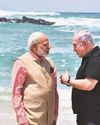
Shalom Namaste: As PM Modi travels to Israel
Israel is India's second largest defence supplier, with a large market for hight technology intensive Israeli arms industry. Israel is also in collaboration with various Indian companies to manufacture in India.
4 mins
February 22, 2026
The Sunday Guardian
India expands intelligence partnerships, turns provider from consumer
India has expanded intelligence-sharing arrangements, surveillance infrastructure, and geospatial cooperation with more than 20 countries since 2014, while simultaneously investing in advanced technologies including artificial intelligence, satellite systems, and digital surveillance platforms to strengthen its intelligence-gathering capacity across defence, intelligence, police, and paramilitary agencies.
3 mins
February 22, 2026

The Sunday Guardian
Karmayogi: How to reclaim meaning in academic life
Karmayogi is not a spiritual ornament but a professional orientation that shifts motivation from reward to responsibility and from anxiety to contribution.
5 mins
February 22, 2026

The Sunday Guardian
US’ renewed Tibet policy matters
For decades, Tibet has lived in the diplomaticshadows—acknowledged but rarely prioritized, invoked but seldom defended with sustained policy attention.
2 mins
February 22, 2026
The Sunday Guardian
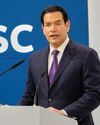
EUROPE’S LEADERS SHOULD DERIVE RESERVED COMFORT FROM RUBIO’S SPEECH
Rubio's speech reflects a broader reality: the US is unlikely to abandon Europe, but it is equally unlikely to return to a sentimental conception of the transatlantic bond. The alliance is entering a post-romantic phase.
4 mins
February 22, 2026
The Sunday Guardian
DEMOCRATS DEMAND REFUND AFTER U.S. SUPREME COURT TOSSES OUT TRUMP TARIFFS
Governor J.B. Pritzker sent U.S. President Donald Trump an invoice on Friday demanding nearly $9 billion in tariff refunds for Illinois families after the Supreme Court ruled the President's much-touted levies are illegal.
1 mins
February 22, 2026
Listen
Translate
Change font size