Essayer OR - Gratuit
The write stuff How human scribes are fuelling AI
The Guardian Weekly
|September 13, 2024
20,000 people work full-time to train’ models like ChatGPT. Here, a data annotator spills the beans on hisjob
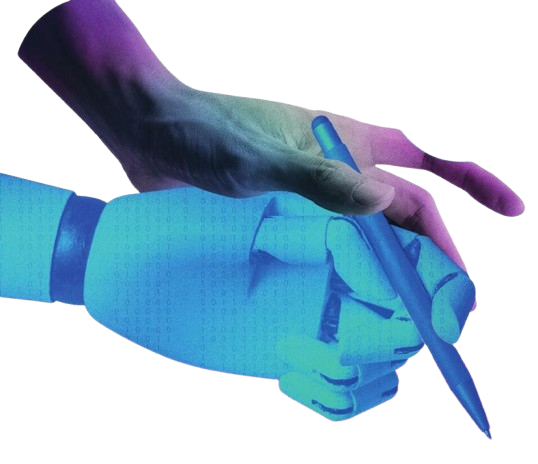
Each week, I write for a tech company worth billions of dollars. Alongside me are novelists, academics and other freelance journalists. The workload is flexible, the pay better than we are used to, and the assignments never run out. But what we write will never be read by anyone outside the company.
That's because we aren't even writing for people. We are writing for an AI.
Large language models (LLMS) such as ChatGPT have made it possible to automate huge swathes of linguistic life, from summarising any amount of text to drafting emails, essays and even entire novels. These tools appear so good at writing, they have become synonymous with the very idea of artificial intelligence.
But before they ever risk leading to a godlike superintelligence or devastating mass unemployment, they first need training. Instead of using these chatbots to automate us out of our livelihoods, tech companies are contracting us to help train their models.
The core part of the job is writing pretend responses to hypothetical chatbot questions. This is the training data the model needs to be fed. The "AI" needs an example of what "good" looks like before it can try to produce "good" writing.
As well as providing our model with such "gold standard" material, we are also helping it attempt to avoid "hallucinating" - a poetic term for telling lies. We do so by feeding it examples that use a search engine and cite sources. Without seeing writing that does this, it cannot learn to do so by itself.
Hold on. Aren't these machines trained on billions and billions of words and sentences? What would they need us fleshy scribes for?
Well, for starters, the internet is finite. And so too is the sum of every word in every book ever written. So what happens when the last pamphlet and papyrus have been digitised and the model is still not perfect? What happens when we run out of words?

Cette histoire est tirée de l'édition September 13, 2024 de The Guardian Weekly.
Abonnez-vous à Magzter GOLD pour accéder à des milliers d'histoires premium sélectionnées et à plus de 9 000 magazines et journaux.
Déjà abonné ? Se connecter
PLUS D'HISTOIRES DE The Guardian Weekly

The Guardian Weekly
Trump has shown there aren't any rules. We'll all regret that
I never thought it possible that you could look back on the Iraq war and feel some measure of nostalgia.

4 mins
January 09, 2026

The Guardian Weekly
The new world order 'according to Trump
With the audacious snatch and grab raid that extracted Nicolás Maduro to face trial in the United States, Washington sent a clear message to its allies and adversaries:
3 mins
January 09, 2026
The Guardian Weekly
The phone is ringing, but is it a scam? I'll ask my assistant
I am staring at my computer when my phone rings.
3 mins
January 09, 2026

The Guardian Weekly
The unlikely genius of Getdown Services
Scatological lyrics, social conscience, a commitment to fun and a shoutout from Walton Goggins - 2026 is going to be the laptop garage band's year
3 mins
January 09, 2026

The Guardian Weekly
Behind the race to get Americans back on the moon
With astronauts set to fly around the moon for the first time in more than half a century when Artemis 2 makes its ascent sometime this spring, 2026 was already destined to become a standout year in space.
3 mins
January 09, 2026
The Guardian Weekly
Striking it rich The US plan for involvement in Venezuela's 'bust' oil sector
The Venezuelan oil industry has been “a total bust” for a long time, according to Donald Trump.
2 mins
January 09, 2026

The Guardian Weekly
Life after extinction Science or science fiction?
A startup's plans for resurrecting lost creatures have caught the public's imagination but many researchers doubt that such a feat is possible
5 mins
January 09, 2026

The Guardian Weekly
It's a ridiculous time to be a man'
A group of male comedians is at the forefront of a new genre of social media comedy poking fun at our ever-shifting notions of modern masculinity
4 mins
January 09, 2026

The Guardian Weekly
Charting the global economy in 2026
With inflation predicted to cool, rising unemployment, weak growth and trade tensions pose fresh risks, while high debt and AI add to uncertainty in the year ahead
4 mins
January 09, 2026
The Guardian Weekly
High stakes for Mamdani as he must now deliver on his promises to New York
The multiple firsts achieved by New York’s new mayor, Zohran Mamdani, have been well chronicled: he is the first Muslim to occupy that role, the first south Asian and the first to be born in Africa.
2 mins
January 09, 2026
Listen
Translate
Change font size