Essayer OR - Gratuit
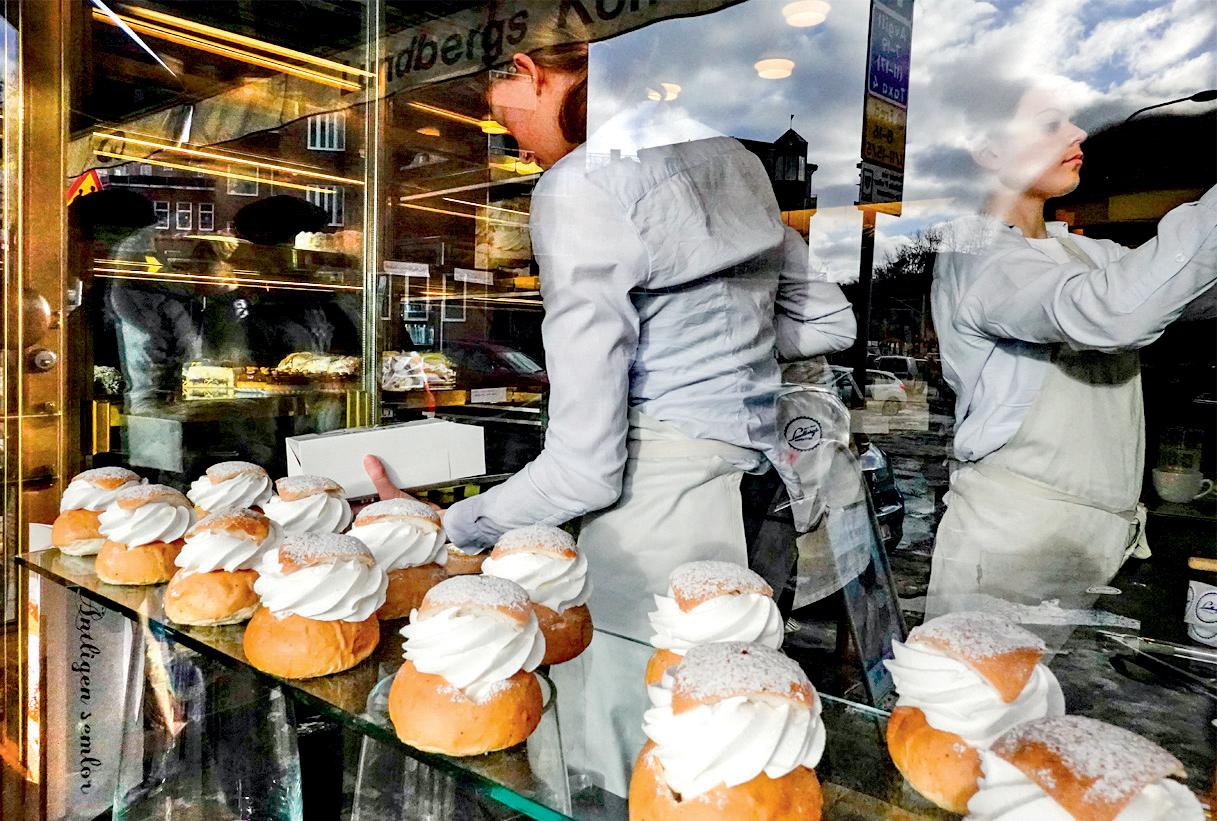
Semla fever How buns went from spring treat to TikTok hit
The Guardian Weekly
|February 28, 2025
The earliest version of the Swedish semla was a 16thcentury plain bread bun served in a soup of warm milk eaten only on Shrove Tuesday in preparation for the 40-day fast of Lent.
It is a far cry from this year's hit varieties, which include Dubai chocolate (the chocolate bar with a knafeh and pistachio filling that became a TikTok trend) and chokladboll (based on a Scandinavian oat, cocoa and butter ball-a popular fika or coffee time item).
Social media has turbocharged the popularity of the traditional buns but also transformed them almost beyond recognition.
The whipped cream-filled, almond paste-stuffed Instagram-friendly semlor that fill the windows of Sweden's bakeries and patisseries in the run-up to Lent this year are more of a celebration of decadent eating than fasting.
They have an entire season dedicated to them approximately between January and March - and their popularity and variations keep growing.
Milda Doumit, who runs Lindquists Konditori in Stockholm with her husband, Bassel, said: "The semla has evolved from a traditional Swedish bun to a modern pastry that is constantly being renewed and adapted to today's tastes and demands."

Cette histoire est tirée de l'édition February 28, 2025 de The Guardian Weekly.
Abonnez-vous à Magzter GOLD pour accéder à des milliers d'histoires premium sélectionnées et à plus de 9 000 magazines et journaux.
Déjà abonné ? Se connecter
PLUS D'HISTOIRES DE The Guardian Weekly

The Guardian Weekly
Trump has shown there aren't any rules. We'll all regret that
I never thought it possible that you could look back on the Iraq war and feel some measure of nostalgia.

4 mins
January 09, 2026

The Guardian Weekly
The new world order 'according to Trump
With the audacious snatch and grab raid that extracted Nicolás Maduro to face trial in the United States, Washington sent a clear message to its allies and adversaries:
3 mins
January 09, 2026
The Guardian Weekly
The phone is ringing, but is it a scam? I'll ask my assistant
I am staring at my computer when my phone rings.
3 mins
January 09, 2026

The Guardian Weekly
The unlikely genius of Getdown Services
Scatological lyrics, social conscience, a commitment to fun and a shoutout from Walton Goggins - 2026 is going to be the laptop garage band's year
3 mins
January 09, 2026

The Guardian Weekly
Behind the race to get Americans back on the moon
With astronauts set to fly around the moon for the first time in more than half a century when Artemis 2 makes its ascent sometime this spring, 2026 was already destined to become a standout year in space.
3 mins
January 09, 2026
The Guardian Weekly
Striking it rich The US plan for involvement in Venezuela's 'bust' oil sector
The Venezuelan oil industry has been “a total bust” for a long time, according to Donald Trump.
2 mins
January 09, 2026

The Guardian Weekly
Life after extinction Science or science fiction?
A startup's plans for resurrecting lost creatures have caught the public's imagination but many researchers doubt that such a feat is possible
5 mins
January 09, 2026

The Guardian Weekly
It's a ridiculous time to be a man'
A group of male comedians is at the forefront of a new genre of social media comedy poking fun at our ever-shifting notions of modern masculinity
4 mins
January 09, 2026

The Guardian Weekly
Charting the global economy in 2026
With inflation predicted to cool, rising unemployment, weak growth and trade tensions pose fresh risks, while high debt and AI add to uncertainty in the year ahead
4 mins
January 09, 2026
The Guardian Weekly
High stakes for Mamdani as he must now deliver on his promises to New York
The multiple firsts achieved by New York’s new mayor, Zohran Mamdani, have been well chronicled: he is the first Muslim to occupy that role, the first south Asian and the first to be born in Africa.
2 mins
January 09, 2026
Listen
Translate
Change font size