Essayer OR - Gratuit
Plutonium, aluminium, plastic - How humans changed the face of the Earth
The Guardian Weekly
|January 13, 2023
Scientists debate the place that best sums up the rise of Homo sapiens and dawn of the Anthropocene era

This month, geologists will select a site that demonstrates most vividly how humans have changed the structure of our planet’s surface. They will choose a place they believe best illustrates when a new epoch – which they have dubbed the Anthropocene – was born and its predecessor, the Holocene, came to an end.
The Holocene began at the conclusion of the last ice age 11,700 years ago as the great glaciers that had previously covered the Earth began to retreat. In their wake, modern humans spread inexorably across the planet.
Homo sapiens flowered during the Holocene but our expansion had geological consequences. The minerals we mined, the gases we released by burning fossil fuels and the radioactive material we have produced have begun to make fundamental changes to Earth’s geology.
Many scientists believe the Holocene is over and they have given the name Anthropocene to its replacement, a move that recognises humans as planetary influencers for the first time. As to the date of this event, most point to the years that followed the second world war when countries worldwide embarked on a massive economic and industrial expansion. This triggered the Anthropocene, it is argued.
But exactly where this transformation should be commemorated has yet to be decided. A list of nine sites – including coral reefs in Australia, layers of silt from Canada and ice cores from Antarctica – was created last year by the Anthropocene Working Group as the best candidates in providing markers, in their sediments, that demonstrate the changes that led to the new epoch.

Cette histoire est tirée de l'édition January 13, 2023 de The Guardian Weekly.
Abonnez-vous à Magzter GOLD pour accéder à des milliers d'histoires premium sélectionnées et à plus de 9 000 magazines et journaux.
Déjà abonné ? Se connecter
PLUS D'HISTOIRES DE The Guardian Weekly
The Guardian Weekly
Price of fame
The creator of eradefining sitcom Girls on sex, stress and the dark side of celebrity

3 mins
May 08, 2026
The Guardian Weekly
Angels of deception
To test the safety and security of AI, hackers have to trick large language models into breaking their own rules. It requires ingenuity and manipulation - and can come at a deep emotional cost
9 mins
May 08, 2026
The Guardian Weekly
COUNTRY DIARY
Richard Bray’s hives stand in a crooked line at the edge of the apple orchard, beside a low thicket of nettles.
1 mins
May 08, 2026

The Guardian Weekly
Where are the so-called anti-racists when British Jews need them?
For me, it's mostly sadness.
4 mins
May 08, 2026
The Guardian Weekly
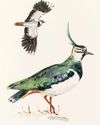
Take flight The Lost Words pair set sights on birds
Jackie Morris and Robert Macfarlane give the Guardian extracts from their book on Britain's declining bird species
4 mins
May 08, 2026

The Guardian Weekly
Fears for spears: how to cook asparagus without blanching
\"Blanching captures that green, verdant nature of asparagus so well, and saves its minerality, too,\" agrees Bart Stratfold of Timberyard in Edinburgh, but when the season is going full tilt, it's just common sense to expand our horizons.
2 mins
May 08, 2026

The Guardian Weekly
Just divine
A major London exhibition reveals how Francisco de Zurbarán reaches into the deepest dimensions of spirituality
6 mins
May 08, 2026
The Guardian Weekly
Brave new world
Olive Kitteridge and Lucy Barton make way for a teacher haunted by trauma
2 mins
May 08, 2026
The Guardian Weekly
My mother is addicted to gaming. What should I do?
My mother is in her 70s and addicted to playing video games such as Tetris, many different versions of solitaire and slot machine gambling games.
2 mins
May 08, 2026
The Guardian Weekly
Kneecap
Five tracks into Fenian, the listener is confronted by rapper Mo Chara expressing a desire to go and live off-grid outside a village in County Meath.
1 min
May 08, 2026
Translate
Change font size