Essayer OR - Gratuit
A disaster foretold The story behind 1986's Challenger space shuttle explosion is a gripping catalogue of underfunding and stifling bureaucracy
The Guardian Weekly
|June 21, 2024
In 1986, two catastrophic events occurred on either side of the cold war divide that shocked the world. On 28 January, 73 seconds after takeoff, the US space shuttle Challenger broke apart in mid-air, killing all seven astronauts on board and traumatising millions of viewers watching live on TV. Three months later, on 26 April, a meltdown at Chornobyl sent a radioactive cloud across the USSR and Europe. Two workers died immediately and the estimated death toll over time ranges from hundreds to tens of thousands. It's widely believed to have contributed to the collapse of the Soviet Union.

In his 2019 book Midnight in Chernobyl, the British writer Adam Higginbotham reconstructed the latter event in forensic detail, building up to the meltdown and tracking its aftermath with the skill of a great thriller writer. It's one of the most queasily compelling books I've ever read, and the scenes in which ill-equipped workers venture into the stricken reactor in the hope of containing the fallout are permanently seared into my memory.
Now Higginbotham is tackling the former event, and despite the awful spectacle of the Challenger disaster and the media frenzy around it at the time-heightened by the presence on board of the charismatic schoolteacher Christa McAuliffe - it would seem the more difficult of the two incidents to turn into a nonfiction pageturner tense enough to make your palms sweat.
For one thing, the Challenger's demise though it punctured Nasa's reputation for competency under pressure, and rattled the US's conception of itself as a spacefaring nation - did not have the empire-toppling force of Chornobyl, which also hobbled the cause of nuclear energy. For another, though the key event at Chornobyl unfolded very quickly, the danger persisted long after the meltdown and rippled outwards to affect millions of people.
The Challenger disaster, by contrast, was over within seconds, and besides the impact on the astronauts and their families, the main damage in the aftermath was to the reputations of those who pushed for the launch despite being aware of fatal flaws in the technology.


Cette histoire est tirée de l'édition June 21, 2024 de The Guardian Weekly.
Abonnez-vous à Magzter GOLD pour accéder à des milliers d'histoires premium sélectionnées et à plus de 9 000 magazines et journaux.
Déjà abonné ? Se connecter
PLUS D'HISTOIRES DE The Guardian Weekly

The Guardian Weekly
Carrot halva mini bundts
Carrot halva is a sticky, spice-laced pudding that's beloved across India, Pakistan, Bangladesh and the diaspora communities abroad.

1 mins
May 15, 2026
The Guardian Weekly
Worried sick
Fearing the worst can lead to physical changes, according to this fascinating study
1 mins
May 15, 2026

The Guardian Weekly
Surviving the information crisis 'We once talked about fake news - now reality itself feels fake'
In this age of crisis, technology is pulling us apart. At its best, journalism can bring us together again.
23 mins
May 15, 2026
The Guardian Weekly
To infinity and beyond
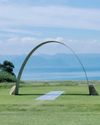
Our writer travels to Naoshima, Japan's legendary 'art island' - and meets Lee Ufan, the great creator of its most spellbinding works
5 mins
May 15, 2026

The Guardian Weekly
Going green: how to keep iron levels up on a vegetarian diet
I’ve been advised to increase the iron in my diet but, as a vegetarian preoccupied with getting sufficient protein, I’m at a loss. June, by email
2 mins
May 15, 2026

The Guardian Weekly
Nightmarish imagining of Bolsonaro's coup bears a warning
The year is 2025 and far-right coup plotters have annihilated Brazil’s democracy, assassinating the president, closing the national congress and surrendering the Amazon rainforest and its untold riches to the United States.
2 mins
May 15, 2026

The Guardian Weekly
Hitting the spot
Angine de Poitrine are the year's buzziest, dottiest band-but are they really ancient aliens inspired by monkeys? The duo tell all
6 mins
May 15, 2026

The Guardian Weekly
Test drive Cana sprawling city make public transit work? Sydney may be on the right track
At Penrith, a suburb on Sydney’s rural fringe 50km west of the central business district, you can catch a train to the city every four to eight minutes during the morning peak, and roughly every 10 to 15 minutes during off-peak hours before midnight.
2 mins
May 15, 2026

The Guardian Weekly
Curve ball What it's like to live inside a Gaudí masterwork
Imagine that you live in an enormous, beautiful apartment designed by one of the world’s most admired architects in the most expensive street in Spain and for which you pay a derisory rent, with the right to live there until you die.
2 mins
May 15, 2026

The Guardian Weekly
Hantavirus Outbreak that turned a dream cruise into tragedy
As the stricken ship was evacuated, questions lingered about how passengers came to be infected with the virus
6 mins
May 15, 2026
Listen
Translate
Change font size