Essayer OR - Gratuit
Fly me to the moon...
Hindustan Times Jammu
|November 23, 2025
It wasn't easy, bringing the stars indoors. The world's first planetarium opened 100 years ago, in Germany. It used the grainy imagery of the time, but elicited gasps nonetheless. Today, planetariums invite viewers to zoom through galaxies, tour clouds of asteroids, view meteors as they approach. And, a new future looms: explorations of tech, biology, even the human body - on domes so large and crystal-clear, they're helping astrophysicists learn about space
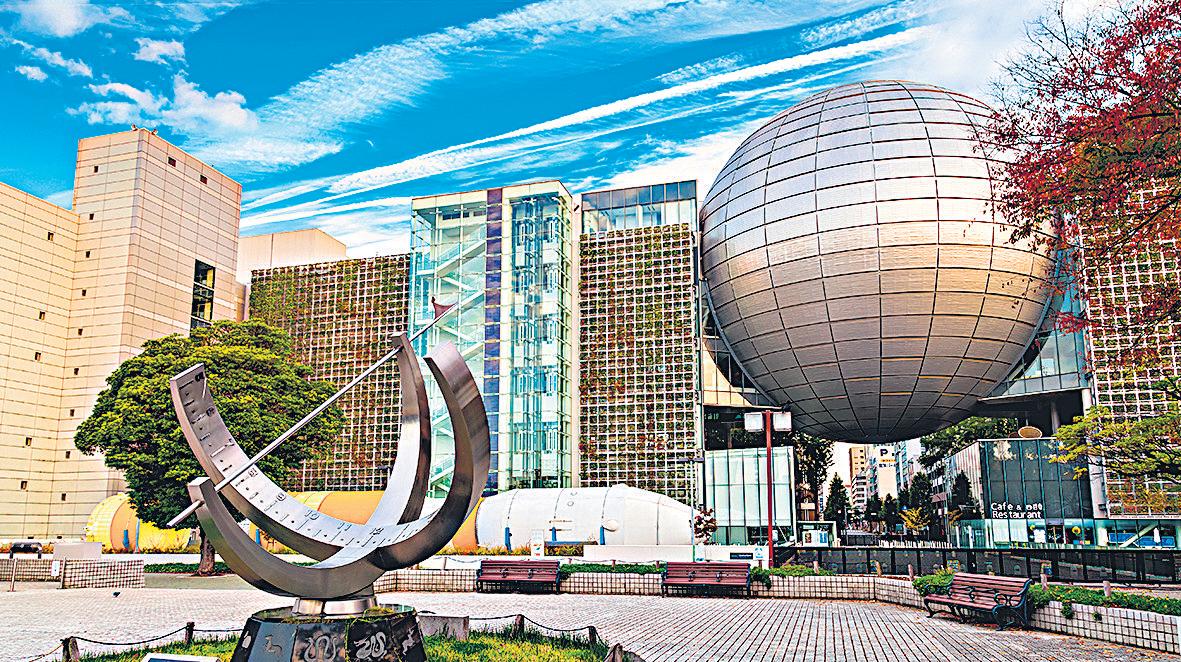
It's 1925, and a small crowd has stepped into a pitch-black dome and heard the doors close behind them.
As they struggle to adjust to the darkness, the roof seems to disappear. An expanse of star-studded sky appears above them.
There are no models of ringed globes in this planetarium. No pinholes in the walls, with light shining through to mimic stars. Instead, there is a hub in the centre of the room, throwing out imagery of a dazzling night sky.
"It matters not whether the audience be made up of children or adults, professional people or laymen, the emotional experience is always the same," astronomer George Clyde Fisher wrote, in an essay in the journal Popular Astronomy. "When... the stars are 'turned on,' the audience gasps audibly... No one is prepared for anything so realistic and so dramatic."
Today's planetariums map swirling galaxies, zoom through clouds of asteroids, and add imagery of real meteors as they approach. We'll get to some of those in a bit. First, a look at why things changed, 100 years ago.
It all began with a German electrical engineer named Oskar von Miller, in 1913. von Miller was a busy man. Amid the race for electrification (which picked up pace in the 1880s), he had helped electrify major German cities. A passionate educator, he helped set up the Deutsches Museum in Munich in 1903, a rare institute dedicated to the history of science and technology, and served as its first director.
A decade on, artificial light and rising pollution levels had started to blot out the night sky. In an era of great strides for science, von Miller wondered, was there something he could do to bring people closer to the stars?
He reached out to the optics factory Carl Zeiss, makers of some of the world's best optical instruments since the 1840s. Could they make a machine that could project, indoors, real imagery of the night sky?

Cette histoire est tirée de l'édition November 23, 2025 de Hindustan Times Jammu.
Abonnez-vous à Magzter GOLD pour accéder à des milliers d'histoires premium sélectionnées et à plus de 9 000 magazines et journaux.
Déjà abonné ? Se connecter
PLUS D'HISTOIRES DE Hindustan Times Jammu
Hindustan Times Jammu
Playbook for diplomacy in the neighbourhood
I vividly remember boarding the then INS Vikrant—formerly HMS Hercules—with my father during a special port call to Colombo in the 1970s.

3 mins
December 03, 2025

Hindustan Times Jammu
Homegrown blueprints for countering terrorism
The blast at Red Fort that injured scores and killed at least 12 persons, brought back terrorism to Delhi, which, since 2011, has been spared of any major terrorist strike.
3 mins
December 03, 2025
Hindustan Times Jammu
Securing cellphones
Controversy over cybersecurity app brings issues of cyber fraud and privacy to the fore
2 mins
December 03, 2025
Hindustan Times Jammu
Reimagining transport policy to check pollution
Delhi and the larger NCR must adopt a forward-looking, data-driven strategy to reduce transport emissions
4 mins
December 03, 2025
Hindustan Times Jammu
In pursuit of a SMART police
Change of public perception will follow once the police force is reformed
2 mins
December 02, 2025
Hindustan Times Jammu
Bridging the gaps in rare earths sufficiency
Last week, the Union Cabinet approved the “Scheme to Promote Manufacturing of Sintered Rare Earth Permanent Magnets” with an outlay of ₹7,280 crore.
4 mins
December 02, 2025
Hindustan Times Jammu
Blue prosperity with plastic-free coastline
Plastic Island is the unfortunate nickname a small island in Norway called Lisle Lyngoy had earned, thanks to half a century of undisturbed accumulation of marine waste on its shores and in its surrounding waters.
3 mins
December 02, 2025
Hindustan Times Jammu
Why are markets cool though GDP is hot?
A mix of reasons, both domestic and foreign, is keeping market enthusiasm on GDP numbers muted
4 mins
December 02, 2025
Hindustan Times Jammu
Nuances in the debate on the age of consent
Debates on children’s issues often erupt into public controversy, and the current discussion on the age of consent is no different.
3 mins
December 01, 2025
Hindustan Times Jammu
The message in high growth
Low inflation, tax cuts have boosted GDP numbers. Overall, the economy is ona high growth path, in the near term and medium term
2 mins
December 01, 2025
Listen
Translate
Change font size