Essayer OR - Gratuit
World has steel glut, but no one wants to stop making it
Bangkok Post
|July 29, 2025
A global plunge in prices, led by increased production in China and US tariffs, threaten steel manufacturing, which has long been a symbol of national might, writes Patricia Cohen from IJmuiden, The Netherlands
-
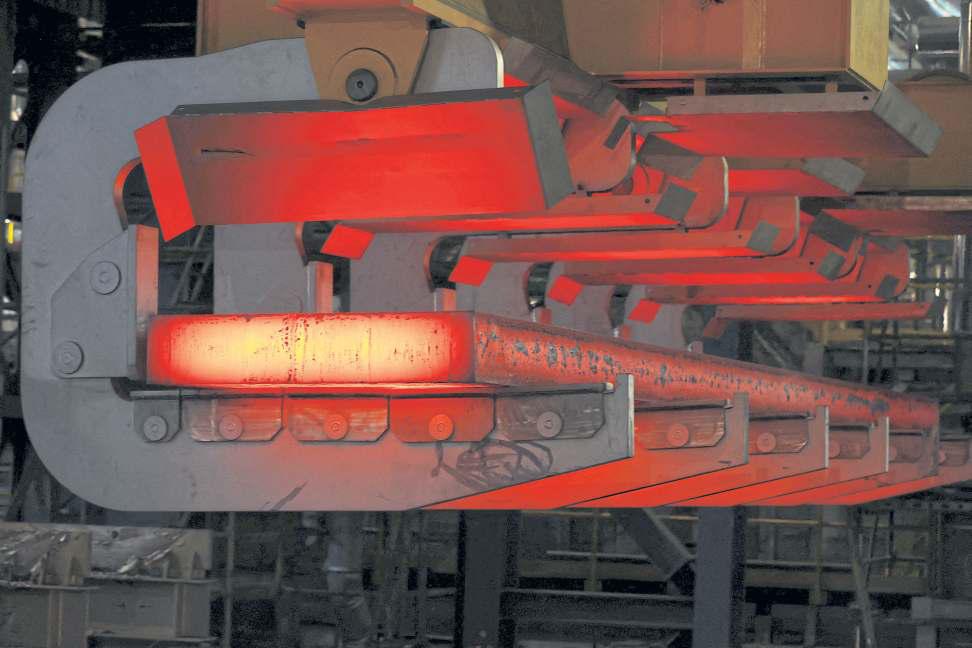
At Tata Steel’s plant in IJmuiden on the outskirts of Amsterdam, cauldrons of lava-like molten steel are poured into long, thin trays that harden into identical 40-by-4-foot slabs of steel.
The end products, though, are strictly haute couture. Every item is made to order: battery casings that do not leak, crumple-zone car parts that absorb the force of a crash, cans that safely preserve food for years.
Very few companies in the world can produce this kind of advanced high-grade steel. Even so, Tata is being hit by the same forces that are pummelling every steel maker: Manufacturers are producing more steel than the world can possibly use.
Excess steel production is estimated to reach 721 million tonns by 2027, according to the Organization for Economic Cooperation and Development.
One answer would be to simply make less steel. The problem is that no country wants to be the one to stop producing a material that is considered essential to its economic and national security.
Steel-making has always held an outsize position as a symbol of economic power and prestige. It constitutes the fabric of modern life, used not only for buildings, roads, cars, refrigerators, electronics, forks and screws but also for weaponry, tanks and fighter jets.
In Europe, the recognition that the United States can no longer be relied on as the primary guarantor of its security has further underscored steel’s critical role in defence.
“Steel is fundamental to Britain's industrial strength, to our security and to our identity as a primary global power,” Britain's business and trade secretary, Jonathan Reynolds, told Parliament in April when the government passed emergency legislation to take control of the country’s last two operational blast furnaces.


Cette histoire est tirée de l'édition July 29, 2025 de Bangkok Post.
Abonnez-vous à Magzter GOLD pour accéder à des milliers d'histoires premium sélectionnées et à plus de 9 000 magazines et journaux.
Déjà abonné ? Se connecter
PLUS D'HISTOIRES DE Bangkok Post
Bangkok Post
Beijing warns robot makers about moving too fast
The Chinese government is betting that robots will drive economic growth, but the bots can't really do much yet, write Meaghan Tobin and Xinyun Wu from Taipei

2 mins
December 18, 2025
Bangkok Post
CELEBRATE ANY DAY WITH LAWRY'S THE PRIME RIB BANGKOK
At Lawry's The Prime Rib Bangkok, every day is a reason to celebrate.
1 min
December 18, 2025

Bangkok Post
Flood resilience a national imperative
The twin cyclones Senyar and Ditwah that struck South and Southeast Asia in November caused unprecedented flooding across the region, with Thailand among the most severely affected.
4 mins
December 18, 2025
Bangkok Post
ATP to apply extreme heat rule
The ATP men’s tennis tour will introduce an extreme heat policy from 2026 after criticism from players who sweltered through some tournaments this year.
2 mins
December 18, 2025

Bangkok Post
Bondi gunman hit with terror charges
Community mourns loss of beloved rabbi
2 mins
December 18, 2025

Bangkok Post
FESTIVE SPLENDOUR BY THE SEA
CENTARA RESERVE SAMUI ELEVATES CHRISTMAS AND NEW YEAR CELEBRATIONS WITH REFINED DINING, BEACHFRONT GLAMOUR AND A SPECTACULAR OCEANFRONT COUNTDOWN.
2 mins
December 18, 2025
Bangkok Post
Dragons on fire, roar into second place
High-flying Ratchaburi hammered Rayong 4-2 to move up to second place in the Thai League 1 on Tuesday night.
1 min
December 18, 2025
Bangkok Post
Riceberry could help restore hair
Unis to run human trials in joint study
2 mins
December 18, 2025
Bangkok Post
EC rules out postponing election
Border fighting will not hinder poll
1 mins
December 18, 2025

Bangkok Post
TAT seeks 5% growth in Kazakh market
Despite a slowdown in the Kazakh market, the Tourism Authority of Thailand (TAT) still targets at least 5% growth next year, coinciding with strong long-haul arrivals that already set a record high of 10 million this year.
2 mins
December 18, 2025
Listen
Translate
Change font size