Essayer OR - Gratuit
THE COMMITTED
Time
|January 27, 2025
Some Long COVID patients are being pressured into psychiatric wards
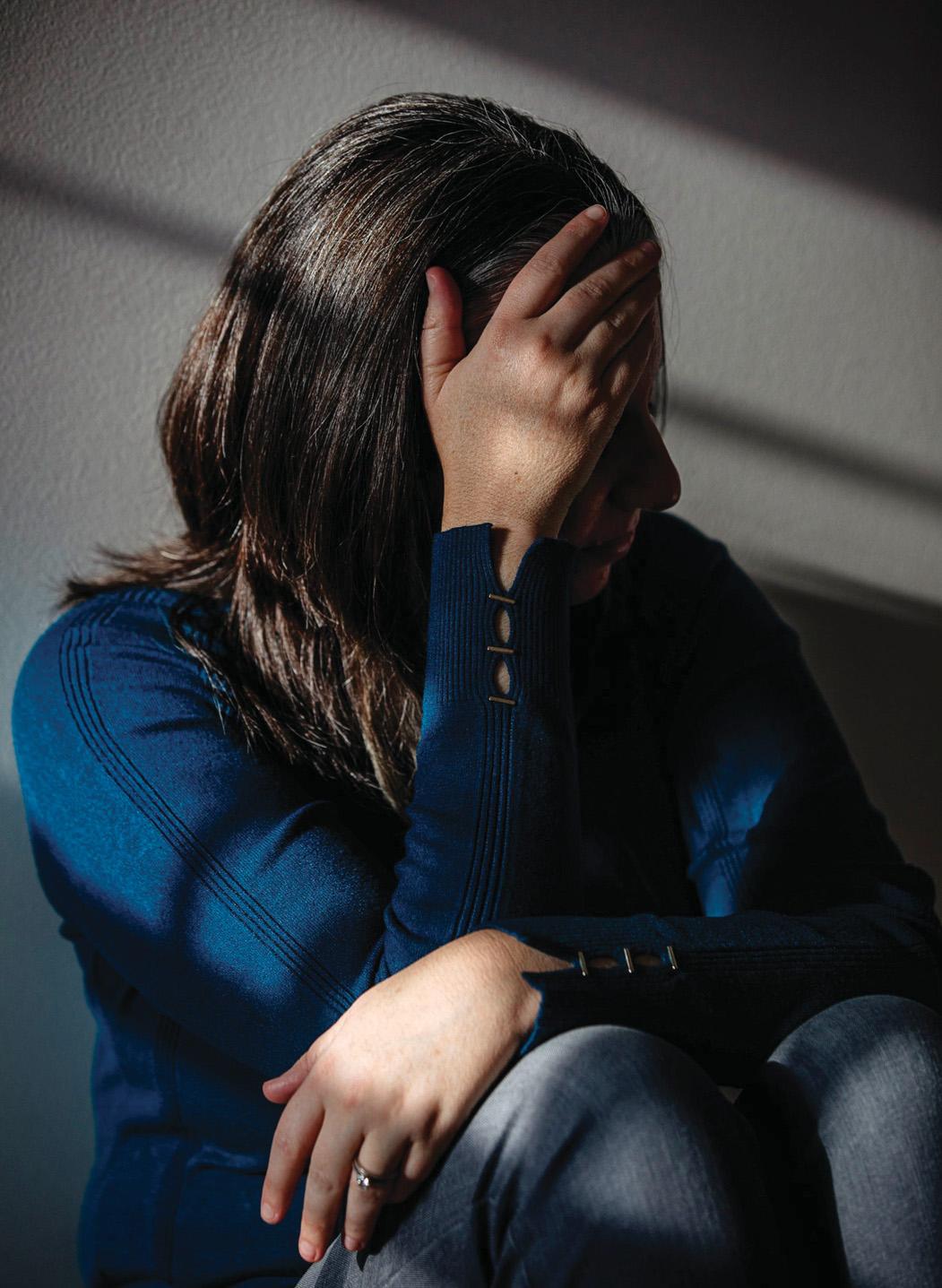
IN LATE 2022, ERIN, A 43-YEAR-OLD FROM PENNSYLVANIA, AGREED to spend six weeks in a psychiatric ward, getting intensive treatment for an illness she knew she didn't have.
That decision was a last resort for Erin, who asked to be identified only by her first name for privacy. Her health had deteriorated after she caught COVID-19 nearly a year earlier; the virus left her with pain, fatigue, rapid weight loss, digestive problems, and vertigo. After another bout with a virus months later, Erin only got sicker, developing heart palpitations, muscle spasms, hoarseness, and pain in her neck, throat, and chest.
Erin was no stranger to chronic illness, having coped with a connective-tissue disorder her whole life. This was different. She became unable to work and rarely left her home. Her usual doctors were stumped; others said her litany of symptoms could be manifestations of anxiety.
When it became too painful to eat and swallow, Erin grew severely malnourished and was hospitalized at a large academic medical center. “I felt at the time like this was my last hope,” says Erin, who has since been diagnosed with Long COVID. “If I didn’t get any answers there, I didn’t know where to go afterward.”
Once again, however, she was disappointed. The only physical diagnosis her doctors landed on was vocal-cord dysfunction, which Erin felt did not explain her wide range of symptoms. When her doctors began to discuss discharging her, Erin panicked and said she could not manage her excruciating symptoms at home—a sentiment that she says contributed to concerns of self-harm among her doctors and kicked off conversations about a stay in the psychiatric ward. Eventually, seeing no other way forward, Erin agreed to go. “I just got increasingly defeated over time,” she says. “I didn’t know what to do.”
She was admitted for a six-week stay and given diagnoses she knew were wrong: an eating disorder and anxiety.

Cette histoire est tirée de l'édition January 27, 2025 de Time.
Abonnez-vous à Magzter GOLD pour accéder à des milliers d'histoires premium sélectionnées et à plus de 9 000 magazines et journaux.
Déjà abonné ? Se connecter
PLUS D'HISTOIRES DE Time

Time
Heated Rivalry depicts autism with a familiar kind of love
THE MAJORITY OF AUTISTIC AND AUTISTIC-coded characters in film and television have long looked, moved, and sounded a certain way. Think Dustin Hoffman's Raymond in Rain Man, Jim Parsons' Sheldon in The Big Bang Theory, or Freddie Highmore's Sean in The Good Doctor.

2 mins
February 09, 2026

Time
A musical about a religious zealot that's never boring
HOW MUCH DO AMBITION AND CHUTZPAH count in filmmaking these days? The Testament of Ann Lee, directed by Mona Fastvold, is for better or worse like no other movie you've seen.
2 mins
February 09, 2026

Time
A SPEEDSKATING SENSATION
Erin Jackson's unconventional path to her third Olympics
2 mins
February 09, 2026

Time
5 doctor-approved ways to use AI for health information
LAST SUMMER, LANCE JOHNSON WOKE up in the middle of the night with excruciating pain in his lower right side. He initially blamed it on the pizza and ice cream he had enjoyed the night before. But five sleepless hours later, the 17-year-old from Phoenix was still suffering, so he decided to consult the nearest expert: ChatGPT.
2 mins
February 09, 2026

Time
Iranian protesters say Trump 'betrayed' them
SEVEN TIMES IN EIGHT DAYS, U.S. PRESIDENT DONALD Trump promised to come to the aid of Iranian protesters if the country's authoritarian regime began killing them in the streets. When it did—slaying thousands on Jan. 8 and 9— Trump doubled down. “KEEP PROTESTING” he urged on Truth Social on Jan. 12. “HELP IS ON ITS WAY.”
5 mins
February 09, 2026

Time
DOMESTIC DISTURBANCE
How a soapy strain of thriller became the defining metaphor of our time
6 mins
February 09, 2026
Time
Venezuelan oil
After the U.S. military operation that led to the capture of Venezuela's President, Nicolás Maduro, Secretary of State Marco Rubio said that the U.S. would seize and sell up to 50 million barrels of the South American nation's oil.
1 min
February 09, 2026

Time
The women saving America's climate data
A COUPLE OF WEEKS AFTER DONALD TRUMP WAS elected President for the second time, a group of federal data watchers gathered in Denice Ross’s dining room. As chief U.S. data scientist under the Biden Administration, Ross had a clear window into just how much information the government collects—whether monitoring a fleet of ocean buoys to guide safe shipping routes or tracking how vulnerable communities are to disaster—and just how useful it is.
5 mins
February 09, 2026

Time
Nia DaCosta The director of 28 Years Later: The Bone Temple on stepping into a storied zombie franchise and calibrating just how much gore serves the story
You've worked with Tessa Thompson on three projects. Do you consider her a muse?
3 mins
February 09, 2026

Time
The Risk Report
THE U.K., FRANCE, AND GERMANY—Europe's political core—begin 2026 with weak, unpopular governments under siege from populists on both the left and right, and a Trump Administration openly working to undermine them. None of these countries holds general elections this year, but all three face risks of political paralysis—and maybe lasting damage.
2 mins
February 09, 2026
Listen
Translate
Change font size