Essayer OR - Gratuit
THE MYTH OF MAD KING GEORGE
The Atlantic
|November 2025
He was denounced by rebel propagandists as a tyrant and remembered by Americans as a reactionary dolt. Who was he really?
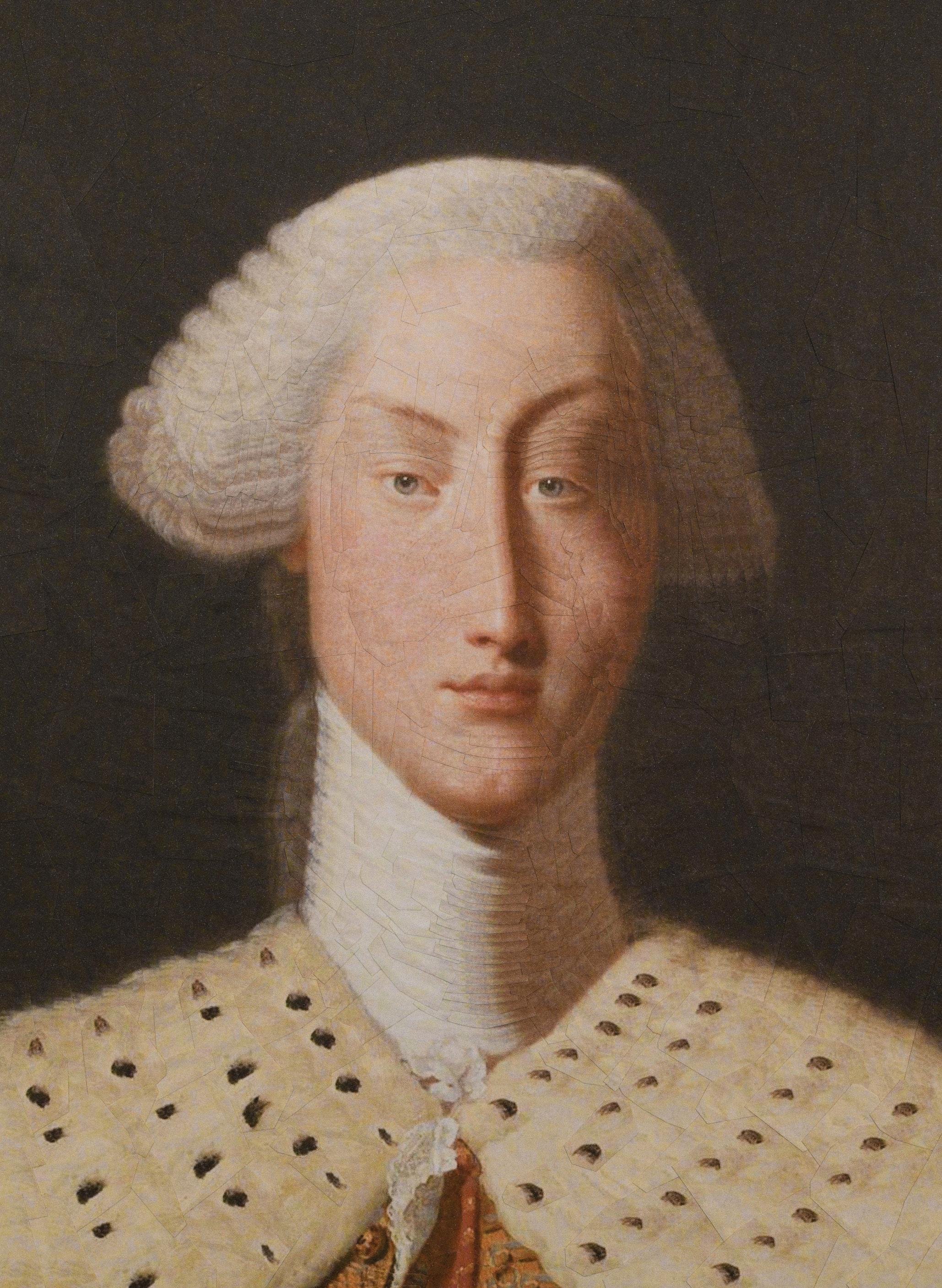
Three miles south of Windsor Castle, in the western exurbs of London, stands a 25-ton equestrian statue of King George III, cast from old cannons in the decade after his death in 1820. Dressed as Marcus Aurelius, in toga and laurel crown, he sits astride his charger, regal and oversize, honored if not revered for a reign that lasted almost 60 years, from the creation of the first British empire in the Seven Years' War through the final defeat of Napoleon.
A similar statue of George as a mounted Roman emperor once stood in New York City atop a marble plinth on Bowling Green, at the lower tip of Manhattan. Commissioned by grateful American colonists following the 1766 repeal of the detested Stamp Act—intended by Parliament to raise money from the lightly taxed colonials—the august figure lasted less than a decade. In July 1776, inflamed by a public reading of the newly adopted Declaration of Independence, Continental Army soldiers and other vandals broke through the iron fence surrounding the statue, lassoed George with ropes, and tugged him to the ground—‘levelled with ye dust,” as a witness reported.
The mob decapitated the King and whacked off his nose. Musket balls punctured his torso, and looters scraped away the 10 ounces of gold leaf that coated rider and horse. The severed head, initially impaled on a spike outside a tavern, would be recovered by a British Army officer and shipped to England to illustrate the “Disposition of the Ungrateful people.” Rebels carted the headless rider and mount in fragments to Connecticut, where Patriot women melted the lead, ladled it into molds, and soon sent George Washington's army 42,088 bullets. “It is hoped,” an American surgeon wrote in his journal, “that the Emanations of the Leaden George will make ... deep impressions in the Bodies of some of his red Coated and Torie subjects.”

Cette histoire est tirée de l'édition November 2025 de The Atlantic.
Abonnez-vous à Magzter GOLD pour accéder à des milliers d'histoires premium sélectionnées et à plus de 9 000 magazines et journaux.
Déjà abonné ? Se connecter
PLUS D'HISTOIRES DE The Atlantic
The Atlantic
The Eighth Deadly Sin
Humankind has devised a new form of debasement.

5 mins
May 2026

The Atlantic
The Art of the (New) Deal
What the murals of the Wilbur J. Cohen Federal Building can teach us about patriotism, propaganda, and beauty
12 mins
May 2026

The Atlantic
New Chairs
Collaboration, for Robert Rauschenberg and Merce Cunningham, began with the arrangement of chairs.
1 mins
May 2026

The Atlantic
HISTORY IS RUNNING BACKWARDS
Why reactionaries are taking over the world
21 mins
May 2026

The Atlantic
SOMEDAY IN TEHRAN
Like Donald Trump, I, too, once underestimated the Islamic Republic of Iran.
16 mins
May 2026

The Atlantic
On Losing a Daughter
The people we were died at the exact moment our child did.
19 mins
May 2026

The Atlantic
I Found It: The Best Free Restaurant Bread in America
Thirteen thousand miles. Infinite contenders. One beautiful loaf.
15 mins
May 2026

The Atlantic
EVERYTHING IS FREE AND NOTHING MATTERS
What I saw at Jeff Bezos's Campfire retreat
9 mins
May 2026

The Atlantic
Who Is Black Comedy For?
A new book is nostalgic for the '90s. But the era of crossover success was not necessarily the pinnacle of Black comedic achievement.
8 mins
May 2026

The Atlantic
The Feeling of Becoming Less and Less of a Person
In Ben Lerner's new novel, technology divides us further from one another, and ourselves.
9 mins
May 2026
Listen
Translate
Change font size