Essayer OR - Gratuit
Paradise Lost
Outlook
|May 11, 2025
The terrorist attack was an assault on something far dearer to Kashmiri Muslims than tourism's potential to contribute to their prosperity: the Islamic values of universal hospitality and empathy for all humans tormented for just being themselves
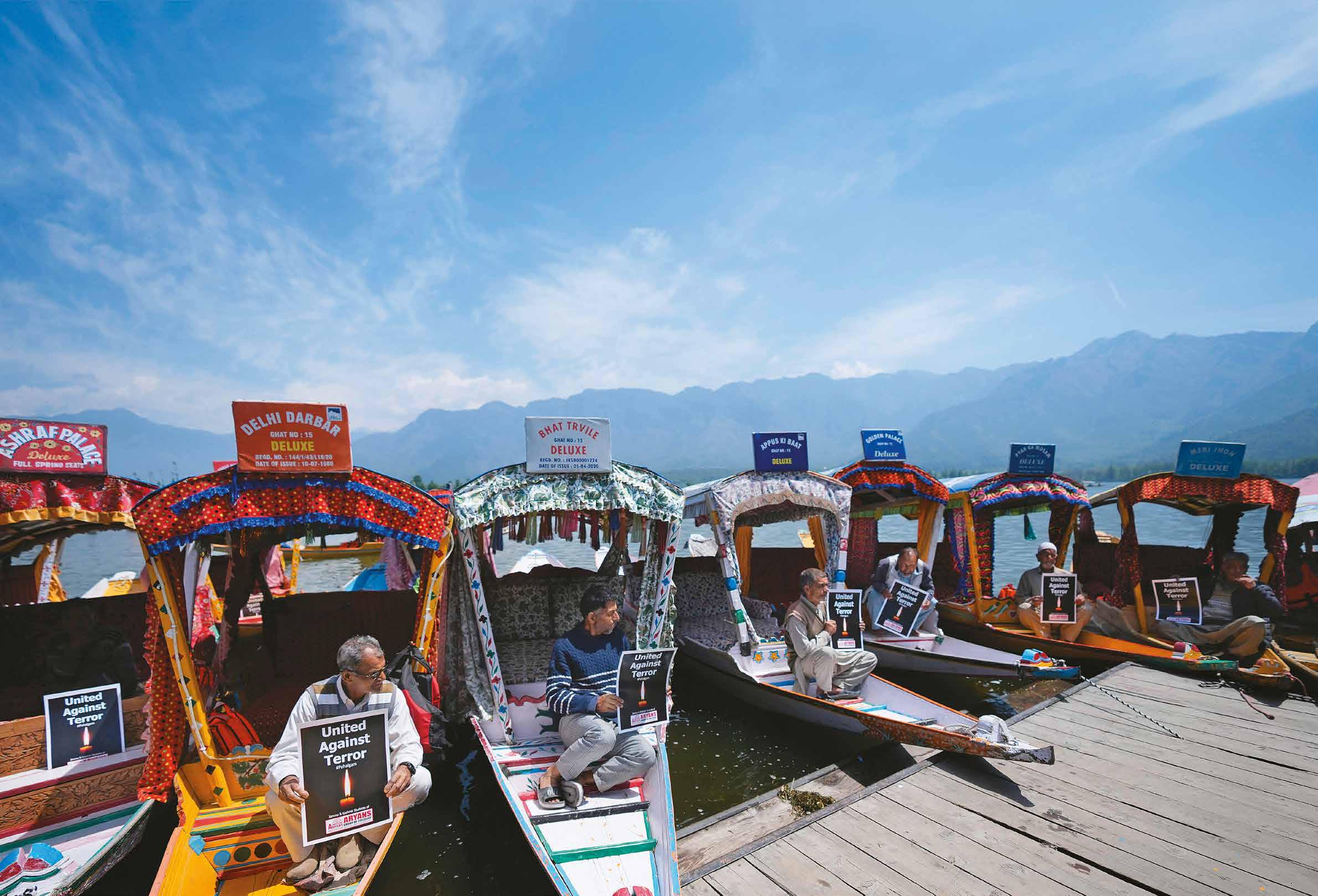
THE tourists didn't return with shawls or saffron, or stories of the mountain trails and placid rivers of 'paradise'—the epithet Mughal emperor Jehangir gave his pleasant summer retreat in the Valley in a couplet so clichéd that neither tourism nor terrorism in Kashmir is talked about without its evocation of heaven and, by implication, hell. This time they carried something else from the Valley: its stench of death, grief and outrage. Some didn't return—they were sent home in coffins, like the soldiers who make it to the news after falling in gunbattles with terrorists in 'paradise'. “Killable bodies,” some call them. Or like the hundreds of young men in Kashmir who leave home to join Pakistan-based terrorist organisations and mostly die younger than other young people of India.
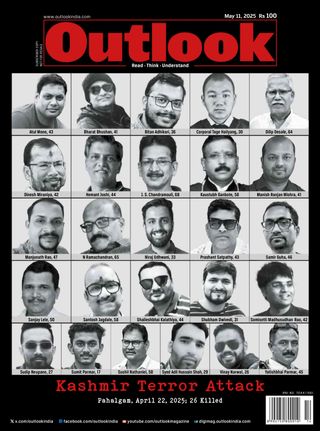
When the terrorists opened fire on tourists in picturesque Pahalgam in Anantnag district on April 22, more “killable bodies” joined the long list of the slain in Kashmir. As blood splattered on the postcard-like beauty of the ambience, the much-celebrated Sufi soul of Kashmir bled into its blood-soaked soil once again. That morning, tourists had arrived from all corners of India—Maharashtra, Gujarat, Karnataka, Tamil Nadu—and also from abroad. March to August is peak tourist season when Kashmir feels most alive—that's when its meadows are green and its historical gardens burst with colour. By evening, though, the sounds of celebration had faded. The streets were empty with people indoors. The Valley was still again, with the silence of its many shutdowns and lockdowns of the past decades.

Cette histoire est tirée de l'édition May 11, 2025 de Outlook.
Abonnez-vous à Magzter GOLD pour accéder à des milliers d'histoires premium sélectionnées et à plus de 9 000 magazines et journaux.
Déjà abonné ? Se connecter
PLUS D'HISTOIRES DE Outlook

Outlook
'Why GDP Growth Doesn't Always Translate Into Votes'
The recent election results have once again shown that economic growth alone does not guarantee electoral victory.

3 mins
June 06, 2026
Outlook
Lights, Camera, Othering
The establishment of Israel has been accompanied by a national cinema devoted to negating and erasing the Palestinian Other
5 mins
June 06, 2026

Outlook
Goodbye to All That
Booker-winning British author Julian Barnes' Departure(s) is a unique hybrid work: playful, philosophical, whimsical
4 mins
June 06, 2026
Outlook
Collapse of Trust
As the NEET-UG 2026 paper leak forced the cancellation of India’s biggest medical entrance exam, more than 22 lakh aspirants find themselves trapped in uncertainty
11 mins
June 06, 2026
Outlook
NO LONGER A TWELFTH MAN
Bihar cricket, which has languished in the shadows for long, is all set to improve its strike rate, thanks to Vaibhav Sooryavanshi, the new Bihari kid on the block
5 mins
June 06, 2026

Outlook
BLAZE OF GLORY
The challenges of being a celebrity cricketer at a young age can be tough to handle
5 mins
June 06, 2026

Outlook
THE SWASHBUCKLERS
A new generation of fearless stars is emerging and finding its feet at the very top of an extremely competitive cricketing environment
5 mins
June 06, 2026

Outlook
THE TEEN TORNAD
At the age of 15, Vaibhav Sooryavanshi is already a cricketing legend
10 mins
June 06, 2026

Outlook
A Journey to Remember
The prerecorded message crackled over the din in the compartment: ‘Welcome to the Shatabdi Express.
4 mins
June 06, 2026

Outlook
Crossing Borders
Ruth Martin is the translator of German-Iranian author Shida Bazyar’s novel The Nights are Quiet in Tehran (originally written in German), which has been shortlisted for the 2026 International Booker Prize.
4 mins
June 06, 2026
Listen
Translate
Change font size