
Passez à l'illimité avec Magzter GOLD
Obtenez un accès illimité à plus de 9 000 magazines, journaux et articles Premium pour seulement
An epic journey
BBC Music Magazine
|December 2025
When asked to write music for Ibsen's play Peer Gynt, Grieg thought he was facing an impossible challenge. But, as Terry Blain relates, the composer's perseverance resulted in a masterpiece of matchless character and colour
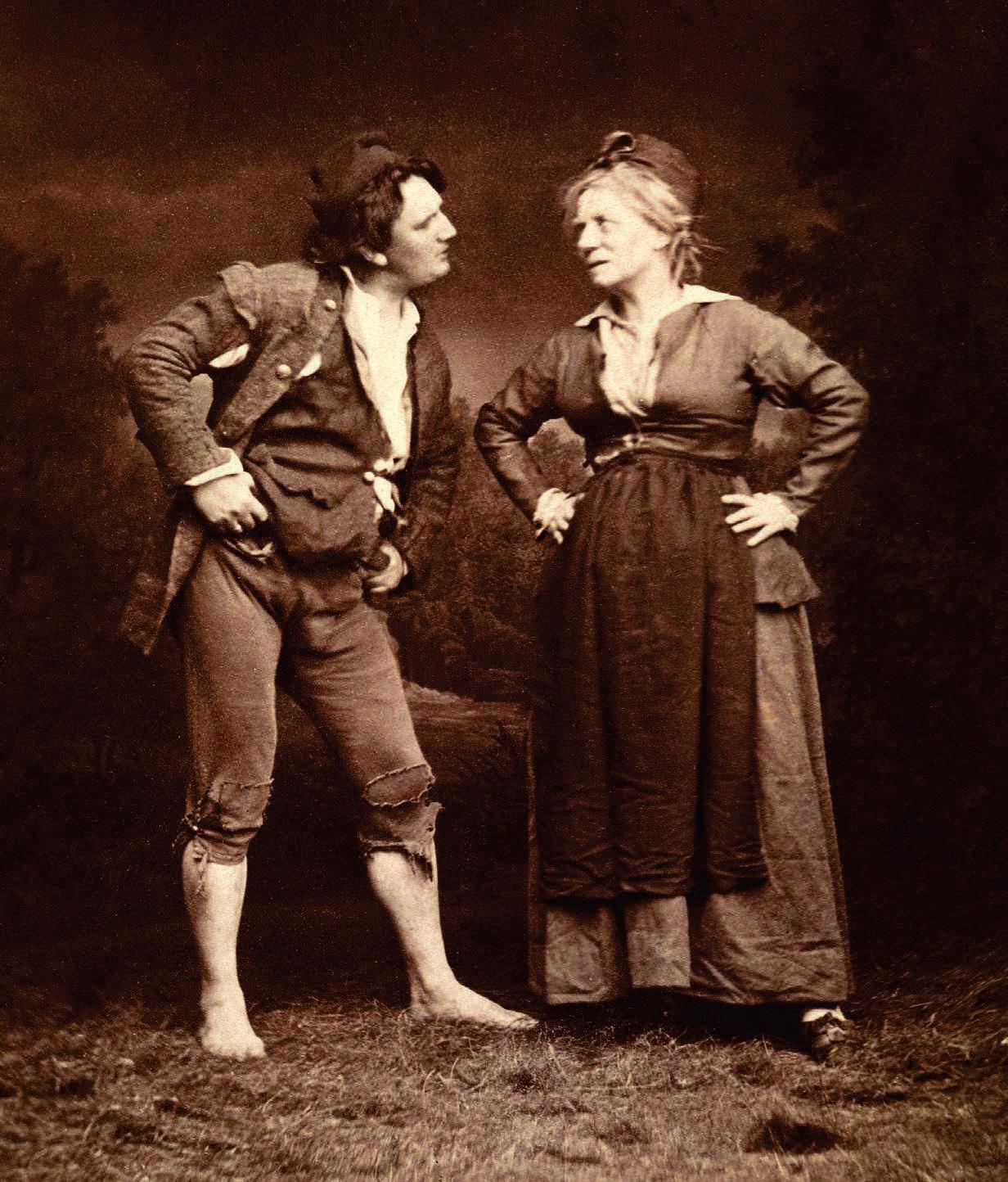
Dear Mr Grieg: I am writing to you in connection with a plan that I propose to implement, and in which I wish to invite your participation.’ The tone is impeccably formal and businesslike, but the letter sent in January 1874 by the Norwegian writer Henrik Ibsen to his compatriot Edvard Grieg planted the seed for one of the most consequential artistic collaborations of the 19th century. The first ever staging of Ibsen’s play Peer Gynt was being mooted, and Ibsen wanted Grieg to write the incidental music which he envisaged accompanying the action. ‘Please let me know if you are willing to undertake this task,’ Ibsen’s letter ended.
Grieg hesitated, not least because his first impressions of Ibsen had not been entirely positive. The pair initially met in Rome nine years earlier, when Grieg noted that Ibsen had been ‘dead drunk’ at a party. A few months later, the playwright was in dubiously high spirits again, demanding that the chairs be cleared for dancing and carousal after a chamber music recital. ‘A few glasses of Foglietti had gone to his head,' Grieg recorded. It was 'strange', he thought, that 'so great a man can be so tactless and in this one area so obtuse'.
Soon enough, however, Grieg replied to Ibsen in a 'friendly' fashion – swayed, as he later acknowledged, by a generous half-share in the fee payable for the new production. The plan was for Grieg to write the Peer Gynt music in the summer of 1874, with the play's premiere tentatively scheduled for early 1875. But from the outset Grieg found the project tricky. 'The work on Peer Gynt is proceeding very slowly, there is no possibility that I can finish it by autumn,' he wrote on 27 August. 'It is a terribly difficult play for which to write music.'
The difficulties Grieg encountered came primarily from the multifaceted nature of Ibsen's play, and its blurring of the distinction between reality and the world of dreams and the subconscious.
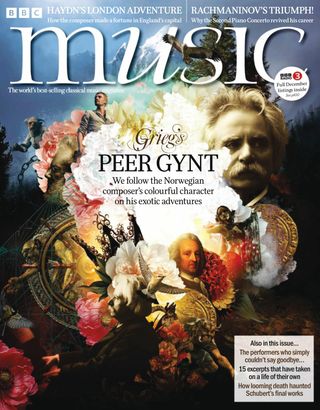

Cette histoire est tirée de l'édition December 2025 de BBC Music Magazine.
Abonnez-vous à Magzter GOLD pour accéder à des milliers d'histoires premium sélectionnées et à plus de 9 000 magazines et journaux.
Déjà abonné ? Se connecter
PLUS D'HISTOIRES DE BBC Music Magazine
BBC Music Magazine
Hiss and make-up
From boos to vegetables, opera stars have had to put up with all sorts being aimed in their direction over the centuries

8 mins
Christmas 2025

BBC Music Magazine
A vivid and intimate portrait of Mahler
Anna Lucia Richter brings striking depth and expressive insight to the composer's song-settings
2 mins
Christmas 2025

BBC Music Magazine
It's all in the genes
Is it a bonus or a burden to be the musical child of musical parents?
7 mins
Christmas 2025

BBC Music Magazine
Banff Canada
Spectacular views and equally stunning string quartet performances are on Jeremy Pound's agenda as he heads to the Canadian Rockies
3 mins
Christmas 2025

BBC Music Magazine
Morten Lauridsen
Terry Blain explores the life of a self-imposed recluse whose magical O Magnum Mysterium beguiles millions of listeners each Christmas
6 mins
Christmas 2025

BBC Music Magazine
In good faith
Composer Roxanna Panufnik and writer Jessica Duchen tell Amanda Holloway how they have joined forces for a new choral work that looks well beyond Christmas for its festive celebrations
8 mins
Christmas 2025

BBC Music Magazine
Westward Ho!
Composer Alex Ho is part of a growing community of musicians combining their British and Chinese heritage in fascinating ways
7 mins
Christmas 2025

BBC Music Magazine
Music & mercy
explores Venice's Ospedale della Pietà, the girls' orphanage where Vivaldi taught and composed
7 mins
Christmas 2025

BBC Music Magazine
Jingle hell!
As the Christmas season approaches, the BBC Music Magazine team share the festive tunes that make our hearts sink
9 mins
Christmas 2025

BBC Music Magazine
Bach's recycled choral music brings festive cheer to Leipzig
Shout, exult, arise, praise these days! Glorify what the Almighty today has done!' Early on the morning of 25 December 1734, these words resounded from the choir stalls of the Thomaskirche, Leipzig, to a jubilant accompaniment of festive timpani, pealing trumpets and scampering violins. Seated at a keyboard, the church's director of music Johann Sebastian Bach marshalled the musicians in a performance of the cantata Jauchzet, frohlocket! Auf, preiset die Tage, which preceded the sermon in the morning service.
3 mins
Christmas 2025
Listen
Translate
Change font size