
Passez à l'illimité avec Magzter GOLD
Obtenez un accès illimité à plus de 9 000 magazines, journaux et articles Premium pour seulement
Essayer OR - Gratuit
What's your attachment style?
Psychologies UK
|July 2025
Understanding how your attachment patterns are rooted in your past — and how they play out in the present — can help you take control with kindness and compassion, writes Jackee Holder

As a child, I would rummage through the two large drawers of the dressing table in my parents' bedroom. I was fascinated to find out more about who my mother was. Delicately handling handwritten letters and photos wrapped in embroidered handkerchiefs, desperate to glimpse the life she had lived before me.
This childhood curiosity reflects something profound: so much of who we are today stems from those early days. Children are like sponges, absorbing through osmosis the language, behaviours, and unspoken narratives from their primary caregivers. It's here we receive our most potent messages about love and intimacy through how affection is shown (or not shown), creating blueprints for our adult relationships.
Understanding these early experiences provides an essential lens for understanding ourselves. This is why this month we turn our attention to attachment styles — a powerful psychological framework coined by British psychologist John Bowlby and expanded by Mary Ainsworth, who revealed how our earliest bonds create patterns that shape our adult relationships, sometimes in ways we don't even recognise.
There are four main attachment styles.
Secure attachment stems from supportive relationships with caregivers. You are confident in who you are, can support your partner without losing yourself, and aren't afraid to be vulnerable.
Anxious attachment often develops from inconsistent early caregiving. You tend to be hypervigilant, constantly scanning for signs of abandonment. This can manifest as emotional hunger in relationships, where reassurance is constantly sought but never quite satisfies.
Avoidant attachment manifests as a fierce desire for independence and develops when children learn that showing needs or emotions results in rejection. This often leads to keeping others at arm's length, protecting yourself from vulnerability and deep emotional discussions.
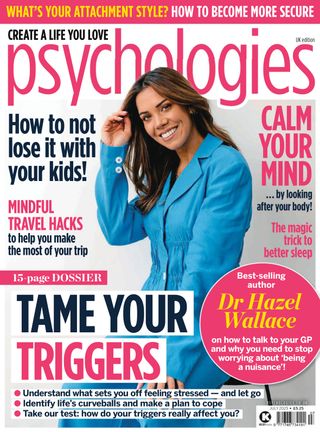

Cette histoire est tirée de l'édition July 2025 de Psychologies UK.
Abonnez-vous à Magzter GOLD pour accéder à des milliers d'histoires premium sélectionnées et à plus de 9 000 magazines et journaux.
Déjà abonné ? Se connecter
PLUS D'HISTOIRES DE Psychologies UK

Psychologies UK
Why do I feel SO SENSITIVE?
I've always been terrible at getting back to people when they communicate with me. Birthday cards? Who am I kidding. A few good friends send them to me, but given they never get one in return, the number is dwindling. Unless I can find the perfect words, a text stays unsent. And don’t even get me started on those two dreaded blue ticks...

5 mins
June 2026

Psychologies UK
HOW THE WILD helped me heal
The sun is warm on my arms as I tentatively step into the lake, the water a delicious cool around my ankles. I give a little shriek as I wade in, little by little, but I soon adjust to the temperature – and it's wonderful to glide through the water. There's the green of the surrounding trees and grass cradling around the lake, the sound of ducks quacking somewhere nearby. I swim gently, and say hello to fellow swimmers out enjoying the sun. It's amazing to me that this place is close to our home.
4 mins
June 2026

Psychologies UK
When our search for safety goes wrong
Kim Morgan's client Anna braves some painful conversations with her children to discover what is really behind her hoarding behaviour
3 mins
June 2026

Psychologies UK
Become an inspirational force in children's emotional wellbeing
Ever wanted to make a difference and train to become a coach? With the Ollie School, you could be changing lives before you know it!
1 mins
June 2026
Psychologies UK
Looking after new mum's mental wellbeing...
Georgie Woollams, founder of Mum-Love.com, a podcast and online space for supporting new mothers, shares what she's learnt from women on the impact of identity loss after childbirth. She explains why looking after new mums should matter to everyone...
1 mins
June 2026

Psychologies UK
Panic buying driven more by group behaviour
It's less about personality — and more about what others are doing
1 min
June 2026

Psychologies UK
Does balance feel like an illusion?
Everyone from the age-old sages to modern-day philosophers have extolled that the art of life is all about balance. But how do you find it?
3 mins
June 2026

Psychologies UK
THE SIMPLE JOY OF DOING SOMETHING COMPLETELY PURPOSELESS on purpose
There is a particular feeling that arrives with the first genuinely warm Saturday of year.The window is open, the light has changed and something in the air smells faintly of possibility. And within minutes, sometimes seconds, the mental list begins. The garden needs sorting. You could finally start that thing you've been putting off since January. You could go for a run, or reorganise the kitchen.
6 mins
June 2026

Psychologies UK
Campaign pushes for better access to countryside
Poor maintenance and signage limit who can enjoy nature
1 min
June 2026

Psychologies UK
Flying isn't all plain sailing...
Harriet Minter is learning to sit with turbulence - both on planes and in real life
2 mins
June 2026
Listen
Translate
Change font size