Essayer OR - Gratuit
Criticising Strawson's Compatibilism
Philosophy Now
|December 2023 / January 2024
Nurana Rajabova is wary of an attempt to dismiss determinism to keep free will.
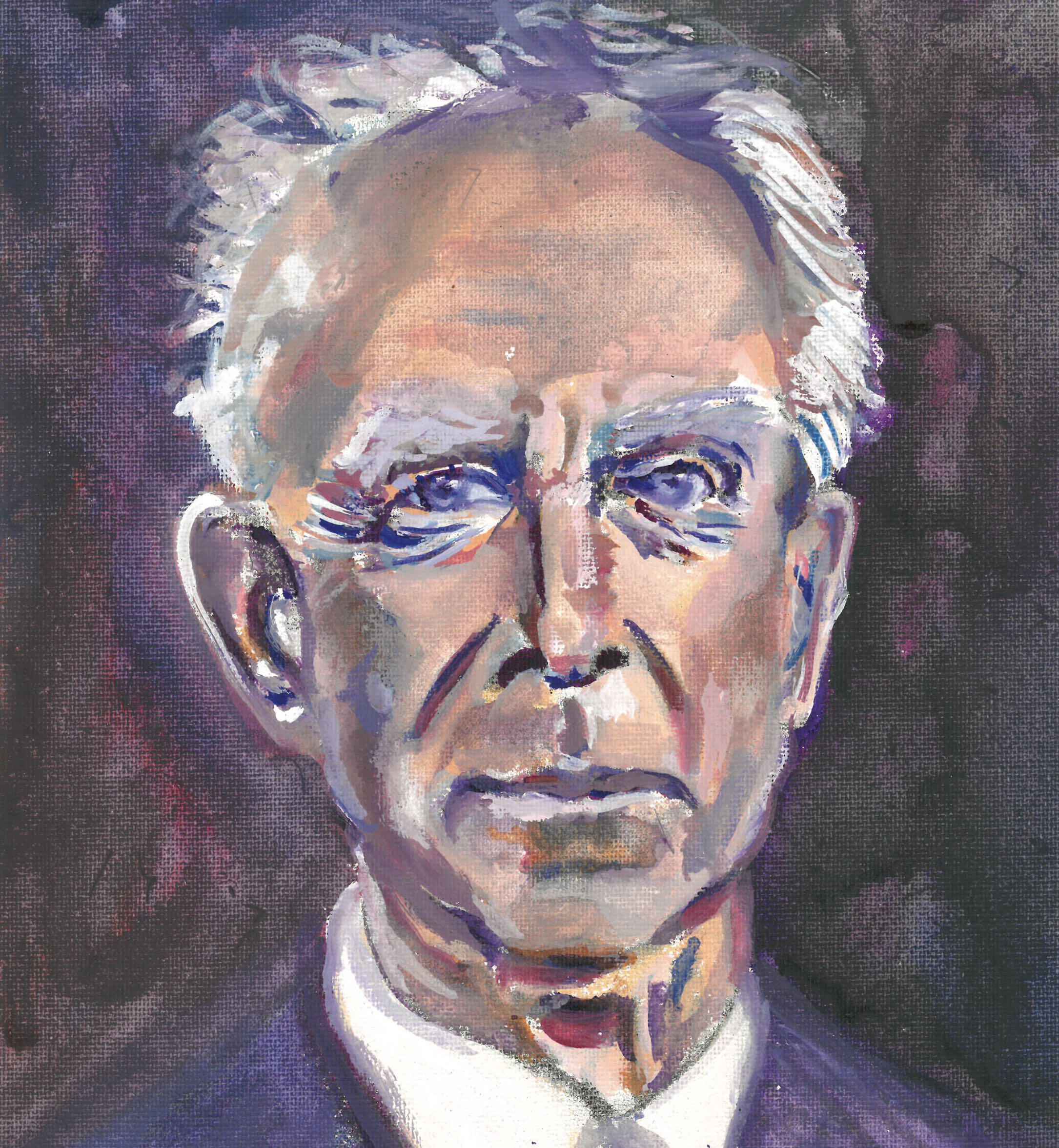
The belief that human beings have moral responsibility is used to judge people based on their actions, then to reward or punish them accordingly. But is this just? This question becomes unavoidable when the theory of determinism enters the discussion. Determinists claim that every event or occurrence in the world, including human desires, thoughts, and acts, are predetermined by physical laws of cause and effect. In such a world there is no space for free will, since any person’s action at any time could not have been different, if all the physical conditions causing it remain the same. As there is no human free will, say the determinists, there can be no moral responsibility either. At the other end of the axis stand libertarians who also view the two phenomena as incompatible, yet the theory they reject is determinism, as they believe that humans do possess free will. Therefore, assigning moral responsibility is justifiable according to their view. In-between these two positions are the compatibilists, who claim that determinism and moral responsibility are not mutually exclusive after all. Different compatibilists explain this with different arguments. In this article, I will only examine one such argument, made by Peter Strawson in his seminal paper ‘Freedom and Resentment’ (Proceedings of the British Academy, Volume 48, 1962), with the purpose of seeing whether it does resolve the centuries old puzzle.
Strawson’s Argument
Before we get into the specifics of his paper, we should note that Strawson has a slightly idiosyncratic compatibilist position. Unlike other compatibilists, he does not identify as a determinist. In fact, he denies that he even understands the thesis of determinism. Instead he argues that
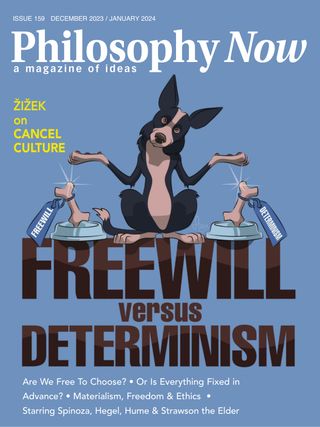

Cette histoire est tirée de l'édition December 2023 / January 2024 de Philosophy Now.
Abonnez-vous à Magzter GOLD pour accéder à des milliers d'histoires premium sélectionnées et à plus de 9 000 magazines et journaux.
Déjà abonné ? Se connecter
PLUS D'HISTOIRES DE Philosophy Now

Philosophy Now
Bilbo Theorizes About Wellbeing
Eric Comerford overhears Bilbo and Gandalf discussing happiness.

9 mins
December 2025 / January 2026

Philosophy Now
What Women?
Marcia Yudkin remembers almost choking at Cornell
11 mins
December 2025 / January 2026

Philosophy Now
Islamic Philosophers On Tyranny
Amir Ali Maleki looks at tyranny from an Islamic perspective.
4 mins
December 2025 / January 2026

Philosophy Now
Peter Singer
The controversial Australian philosopher defends the right to choose to die on utilitarian grounds
5 mins
December 2025 / January 2026

Philosophy Now
Another Conversation with Martin Heidegger?
Raymond Tallis talks about communication problems.
7 mins
December 2025 / January 2026

Philosophy Now
Letters
When inspiration strikes, don't bottle it up. Email me at rick.lewis@philosophynow.org Keep them short and keep them coming!
17 mins
December 2025 / January 2026

Philosophy Now
The Philosophy of William Blake
Mark Vernon looks at the imaginative thinking of an imaginative artist.
9 mins
December 2025 / January 2026

Philosophy Now
Philosophical Haiku
Peering through life’s lens God in nature is deduced: The joy of being.
1 mins
December 2025 / January 2026

Philosophy Now
Philosophy Shorts
More songs about Buildings and Food' was the title of a 1978 album by the rock band Talking Heads. It was about all the things rock stars normally don't sing about. Pop songs are usually about variations on the theme of love; tracks like Rose Royce's 1976 hit 'Car Wash' are the exception. Philosophers, likewise, tend to have a narrow focus on epistemology, metaphysics and trifles like the meaning of life. But occasionally great minds stray from their turf and write about other matters, for example buildings (Martin Heidegger), food (Hobbes), tomato juice (Robert Nozick), and the weather (Lucretius and Aristotle). This series of Shorts is about these unfamiliar themes; about the things philosophers also write about.
2 mins
December 2025 / January 2026

Philosophy Now
Hedonic Treadmills in the Vale of Tears
Michael Gracey looks at how philosophers have pursued happiness.
8 mins
December 2025 / January 2026
Translate
Change font size