Essayer OR - Gratuit
Plaiting gold
BBC Countryfile Magazine
|October 2025
For thousands of years, corn dollies, or harvest tokens, were crafted by our ancestors to house the spirit of the crop, but this intricate art is now at risk of extinction. Julie Brominicks finds out why
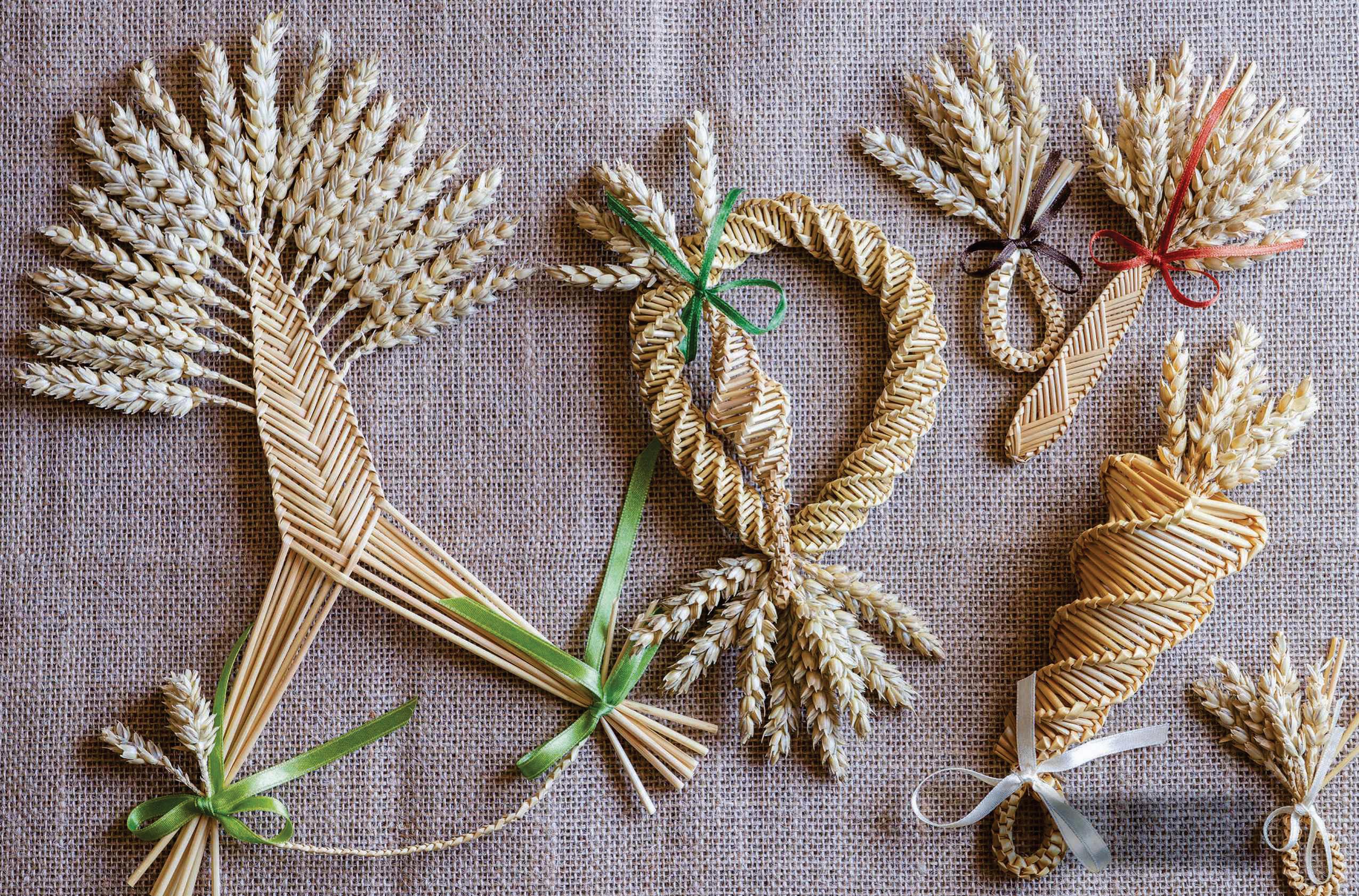
orn-dolly crafter Colette Hughes describes the bleak situations our ancestors faced. “Imagine,” she says. “It’s winter and your family is hungry and cold. It gets dark early, fresh food is in short supply. You could eat that grain that you’ve kept to plant. Do you?” It’s a sunny day in North Wales, but she paints a vivid scene.
The corn dollies that Colette has created - by folding, knotting or plaiting hollow straw stems into various shapes, such as twists, figures or fans - are displayed on the table. Intriguing, golden and intricate, they inspire curiosity.
Cultivation of corn (a generic term for all cereals such as wheat, barley and oats) began about 10,000 years ago in West Asia, from where the practice spread. Before soil fertility and germination was understood, comunities worldwide put their hopes for a good harvest in a deity. The success, or otherwise, of a crop could be a life or death situation.
Many legends claim that the spirit of the corn lived in the fields. Perhaps it was seen moving through the corn as the wind scythed the crop into waves. Our pre-Christian ancestors believed the spirit retreated further as the corn was harvested and would die if the corn was all thrashed, so the last of the crop was used to fashion a receptacle in which the spirit could dwell during winter until spring, when it was returned to the field.
In British folklore, evidence is scant. References to ‘dressing’ the sheaf date from the 16th century, while a record of fashioning a shape from the last of the corn came two centuries later. But pagan and Christian traditions frequently co-mingled, and corn dollies, as they became known, were often made to celebrate both Lammas (the first day of the harvest season) and Christian harvest festivals.

Cette histoire est tirée de l'édition October 2025 de BBC Countryfile Magazine.
Abonnez-vous à Magzter GOLD pour accéder à des milliers d'histoires premium sélectionnées et à plus de 9 000 magazines et journaux.
Déjà abonné ? Se connecter
PLUS D'HISTOIRES DE BBC Countryfile Magazine
BBC Countryfile Magazine
The power of eight
In 2025, UK waters were invaded by hordes of common octopus. Could such 'blooms' become more regular and what might be the impact?

8 mins
January 2026
BBC Countryfile Magazine
Dog DNA tests
How reliable are DNA kits for revealing your dog's breed, exercise needs and potential health risks? Mel Sherwood puts three to the test
8 mins
January 2026
BBC Countryfile Magazine
Foot and mouth devastated rural Britain. It could happen again
When the new year is welcomed in, we hope for good fortune in the months that lie ahead. But 25 years ago, right across the British countryside, good fortune was nowhere to be seen. Instead, 2001 was to be one of the blackest years ever, as an unexpected epidemic of foot and mouth disease swept the land.
3 mins
January 2026

BBC Countryfile Magazine
Conquer triathlon
Triathlon isn't just for super-fit athletes. With a wealth of shorter distance events for all ages and abilities, there's no better time to get started on your multisport journey
3 mins
January 2026

BBC Countryfile Magazine
A NATURAL DETECTIVE
Natural navigator Tristan Gooley has spent a lifetime observing the fascinating clues of the natural world
2 mins
January 2026

BBC Countryfile Magazine
TOP 10 GETAWAY ISLANDS
Escape life's everyday stresses and experience incredible wildlife on these invigorating island escapes
9 mins
January 2026
BBC Countryfile Magazine
Permissive paths are a precarious privilege we shouldn't abuse
I've always loved a 'permissive path' - a route across private land that the owner, manager or tenant has decided voluntarily to open to all. It's always seemed like the nicest of invitations. A surprise, a welcome, a generous act, as well as an implied pact between walker and landowner: here is a safe route to use, responsibly. The direct opposite of “get off my land”, it is the action of a farmer or land manager interested in and part of their wider community.
2 mins
January 2026

BBC Countryfile Magazine
A FIERY NORDIC KNEES-UP
The Shetland Islands celebrates its Viking heritage in a flamboyant, flaming series of events that brighten the dark winter months
3 mins
January 2026
BBC Countryfile Magazine
'MEGAFARMS' FAILING TO DECLARE POLLUTION IMPACTS
Local councils are kept in the dark over potentially devastating climate impacts of new 'megafarms', says a new report
2 mins
January 2026
BBC Countryfile Magazine
SCIENTISTS FREEZE BUTTERFLY EGGS IN WORLD-FIRST EXPERIMENT
Scientists hope new breeding methods can pull the British swallowtail butterfly back from the brink
1 mins
January 2026
Listen
Translate
Change font size