Essayer OR - Gratuit
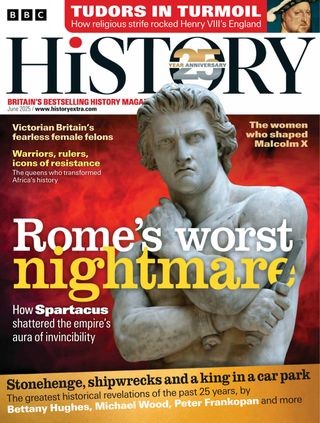
Rome's worst nightmare
BBC History UK
|June 2025
When the Spartacus revolt erupted in 73 BC, it exposed a terrifying truth: that the cocksure Roman Republic was nowhere near as invincible as it liked to believe.
It's a measure of the enduring appeal of Stanley Kubrick's 1960 swords-and-sandals epic that, when most of us hear the name Spartacus, a dimple-chinned Kirk Douglas springs immediately to mind. Heroic. Noble. Doomed. Roman citizens, it's safe to say, saw Spartacus rather differently – as a rebellious slave who threatened the future of the Roman Republic. Violent. Disobedient. Dangerous.
Though writing in the imperial Roman era long after the defeat of Spartacus, the words of the author Plutarch (AD 46-c120) capture something of the dread the warrior inspired. “It is said that, when he was first brought to Rome to be sold, a serpent was seen coiled about his face as he slept,” noted Plutarch, “and his wife, who was of the same tribe as Spartacus, a prophetess, and subject to visitations of the Dionysiac frenzy, declared it the sign of a great and formidable power which would end in misfortune.”
So what's the truth behind these very different legends? Why did Spartacus take up arms outside the gladiatorial arena? And why was the uprising he led – the third of the so-called Servile Wars, following rebellions in 135-132 BC and 104-c100 BC – perceived as being so threatening to Rome?
Brutal degradations
To answer these questions, it first helps to remember just how reliant upon slaves Rome had become by 73 BC, when the renegade band of trainee gladiators led by Spartacus burst out of their barracks in southern Italy. Their rebellion exposed the terrifying truth: that every city, every village and every villa estate was at risk from the slaves on whom every aspect of Roman life depended.

Cette histoire est tirée de l'édition June 2025 de BBC History UK.
Abonnez-vous à Magzter GOLD pour accéder à des milliers d'histoires premium sélectionnées et à plus de 9 000 magazines et journaux.
Déjà abonné ? Se connecter
PLUS D'HISTOIRES DE BBC History UK
History Extra
Power and principles
GWILYM DODD applauds a biography of a cleric and statesman who combined political clout with spiritual integrity

2 mins
March 2026
History Extra
What is the biggest historical misconception?
Our team of historians, broadcasters and authors take aim at the most egregious fallacies about the past
10 mins
March 2026

History Extra
Split decisions
The history of motherhood, from childbirth to breastfeeding and working mothers, has enjoyed overdue scholarly attention in recent years.
1 mins
March 2026
History Extra
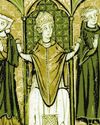
Statutes of liberty
In the 10th century, a Welsh king presided over legislation that recognised women's rights, offered consumer protection and removed physical punishments. Malcolm Smith tells the story of some of the most progressive laws ever to be enacted
8 mins
March 2026

History Extra
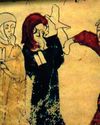
Victorian tragedy
My February issue of HistoryExtra magazine arrived today and I was fascinated to see the cover image informing readers of \"Lucy Worsley's hunt for a London serial killer\".
3 mins
March 2026
History Extra
Jews and Christians in York worked together for the common good
ON A COLD, GREY JANUARY DAY IN YORK, I climbed the steps to Clifford's Tower (pictured below), continuing all the way to the top to enjoy panoramic views across the city.
2 mins
March 2026

History Extra
The Archers shows that the village still stands for the idea of community
THIS YEAR WE CELEBRATE 75 YEARS OF The Archers.
3 mins
March 2026
History Extra
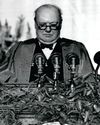
WHY CHURCHILL POKED THE RUSSIAN BEAR
It's 80 years since the war victor delivered his 'Iron Curtain' speech, sounding the alarm for a perilous new age. The speech, given as tensions with Stalin soared, is among the most famous in modern history. Yet, asks Richard Toye, has it been misunderstood?
10 mins
March 2026
History Extra
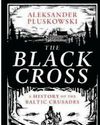
Sea changes
The title of this wideranging book is misleading: an overview of the medieval history of the Baltic lands, it starts before the crusades proper and follows the story through to the Reformation.
1 mins
March 2026

History Extra
MY HISTORY HERO
Olympic gold medallist Amy Williams chooses
2 mins
March 2026
Listen
Translate
Change font size