
Passez à l'illimité avec Magzter GOLD
Obtenez un accès illimité à plus de 9 000 magazines, journaux et articles Premium pour seulement
Essayer OR - Gratuit
AN APPETITE FOR POWER
BBC History UK
|May 2023
Wine, song and the finest food money could buy made medieval feasts a highlight of the courtly calendar. Yet more often than not, writes Charlotte Palmer, a thirst for influence and prestige lay behind the carousing

THE MENU
If you've got it... flaunt it
In 1491, Ercole I d'Este, Duke of Ferrara in northern Italy, threw a feast for his son's wedding. Among the highlights of this culinary extravaganza was a series of elaborately designed sugar sculptures. Yet before the guests could tuck in to them, attendants picked up the sweet artworks and promptly threw them into the diners' laps. Not to worry: another round of similar treats was served immediately.
To modern eyes, this may seem like a strange way to treat wedding guests. Yet the duke was making a statement: that he had the wealth to throw away eye-wateringly expensive delicacies and, in the blink of an eye, replace them with more of the same.
The duke's prank may strike us as extravagance at its very worst, yet it shines a light on to medieval attitudes to feasting. For the elite, food was seen as a tool for flaunting wealth and power - and, as such, serving (or merely displaying) highly elaborate dishes was a feature of banquets in the Middle Ages. The 14th-century English cookbook The Forme of Cury includes recipes for chickens dressed as knights and a cockatrice - a mythical dragon-like creature, in this case created by combining body parts from a pig and a cockerel. "Take a whole roasted cockerel, pull his guts and skin him all in one piece, save for the legs," run the instructions. "Take a piglet, cut him in half from the middle downwards. Sew them firmly together."
Other dishes might demonstrate that the host was dialled in to new tastes and trends - for example, the growing influence of Arab or other cuisines seen in foods and ingredients such as pasta or aubergine.
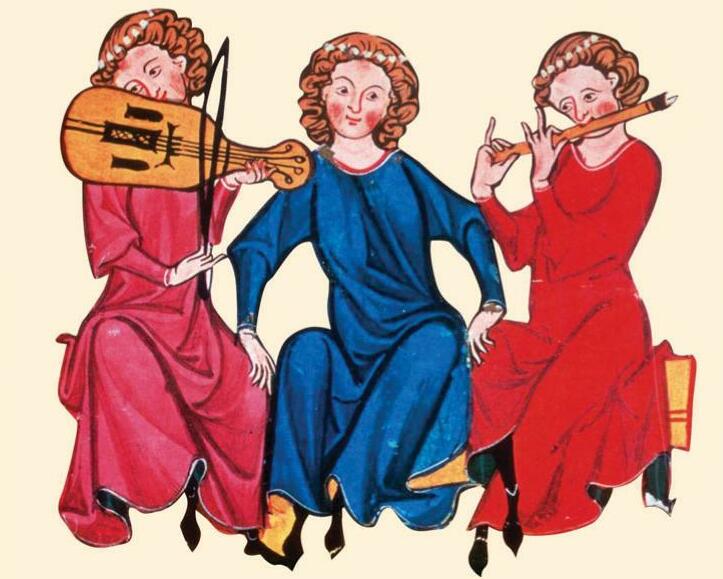
MUSIC
Flutes, bells and trumpets


Cette histoire est tirée de l'édition May 2023 de BBC History UK.
Abonnez-vous à Magzter GOLD pour accéder à des milliers d'histoires premium sélectionnées et à plus de 9 000 magazines et journaux.
Déjà abonné ? Se connecter
PLUS D'HISTOIRES DE BBC History UK
BBC History UK
29 DECEMBER 1170: Thomas Becket is murdered in Canterbury
Knights loyal to Henry II rid him of the “low-born cleric”

2 mins
Christmas 2025
BBC History UK
Murder most female
Women accused of violent murders have often faced assumptions about their motives and disbelief that the 'gentle sex' could commit such bloody crimes. Rosalind Crone investigates four cases from the 19th century
9 mins
Christmas 2025
BBC History UK
Memories of Malaya
I read Kavita Puri's article on the Second World War in Asia (Hidden Histories, December) with great interest.
3 mins
Christmas 2025

BBC History UK
“Protests are political theatre, and public squares are their grand stages”
With the police about to be given broader powers to tackle disruptive events, the right to protest is in the spotlight. TIMOTHY GARTON ASH and KATRINA NAVICKAS join Danny Bird to discuss the history of popular demonstrations.
9 mins
Christmas 2025
BBC History UK
Eighty years on, it's time that these 3 million lives are remembered
KAVITA PURI on the first event commemorating the 1943 Bengal Famine.
2 mins
Christmas 2025
BBC History UK
Jane Austen was a brilliant observer of Georgian Britain But she couldn't speak for everyone
The author's books depict an evocative slice of early 19th-century life, but many aspects of the Regency era are only hinted at in her novels, as Lizzie Rogers reveals
10 mins
Christmas 2025
BBC History UK
These are the last humans who have stayed outside ‘civilisation'
A NEW REPORT BY SURVIVAL INTERNATIONAL, Uncontacted Peoples: At the Edge of Survival, is the latest accounting of the human story - and it is a historical document of unparalleled power. It reveals that at least 196 groups in the world are still uncontacted, most of them gravely threatened by logging, mining and drilling for oil. These are the last human beings who have stayed outside ‘civilisation’ since the violence of the West reached across the globe after 1492.
3 mins
Christmas 2025

BBC History UK
Hymn to life
Scripted by Alan Bennett and directed by Nicholas Hytner - a collaboration that produced The Madness of King George and The History Boys – The Choral is set in 1916.
1 min
December 2025
BBC History UK
Helen Keller
It was when I was eight or nine years old, growing up in Canada, and I borrowed a book about her from my local library.
2 mins
December 2025

BBC History UK
Spain's miracle
The nation's transition from dictatorship to democracy in the late 1970s surely counts as one of modern Europe's most remarkable stories. On the 50th anniversary of General Franco's death, Paul Preston explores how pluralism arose from the ashes of tyranny
8 mins
December 2025
Translate
Change font size