Essayer OR - Gratuit
INDESCRIBABLE
The New Yorker
|March 17, 2025
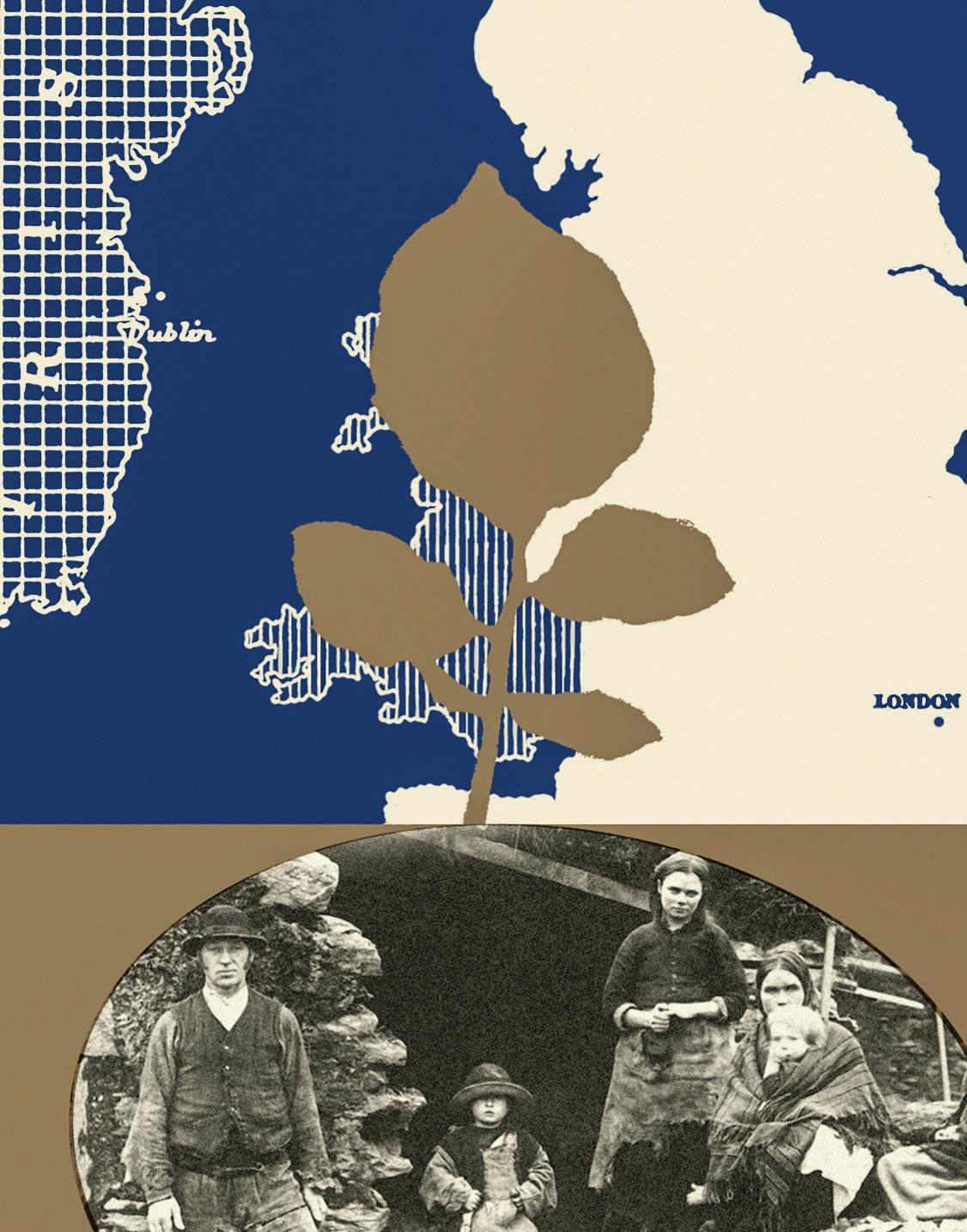
The human disaster of the Irish famine.
In the first act of the wittiest Irish play of the nineteenth century, Oscar Wilde’s “Importance of Being Earnest,” there is much ado about a shortage of food. The fearsome Aunt Augusta is coming to tea, but we have watched the feckless Algernon eat all the cucumber sandwiches prepared for her by his man-servant, Lane. The servant saves the day when the aunt arrives, expecting her sandwiches, by lying: “There were no cucumbers in the market this morning, sir. I went down twice.” Algy responds with high emotion: “I am greatly distressed, Aunt Augusta, about there being no cucumbers, not even for ready money.”
The play, first performed in 1895, is subtitled “A Trivial Comedy for Serious People,” and this scene is an exquisite exercise in trivialization. Wilde is imagining what a food crisis might look like if it were happening among the English upper classes rather than in his home country. The panic and dread of searching for nourishment and finding none is transformed into an airy nothing: a fake story about the nonexistent dearth of a plant that has relatively little nutritional value, and a charade of great distress. The comedy is so wonderfully weightless as to seem entirely free from the gravitational pull of the history that had preoccupied Wilde’s family, and of a place called Ireland, where the unfortunately unavailable food was not the cucumber but the potato.

Cette histoire est tirée de l'édition March 17, 2025 de The New Yorker.
Abonnez-vous à Magzter GOLD pour accéder à des milliers d'histoires premium sélectionnées et à plus de 9 000 magazines et journaux.
Déjà abonné ? Se connecter
PLUS D'HISTOIRES DE The New Yorker
The New Yorker
DEPT. OF ETCHING
One recent weekday morning, the British painter Peter Doig arrived at a bonded warehouse—a cavernous brick building—about a mile south of the River Thames, but not subject to the import taxes of the United Kingdom.

3 mins
January 19, 2026

The New Yorker
SUBWAY VIGILANTE
Revisiting the New York shooting that defined an era
17 mins
January 19, 2026

The New Yorker
MOM AND DAD: THE PERFORMANCE REVIEW
Mom, Dad, thanks for being on time this year. Dad, I can see by your T-shirt that it was a challenge. So you've already exceeded expectations.
3 mins
January 19, 2026
The New Yorker
Patrick Radden Keefe on Truman Capote's “In Cold Blood”
In 1972, on “The Tonight Show,” Johnny Carson asked Truman Capote about capital punishment. Capote had written, in unsettling detail, about the hanging of two killers, Dale Hickock and Perry Smith. Carson said, of the death penalty, “As long as the people don't have to see it, they seem to be all for it”; if executions occurred “in the public square,” Americans might stop doing them. Capote wasn't so sure. His hands laced together professorially, he murmured, in his baby-talk drawl, “Human nature is so peculiar that, really, millions of people would watch it and get some sort of vicarious sensation.”
3 mins
January 19, 2026
The New Yorker
BOOTS ON THE GROUND
There aren't many moments in Donald Trump's political career that could be called highlights.
4 mins
January 19, 2026

The New Yorker
CALL OF THE WILD
When calamity strikes in America's busiest national park, who comes to the rescue?
35 mins
January 19, 2026

The New Yorker
UNDER THREAT
The Danes were America's most loyal ally. Now they feel targeted—and terrified.
22 mins
January 19, 2026

The New Yorker
CONTAGION
A Broadway revival of Tracy Letts's “Bug.”
6 mins
January 19, 2026

The New Yorker
ANNALS OF TECHNOLOGY: HEY THERE!
How WhatsApp took over the global conversation.
25 mins
January 19, 2026
The New Yorker
M.I.P. IN CHAINS
Whatever else you think about invading a country and capturing its President, there's no getting around the inconvenience of imprisoning Nicolás Maduro in New York City.
7 mins
January 19, 2026
Listen
Translate
Change font size