
Passez à l'illimité avec Magzter GOLD
Obtenez un accès illimité à plus de 9 000 magazines, journaux et articles Premium pour seulement
Essayer OR - Gratuit
WRITE ON TIME
Best of British
|July 2025
Angeline Wilcox traces the history and influence of Pitman shorthand
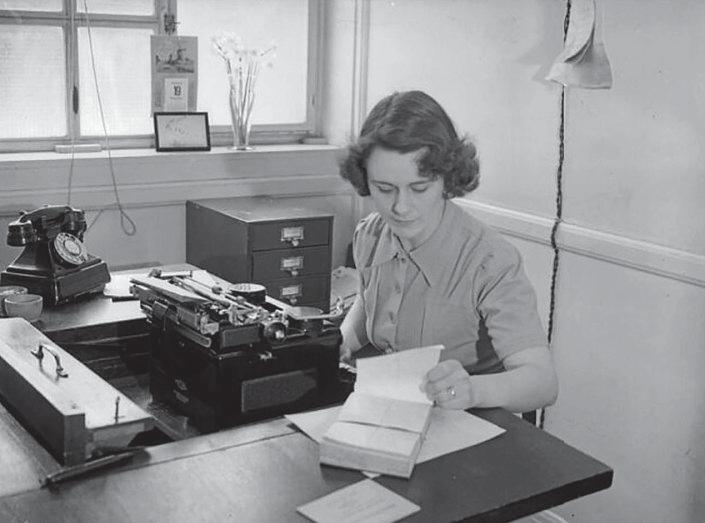
Over the centuries, a vital tool of the trade for secretaries, journalists, clerks and court reporters has been shorthand.
Although technology has brought us Dictaphones and smartphones with built-in voice recorders, shorthand is still taught in various forms today. To the uninitiated, it appears a bewildering mass of indecipherable squiggles, but to many of us it has provided a passport to jobs and careers. It has also played a crucial role in the development of the media, communications, trade, law, and education.
When you consider the average speed for adults writing in longhand is 10-20 words per minute, and contrast that with shorthand speeds of anywhere between 50-150 wpm, you begin to realise what an impact it can have in terms of quickly recording information, particularly the spoken word. But where did it begin?
The origins of shorthand can be traced back to ancient Egyptian, Greek and Roman civilisations. British interest in what was known as “short-writing” started in the late 16th century, with Timothy Bright's Characterie; An Arte of Shorte, Swifte and Secrete Writing by Character. Other systems followed, among them Thomas Shelton’s, which was used by notable figures including Samuel Pepys and Isaac Newton. In the 18th century, John Byrom’s New Universal Shorthand was taught at Oxford and Cambridge universities.
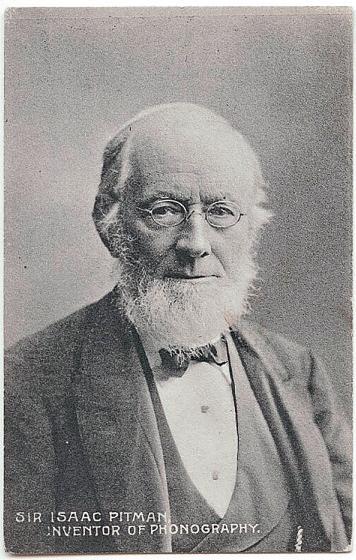
However, in 1837, a schoolteacher by the name of Isaac Pitman (1813-1897) launched his revolutionary method of shorthand, with the publication of a booklet entitled Stenographic Sound-Hand. This heralded a landmark in written communications and would become the best-known shorthand in the world.

Cette histoire est tirée de l'édition July 2025 de Best of British.
Abonnez-vous à Magzter GOLD pour accéder à des milliers d'histoires premium sélectionnées et à plus de 9 000 magazines et journaux.
Déjà abonné ? Se connecter
PLUS D'HISTOIRES DE Best of British
Best of British
The Medway Queen Club
Richard Halton recalls a little ship of Dunkirk's time as a nightclub

6 mins
May 2026

Best of British
Red Giant
Chris Hallam pays tribute to a co-creator of Red Dwarf
5 mins
May 2026
Best of British
Freddie in the Overworld
Philip and David Williams investigate Freddie Garrity's life beyond the Dreamers
5 mins
May 2026
Best of British
Looking Back (in Anger)
Colin Mayo celebrates the 70th anniversary of John Osborne's groundbreaking play
5 mins
May 2026

Best of British
BACK INSIDE THE TARDIS
Oliver Crocker travels back in time to explore the 1996 Doctor Who TV movie
12 mins
May 2026
Best of British
Spymaster
Chris Hallam pays tribute to spy writer and cookery expert Len Deighton
5 mins
May 2026
Best of British
BACK IN TIME WITH COLIN BAKER
BoB's very own Time Lord recalls corpsing in front of an audience of one, and how his return to Doctor Who on TV was a heartening experience
2 mins
May 2026

Best of British
RAINING CHAMPIONS
The nearest I get to watching the Eurovision Song Contest these days is pointing the remote control at the screen to change channels the moment I hear the opening notes of Te Deum.
1 mins
May 2026

Best of British
Better Than the Captain's Table
Simon Stabler visits a pair of Brighton dining favourites
2 mins
May 2026
Best of British
The Great Exhibition
Michael Montagu celebrates the beginning of the Crystal Palace and draws on his family's accounts of its destruction
9 mins
May 2026
Listen
Translate
Change font size