
Passez à l'illimité avec Magzter GOLD
Obtenez un accès illimité à plus de 9 000 magazines, journaux et articles Premium pour seulement
Essayer OR - Gratuit
Greatest Battles - BATTLE OF THE LITTLE BIGHORN
All About History UK
|Issue 131
LITTLE BIGHORN RIVER, MONTANA, USA, 25 JUNE 1876

In 1876, after violating an earlier peace treaty with the Plains Indians, the United States Army sent a force to the Midwest to conquer the increasing number of nomadic natives who did not want to live on designated reservations.
The ensuing conflict culminated in the Battle of Little Bighorn, where the US soldiers, under the leadership of Civil War veteran General George Armstrong Custer, were overwhelmed and killed down to the last man. A spectacular loss for the US Army and a stunning win for the combined Lakota Sioux, Northern Cheyenne and Arapaho tribes, the battle remains one of the most significant events of the wider Sioux Wars.
The battle was part of an ongoing series of hostilities triggered by relentless white American expansion westwards through indigenous ancestral lands. With most Native Americans either dead or forced onto reservations, after centuries of abuse the Great Plains Indians were the last remaining nomadic communities left.
However, their victory at Little Bighorn proved a double-edged sword: the decisive win over Custer’s men only strengthened the United States’ resolve. Utilising their greater resources, within a year the US Army would force the remaining Native Americans to surrender, taking the Black Hills by force and without any compensation.
FROM CIVIL WAR TO CONQUEST OF THE WEST
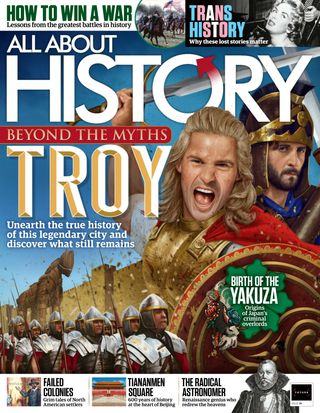

Cette histoire est tirée de l'édition Issue 131 de All About History UK.
Abonnez-vous à Magzter GOLD pour accéder à des milliers d'histoires premium sélectionnées et à plus de 9 000 magazines et journaux.
Déjà abonné ? Se connecter
PLUS D'HISTOIRES DE All About History UK

All About History UK
HOT FUDGE SUNDAE
USA, 19-20TH CENTURY

1 mins
Issue 169

All About History UK
HISTORY OF THE WORLD CUP
Football writer Jonathan Wilson explains why the tournament has always been a reflection of its time
10 mins
Issue 169

All About History UK
THE MAKING OF THE MIDDLE AGES AN ATLAS OF EUROPE
Explore the medieval world with this guide
1 min
Issue 169

All About History UK
PROPHECIES OMENS, AUGURIES, DIVINATION, ORACLES, DREAMS, APOCALYPSE
How humanity tries to predict the future
1 min
Issue 169

All About History UK
MICHAEL JACKSON: AN AMERICAN TRAGEDY
A by-the-book examination of the rise and fall of the King of Pop
2 mins
Issue 169
All About History UK
LECHAEUM
In 391 BCE (or 390 BCE, sources differ) during the Corinthian War (395-387 BCE), a force of lightly armed and armoured peltasts under the command of the Athenian Iphicrates faced almost 600 Spartan hoplites at Lechaeum, near Corinth.
11 mins
Issue 169

All About History UK
AGE of ALCHEMY
How occult ritual and a thirst for gold paved the way for modern chemistry
12 mins
Issue 169

All About History UK
THE QUEEN'S CLOTHES
An exhibition at Buckingham Palace explores Elizabeth II's life in fashion
2 mins
Issue 169

All About History UK
WHAT IF...9/11 HAD BEEN FOILED?
It was a day that shook the world. But what would preventing the attack mean for the 'War on Terror'?
6 mins
Issue 169

All About History UK
CURIOUS CATS AND FANTASTICAL FELINES
An entertaining jaunt through furry folklore
2 mins
Issue 169
Translate
Change font size