Essayer OR - Gratuit
SUNITA WILLIAMS, STARLINER, AND THE STATE OF HUMAN SPACEFLIGHT
SP’s Aviation
|Issue 4, 2025
The extended Starliner mission is likely to go down in history for testing technology, teamwork, and tenacity in equal measure
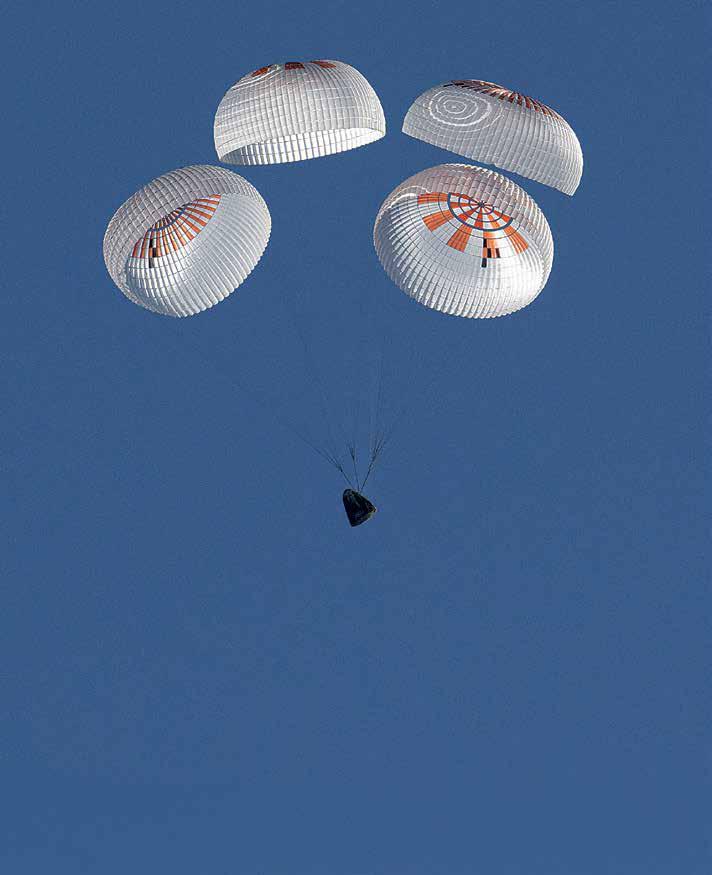
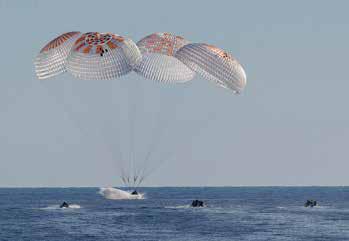
WHEN NASA ASTRONAUTS SUNITA WILLIAMS AND BARRY “Butch” Wilmore lifted off aboard Boeing's Starliner spacecraft on June 5, 2024, the mission was planned to be a straight-forward 8-day flight—a crucial validation for Boeing’s long-awaited commercial crew capsule. Instead, their planned brief visit extended into a 286-day mission in low Earth orbit, evolving into an extraordinary test not just of engineering, but also of human resilience, adaptability, and the realities of space exploration in the commercial era. What transpired was a reminder that space travel—even after 25 years of continuous International Space Station (ISS) operation and a decade of private sector partnerships—is still not entirely predictable.
 THE LONG PATH TO STARLINER’S FLIGHT
The Boeing CST-100 Starliner was developed under NASA's Commercial Crew Programme to provide the agency with a second US-built option for transporting astronauts to and from the ISS—complementing SpaceX’s Crew Dragon. While the programme promised flexibility and redundancy, Starliner’s route to its first crewed launch was fraught with technical challenges and setbacks.
Its first uncrewed flight in 2019 was marred by software issues that prevented the spacecraft from docking with the ISS. A second, partially successful, uncrewed mission in 2022 improved outcomes but didn’t fully redeem the system. Multiple technical problems—including software bugs, corrosion in valves, and propulsion system issues—troubled the spacecraft's development.

Cette histoire est tirée de l'édition Issue 4, 2025 de SP’s Aviation.
Abonnez-vous à Magzter GOLD pour accéder à des milliers d'histoires premium sélectionnées et à plus de 9 000 magazines et journaux.
Déjà abonné ? Se connecter
PLUS D'HISTOIRES DE SP’s Aviation
SP’s Aviation
AVIATION'S NEW FUEL DIVIDE
Differential fuel pricing emerges for the first time, raising questions on cost allocation and the future of business aviation

3 mins
Issue 4, 2026
SP’s Aviation
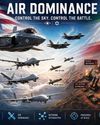
LESSONS FROM THE IRAN WAR
How Air Power Shaped the USA/Israel-Iran War and Strategic Lessons from the Conflict
7 mins
Issue 4, 2026

SP’s Aviation
ACCELERATING MARKET MOMENTUM
With Record participation, AERO Friedrichshafen 2026, Europe's Leading General Aviation Show, Delivers a Landmark Edition
5 mins
Issue 4, 2026
SP’s Aviation
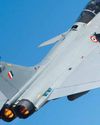
MAJOR IAF BOOST WITH RAFALE, MTA AND AEW&C DEALS
The scale of acquisitions signals a shift from incremental upgrades to preparing for high-intensity, technology-led warfare. If executed well, they could rebuild IAF squadron strength, boost readiness, and strengthen deterrence.
3 mins
Issue 4, 2026

SP’s Aviation
TRANSFORMING THE FUTURE OF HUMAN SPACE EXPLORATION
After a 10-day journey that took humanity farther from Earth than ever before, the four astronauts of Artemis II splashed down on Earth, completing a mission that validated NASA's entire deep- space architecture, paving the way for the next generation of human space exploration
7 mins
Issue 4, 2026

SP’s Aviation
COUNTING CRORES – INDIA'S BUSINESS JET MARKET IS ABOUT TO BOOM
India's business aviation market holds strong untapped potential, with expectations of significant fleet expansion and broader market development by 2030
3 mins
Issue 4, 2026

SP’s Aviation
TRANSFORMING INDIA'S HELICOPTER LANDSCAPE
In a major push to developing India's Helicopter Ecosystem, Adani and Leonardo have announced a MoU to build a Helicopter Manufacturing Hub
2 mins
Issue 4, 2026
SP’s Aviation
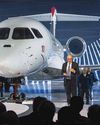
FALCON 10X UNVEILED
Dassault Aviation Redefines the Ultra-Long-Range Business Jet Segment
4 mins
Issue 4, 2026
SP’s Aviation
AIRCRAFT MANAGEMENT: THE CASE FOR DECOUPLING
Why India Needs Specialised Aircraft Management Companies for its Business Aviation Sector
3 mins
Issue 4, 2026

SP’s Aviation
DEVELOPING A SUSTAINABLE DOMESTIC MRO ECOSYSTEM
India is expanding its civil aviation MRO infrastructure, but without deeper component repair capability, regulatory alignment and supply-chain control, it risks creating capacity without sovereignty and continued reliance on foreign maintenance ecosystems
8 mins
Issue 1, 2026
Listen
Translate
Change font size