Essayer OR - Gratuit
Using data and technology to breed a climate-ready Merino
Farmer's Weekly
|January 16-23, 2026
High on the shoulders of the Sneeuberg mountains near Cradock, the Jordaan family has shaped a Merino that survives where seasons no longer follow rules. They are building resilience against a future where 'normal' seasons don't exist, merging old-school stockmanship with genomics, nutrition science, and hard-won climate wisdom. Sabrina Dean spoke to Andrew Jordaan Jr.
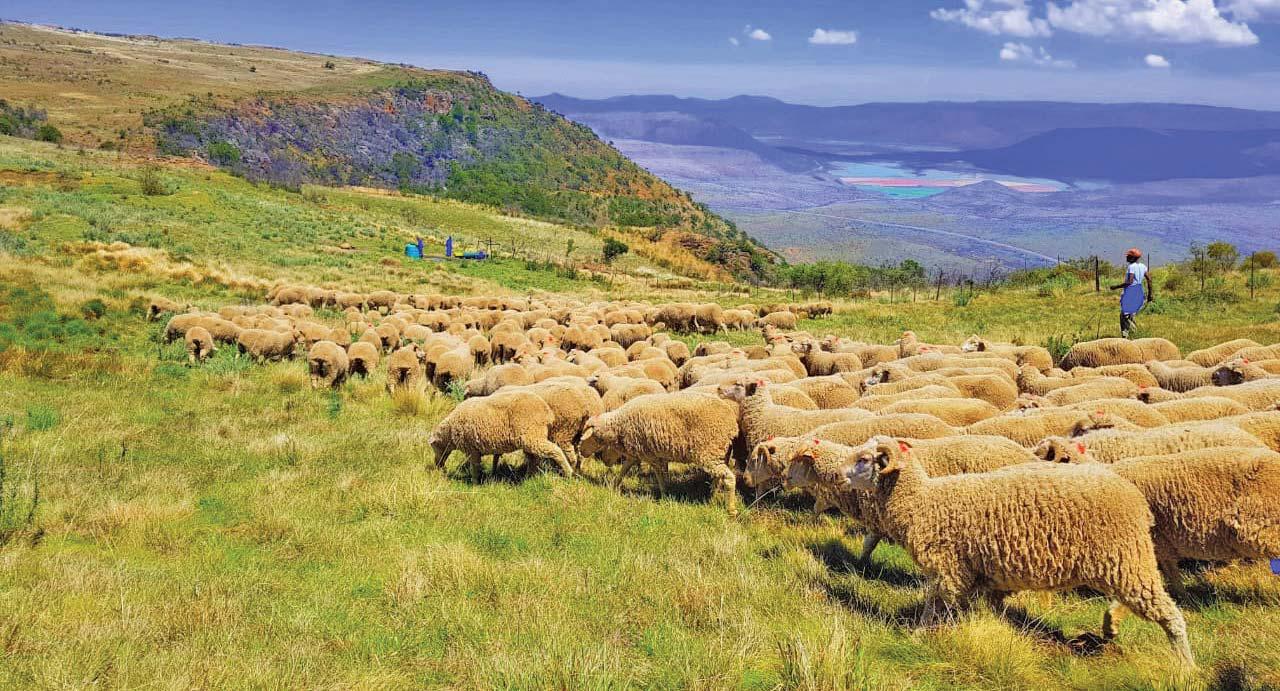
Follow the Great Fish River north of Cradock and the landscape shifts quickly – irrigated pastures at 800m to 900m give way to koppies, then morph into the steep shale and grass slopes of the Sneeuberg mountain range, rising to nearly 1 800m.
It’s a landscape of contrasts: fertile bottoms fed by irrigation schemes, and rugged mountain veld where cold fronts bite, winds cut, and summer heat pushes animals to the edge of their comfort zone.
“Our sheep must perform in both worlds,” says Merino breeder Andrew Jordaan Jr, who farms with his father, Andrew Jordaan Sr, and brothers Wilhelm and Ginkel on their family farm, Spekboomberg. “The land forces us to think differently.”
The Jordaan family operates a diverse farming operation comprising a Merino stud along with Dormers, Angoras, beef cattle, and an irrigated dairy and a feed company. The Merino component has been developed under a philosophy passed down from father to son: “Breed sheep that can write their own exam on the mountain.”
Each generation has added layers of selection pressure shaped by climate variability, drought, and high-altitude endurance. In an increasingly variable climate, as seasons grow less predictable, this approach is proving more relevant than ever.
CLIMATE CHANGE AS BREEDING PRESSURE
The family farm Spekboomberg is a place where altitude, terrain and climate are as much a part of the farming equation as the animals themselves.
The operation spans irrigated lowland, Karoo veld, and high-altitude mountain veld. It is complex terrain and demands resilient animals.
“Our animals must perform in both worlds — the lush irrigated pastures and the tough mountain veld,” says Jordaan.
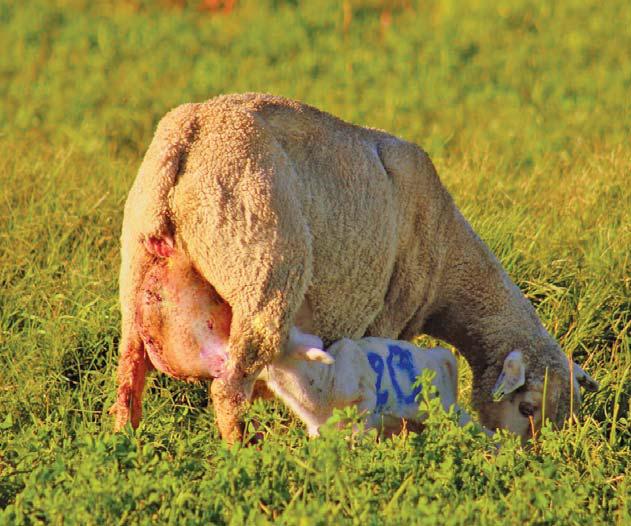 That balance influences every decision — from breeding to nutrition to grazing strategy.

Cette histoire est tirée de l'édition January 16-23, 2026 de Farmer's Weekly.
Abonnez-vous à Magzter GOLD pour accéder à des milliers d'histoires premium sélectionnées et à plus de 9 000 magazines et journaux.
Déjà abonné ? Se connecter
PLUS D'HISTOIRES DE Farmer's Weekly

Farmer's Weekly
Tropical avo smoothie
Escape to the tropics with this luxurious, creamy, and vibrant smoothie! Blending rich avocado and sweet mango with zesty lime, fragrant mint, and a punch of tangy granadilla, this recipe transforms into a nutrient-packed and silky-smooth treat.

1 min
January 16-23, 2026
Farmer's Weekly
THE HITCHING POST
I am a 60-year-old white woman who loves camping, animals, the outdoors and watching sport.
2 mins
January 16-23, 2026
Farmer's Weekly
The enduring legacy of Tiyo Soga
In the 1850s, Tiyo Soga, a Xhosa man, became the first ordained black South African minister. But as Mike Burgess writes, his legacy would also be determined by his all-round intellectual abilities honed by a solid Scottish education.
4 mins
January 16-23, 2026

Farmer's Weekly
Isuzu D-Max shows single cabs can be comfortable companions
Bakkie manufacturers don't give single cabs to the media due to them generally being regarded as workhorses without the bells and whistles from fancier double cabs. The Citizen's Charl Bosch was gobsmacked when a single cab arrived for a three-month stay.
2 mins
January 16-23, 2026
Farmer's Weekly
South Africa eyes home-grown rice as ARC expands research efforts
South Africa is taking bold steps toward reducing its dependence on rice imports by exploring the viability of home-grown upland rice. Through a major research drive led by the Agricultural Research Council's Small Grain division, scientists and industry partners are testing rice varieties capable of thriving in South Africa's diverse soils and increasingly water-scarce climate. Anelisa Gusha reports.
3 mins
January 16-23, 2026

Farmer's Weekly
Spanish tortilla
Bring the authentic flavours of Spain to your table with this robust and satisfying Spanish tortilla.
1 min
January 16-23, 2026

Farmer's Weekly
New year brings marvellous new titles
Patricia McCracken, like many of us, has settled back into the grind of the new year and picked up a diverse selection of books ranging from travel, to fiction, to non-fiction and a delightful local children's adventure.
2 mins
January 16-23, 2026
Farmer's Weekly
Nitrogen 'switch' unlocks greener crops
A ground-breaking discovery by molecular biology professors Kasper Røjkjær Andersen and Simona Radutoiu at Aarhus University in Denmark offers a significant step toward developing self-fertilising grain crops, potentially revolutionising agriculture to be greener and more climate-friendly.
1 min
January 16-23, 2026
Farmer's Weekly
Sweet prospects: the current state of litchi production in South Africa
Bram Snijder, agricultural consultant and chairperson of the South African Litchi Growers' Association, spoke to Octavia Avesca Spandiel about the litchi industry embracing new opportunities, tackling challenges, implementing innovation, and reaching markets both locally and internationally.
6 mins
January 16-23, 2026
Farmer's Weekly
How AFGRI uses technology to unlock farm finance from asset to market
As modern farming becomes more capital-intensive and digitally driven, AFGRI is reinventing agricultural finance by linking technology directly to lending decisions.
5 mins
January 16-23, 2026
Listen
Translate
Change font size