
Passez à l'illimité avec Magzter GOLD
Obtenez un accès illimité à plus de 9 000 magazines, journaux et articles Premium pour seulement
Essayer OR - Gratuit
Boosting productivity in sheep farming
Farmer's Weekly
|May 09, 2025
Emerging sheep farmers can boost their production and profitability by focusing on quality over quantity. Willem Goosen, production adviser at the National Wool Growers' Association, spoke to Octavia Avesca Spandiel about strategies for breeding productive animals and managing them effectively.
-
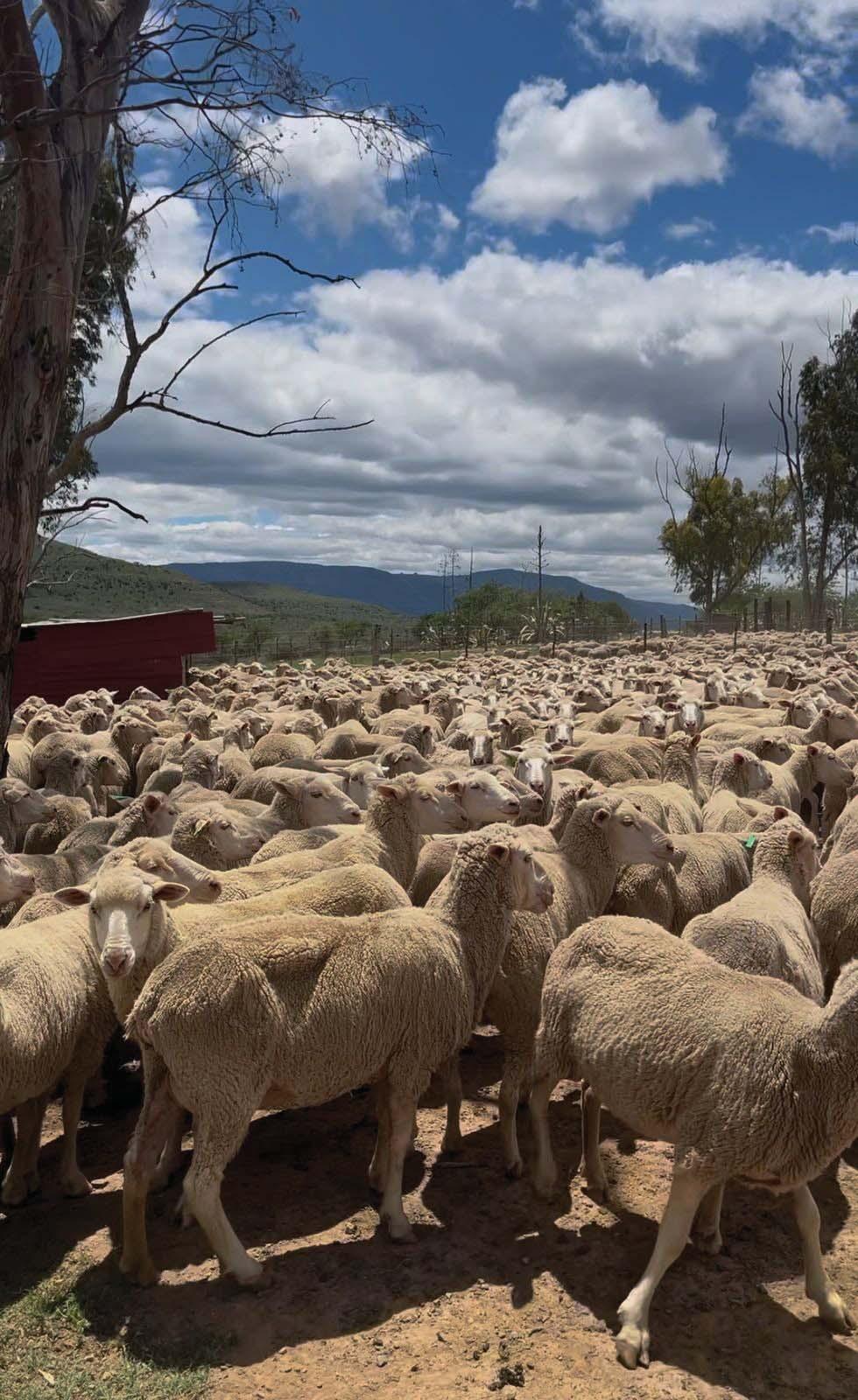
Efficient sheep production starts with making smart decisions - from selecting productive animals and managing grazing to balancing wool and meat output.
Willem Goosen, production adviser at the National Wool Growers' Association (NWGA) in the Eastern Cape, says emerging farmers can thrive by focusing on quality over quantity.
For sheep farmers working on limited land, especially in communal areas, making the most of each animal is essential. Instead of increasing flock size, the real gains come from improving flock quality.
Goosen says identifying and replacing nonproductive sheep with high-yielding animals can significantly boost a farmer's income.
MAXIMISING PRODUCTIVITY WITH LIMITED RESOURCES
"From better wool yields to additional meat production, strategic breeding and proper herd management can transform small-scale operations into profitable ventures," he says.
Goosen points out that one of the most effective ways to supplement feed during periods of drought or low grazing is to make use of crops planted during the summer season.
"In summer, most communal farmers have a piece of land where they normally grow oats or maize. At the end of April or May, they harvest the maize and use it in their own households, and the rest they feed to their animals in winter," he says.
Goosen adds that the maize cobs are bagged and stored in garages or sheds, while the stover left in the fields is grazed down by cattle.
"The maize that is harvested is mostly for small stock like sheep and goats, if necessary. The rest will be utilised by cattle," he says.
When it comes to cost-effective feeding strategies, Goosen encourages farmers to buy feed in bulk during the summer months, when prices are lower.
"If they can buy grass or lucerne bales during summer - any time from November to the middle of April - they'll save money.


Cette histoire est tirée de l'édition May 09, 2025 de Farmer's Weekly.
Abonnez-vous à Magzter GOLD pour accéder à des milliers d'histoires premium sélectionnées et à plus de 9 000 magazines et journaux.
Déjà abonné ? Se connecter
PLUS D'HISTOIRES DE Farmer's Weekly

Farmer's Weekly
Cash flow budgets: keeping farmers in control of liquidity, risk, and their survival
Profit doesn't guarantee a farm's survival - cash does. Cobus du Plessis explains why cash flow budgets are one of the most important yet underused financial tools on South African farms.

5 mins
February 27 - March 06, 2026

Farmer's Weekly
The toast of the Navy
The incredible story of the World War II-era Great Dane dog Nuisance being enlisted in the Royal Navy is well documented. Graham Jooste shared some entertaining anecdotes involving the canine shipmate.
6 mins
February 27 - March 06, 2026
Farmer's Weekly
Healthier soils deter destructive locusts
Locust swarms remain a serious global threat, capable of devastating crops, livelihoods and local economies across vast regions.
1 min
February 27 - March 06, 2026
Farmer's Weekly
Wheat crisis dominates Grain SA regional meetings
As the ongoing wheat crisis continues to erode producers' margins, emotions ran high at Grain SA's regional meeting in Moorreesburg in the Western Cape.
2 mins
February 27 - March 06, 2026

Farmer's Weekly
A FARMER'S EXPERIENCE
Street Wallet has been a game-changer for Mario Athanasopoulos, hydroponic production consultant and owner of Green City Farms.
1 mins
February 27 - March 06, 2026
Farmer's Weekly
Kesieberg Merino Stud Production Sale
The Kesieberg Merino Stud Production Sale was held on the farm Leeuwfontein on 4 February on behalf of Willie and Herman Henning.
1 min
February 27 - March 06, 2026
Farmer's Weekly
Not cheaper, just different: what you should know about farming in Mozambique
Although Mozambique is often viewed as a cheaper, easier farming location than South Africa, cost comparisons tell a more complex story. But while cross-border production presents real challenges, it also offers opportunities for complementary trade, diversification and regional food security, particularly when it comes to subtropical crops such as bananas.
10 mins
February 27 - March 06, 2026
Farmer's Weekly
The all-rounder anchoring South Africa's beef value chain
Louis Steyl, CEO of the Bonsmara Cattle Breeders' Society of South Africa, spoke to Octavia Avesca Spandiel about how the versatile Bonsmara breed anchors the country's beef value chain, delivering balanced performance, reproductive and feed efficiency, and carcass traits across extensive and intensive systems.
6 mins
February 27 - March 06, 2026

Farmer's Weekly
THE HITCHING POST
I'm a 60-year-old white woman who loves camping, animals, the outdoors, and watching sport.
2 mins
February 27 - March 06, 2026
Farmer's Weekly
Foot-and-mouth disease in pigs
Recently, the radio news mentioned an outbreak of foot-and-mouth disease (FMD) in pigs in South Africa.
2 mins
February 27 - March 06, 2026
Listen
Translate
Change font size